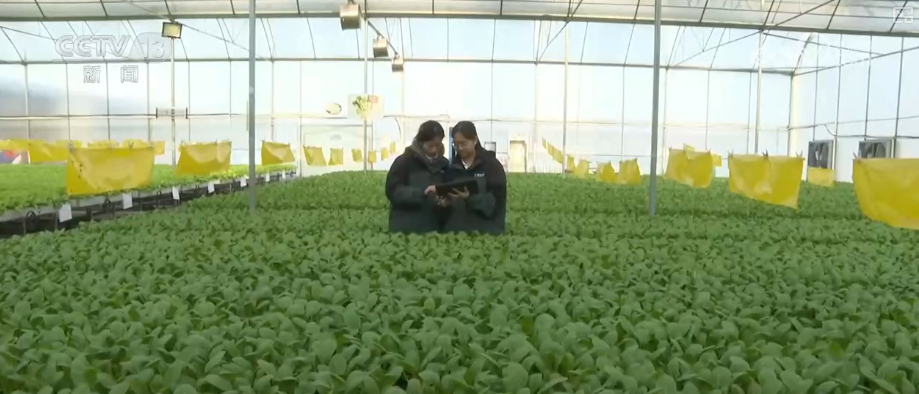
智能温室

Search documents
年味里的新质生产力|春花“赶春”有新招
Ren Min Ri Bao· 2026-02-11 02:18
Core Insights - The article highlights the transformation of the flower industry in Yunnan, particularly in Kunming, where technology and innovative practices are reshaping the production and sale of flowers, especially during the Spring Festival season [1][5][9] Group 1: Industry Transformation - The Yunnan flower industry is shifting from traditional methods to data-driven approaches, enhancing production efficiency and market responsiveness [1][3] - The Kunming Flower Auction Center has become a significant hub, facilitating the trade of over 154.76 billion flowers with a transaction value of 134.84 billion yuan in 2025, maintaining its position as the top flower trading center in China for over 20 years [3][4] - The introduction of a flower trading database at the auction center allows for better data integration across production, trading, and distribution, aiding both government policy-making and farmers' market strategies [3][4] Group 2: Technological Advancements - The use of smart greenhouses and automated systems in flower cultivation has significantly improved yield and quality, with some farms reporting a threefold increase in flower production compared to traditional methods [5][6] - Advanced technologies enable precise control over growing conditions, allowing for the synchronization of flower blooming with market demand, thus reducing reliance on weather conditions [5][6] - The implementation of automated sorting and packaging systems has streamlined post-harvest processes, enhancing freshness and reducing labor costs [6] Group 3: Breeding and Innovation - The Yunnan Agricultural Academy is actively working on developing new flower varieties, with a rigorous selection process that can take several years before a new variety reaches the market [7][9] - The academy has collected over 1,500 flower varieties, with plans to expand domestic breeding efforts to reduce reliance on imported varieties, which currently account for about 85% of the market [9] - The focus is shifting towards creating unique Chinese flower varieties, aiming for self-sufficiency in the flower breeding sector [9]
春花“赶春”有新招(年味里的新质生产力)
Ren Min Ri Bao· 2026-02-10 22:37
Core Insights - The article highlights the transformation of the flower industry in Yunnan, particularly in Kunming, where technology and innovative practices are reshaping the production and sale of flowers, especially during the Spring Festival season. Group 1: Industry Overview - The Kunming flower auction center covers over 4,000 varieties across 65 categories, with a significant market reach extending to Southeast Asia, facilitating competitive pricing for flowers like peonies from Shandong [4][5]. - In 2025, the flower industry in Dou Nan is projected to trade 15.476 billion stems of flowers, generating a transaction value of 13.484 billion yuan, maintaining its position as the top flower trading hub in China for over 20 years [4][5]. Group 2: Technological Advancements - The introduction of smart greenhouses and automated systems in flower cultivation has led to a significant increase in production efficiency, with yields per acre rising to three times that of traditional methods [8][9]. - The use of big data in the flower auction center allows for better market insights and production planning, benefiting both farmers and policymakers [4][5]. Group 3: Market Dynamics - The daily supply of flowers in Dou Nan exceeds 6 million stems, with peak days approaching 7 million, reflecting a nearly 30% increase compared to the previous year [5][6]. - The auction model combines online bidding, direct sourcing from bases, and offline transactions, ensuring a steady supply of flowers at competitive prices for merchants [5][6]. Group 4: Breeding and Innovation - The breeding process for new flower varieties is lengthy and selective, with only 0.1% to 0.2% of varieties making it to market after rigorous testing [10][11]. - The focus on local genetic resources and the development of unique Chinese flower varieties is seen as a key strategy for reducing dependency on imported flower seeds, which currently account for about 85% of the market [10][11].
农业科普·品尝舌尖上第一口“鲜” 解锁反季节蔬菜背后高科技“密码”
Yang Shi Wang· 2025-12-10 07:16
Core Viewpoint - The article addresses misconceptions about off-season vegetables, clarifying that they are produced using modern agricultural technologies and do not inherently lack nutrition or safety [1][3][15]. Group 1: Definition and Types of Off-Season Vegetables - Off-season vegetables are defined as agricultural products that are grown outside their traditional harvest periods through modern technology, allowing for year-round supply [3]. - There are three main categories of off-season vegetables: those grown in different geographical locations, emergency reserves using preservation techniques, and those cultivated in greenhouses [4]. Group 2: Nutritional Value and Quality - Misconceptions about off-season vegetables lacking nutrition stem from perceived differences in taste and texture, which do not equate to a lack of nutritional value [6][7]. - While growing conditions can affect the flavor and texture of vegetables, the fundamental nutritional components remain stable [10]. - The use of cold chain logistics and immediate pre-cooling after harvest can significantly reduce nutrient loss and maintain freshness [12]. Group 3: Safety and Pesticide Use - Claims that off-season vegetables contain high pesticide residues are misleading; modern agricultural practices involve strict management of pesticide use [15][17]. - The majority of pesticides used today are biodegradable and subject to safety testing before products reach the market [17]. Group 4: Technological Innovations in Off-Season Vegetable Production - Advanced technologies in greenhouse farming allow for the production of off-season vegetables, with controlled environments ensuring optimal growth conditions [22][30]. - In a specific intelligent greenhouse in Shandong, the temperature is maintained above 15°C during winter, and automated systems monitor humidity and temperature to support vegetable growth [26][28]. - The use of LED grow lights compensates for reduced sunlight in winter, enhancing the growth of off-season crops like cucumbers, achieving yields comparable to summer production [31].