药品集采反内卷

Search documents
第十一批国家组织药品集采中选结果即将正式公布 药品集采,新规则带来新变化(民生一线)
Ren Min Ri Bao· 2025-11-04 22:01
Core Viewpoint - The upcoming results of the 11th batch of national organized drug procurement are set to be announced, with new rules focusing on stabilizing clinical use, ensuring quality, preventing excessive competition, and avoiding collusion, which aims to foster a healthy environment for the pharmaceutical industry [1][2]. Group 1: Procurement Results - The results of the procurement are expected to be officially announced soon, with patients anticipated to access a new batch of quality and affordable drugs by February 2026 [1]. - A total of 272 companies have qualified for the procurement, covering 55 varieties and 453 products, increasing the total number of drugs included in national organized procurement to 490 [1][2]. Group 2: New Rules and Adjustments - The new procurement rules allow medical institutions to report quantities based on brand names, with 77% of the 46,000 medical institutions opting for brand-specific reporting, facilitating access to lower-priced drugs without changing brands [2][3]. - The procurement emphasizes quality control, raising the bar for companies by requiring a clean record of compliance with production standards and quality management practices [2][3]. Group 3: Market Dynamics and Competition - The introduction of a "reference price" mechanism aims to prevent extreme low pricing and encourages rational bidding among companies, with all bidders required to justify any prices below the reference price [3][4]. - The competitive landscape has intensified, with some products seeing participation from up to 48 companies, indicating a robust supply capacity within the pharmaceutical industry [6][7]. Group 4: Industry Challenges and Future Directions - The procurement aims to reduce medication costs for insured individuals while promoting a shift in the generic drug industry towards quality and innovation, addressing concerns about low profit margins potentially impacting drug quality [5][7]. - Experts suggest that future procurement rules should continue to evolve, emphasizing the need for companies to engage in scientific project selection to avoid oversaturation in the production of similar drugs [7].
药品集采首提“反内卷” 不再唯低价马首是瞻
Zheng Quan Shi Bao· 2025-09-22 18:03
Group 1 - The article emphasizes the importance of avoiding excessive competition in drug procurement, suggesting that low bids may appear attractive but can lead to inferior quality, ultimately being less cost-effective [1] - It advocates for optimizing the benchmark pricing in bidding processes to ensure that pharmaceutical companies can maintain profitability [1] - The article stresses the need for careful oversight in the selection of medications under the healthcare insurance plan, highlighting the importance of prioritizing quality for the benefit of the public [1]


创新药重磅利好!第11批药品集采提及“反内卷”
Mei Ri Jing Ji Xin Wen· 2025-09-22 02:09
Core Viewpoint - The National Healthcare Security Administration has announced the 11th batch of centralized drug procurement, set to open bids on October 21 in Shanghai, covering 55 varieties and 162 specifications of drugs, including key areas like antiviral and innovative kidney disease treatments [1] Group 1: Procurement Details - The procurement will include various dosage forms such as oral immediate-release forms, inhalants, and topical patches [1] - The principle of "anti-involution" is emphasized, indicating that the procurement is not aimed at price wars but rather at balancing drug prices and values [1] Group 2: Industry Impact - The procurement aims to stabilize clinical practices, ensure quality, prevent collusion, and promote innovation, laying a foundation for high-quality development in the pharmaceutical industry [1] - Companies with strong R&D capabilities and unique products are expected to gain larger market shares through price-volume strategies, leading to increased demand [1] Group 3: Market Reaction - The announcement has positively impacted the market, with the Hang Seng Pharmaceutical ETF (159892) rising over 2%, and stocks like WuXi AppTec gaining over 5%, leading the pharmaceutical sector [1]
药品集采首提反内卷 不再唯低价、新增“未入围复活”
Bei Jing Shang Bao· 2025-09-21 23:22
Core Viewpoint - The 11th batch of national organized drug centralized procurement has officially launched, emphasizing principles such as "stabilizing clinical use, ensuring quality, preventing collusion, and countering price wars" [1] Group 1: Price Control Mechanism - The new procurement rules optimize the selection of price control "anchors," moving away from simply choosing the lowest bid to prevent abnormal low pricing from disrupting the market [2] - When the lowest price is below 50% of the average bid, the price control anchor will be set at 50% of the average bid, potentially increasing the average bid by 34% and up to 170% for certain products [2] - Companies are required to provide a rationale for any bids below the anchor price, detailing cost components such as manufacturing costs and sales profits [2] Group 2: Market Competition and Quality - The optimization of price control anchors is expected to reduce vicious low-price competition, allowing larger companies with strong brand influence to maintain market share and focus on quality and innovation [3] - Smaller companies attempting to capture market share through low pricing will face limitations, encouraging them to enhance product quality and competitiveness [3] Group 3: Revival Mechanism - The new "non-selected revival" rule allows companies that did not win bids to re-enter the selection process under certain conditions, increasing the number of selected companies and ensuring stable supply [4] - Conditions for revival include meeting average hospital demand, not being the highest bidder in the first round, and voluntarily lowering prices to match selected companies [4] Group 4: Anti-Collusion Measures - The introduction of a "first report leniency" mechanism aims to dismantle collusion among companies, promoting fairness in the procurement process [6][7] - Companies providing evidence of collusion will receive leniency in penalties, and strict measures will be enforced against colluding companies, including being placed on a "violation list" [6][7] - Continuous optimization of procurement rules is intended to ensure the sustainability and effectiveness of the centralized procurement system, ultimately benefiting public access to medications [7]
不再唯低价 药品集采首提反内卷
Bei Jing Shang Bao· 2025-09-21 15:54
Core Viewpoint - The 11th batch of national organized drug centralized procurement has officially launched, emphasizing principles such as "stabilizing clinical use, ensuring quality, preventing collusion, and countering price wars" with a focus on avoiding a "low-price only" approach [1][8]. Price Control Optimization - The new procurement rules optimize the selection of price control "anchors," moving away from simply choosing the lowest bid. If the lowest price is below 50% of the average bid, the control anchor will be set at 50% of the average bid [3][4]. - A simulation of previous procurement batches indicated that about 25% of products would trigger an increase in the control anchor, with an average increase of 34% and a maximum increase of 170% compared to the lowest bid [3][4]. Market Environment - The optimization of price control anchors aims to prevent vicious low-price competition, ensuring that companies consider costs and market factors in their bids, thus promoting a healthier market environment [4][5]. - Larger companies with strong brand influence will benefit from these changes, allowing them to maintain market share and focus on quality improvement and innovation, while smaller companies relying on low-price strategies may face restricted growth [5]. New Revival Rules - The introduction of "unselected revival" opportunities allows companies that did not win bids to re-enter the selection process under certain conditions, increasing the number of selected companies and ensuring stable supply of drugs [6]. - Specific conditions for revival include meeting hospital demand, not being the highest bidder in the first round, and voluntarily lowering prices to match those of selected companies [6]. Anti-Collusion Measures - The new procurement rules include a "first report leniency" mechanism to encourage companies to report collusion and fraud, with potential leniency for those providing evidence [7][8]. - There will be strict measures against collusion, including treating closely related companies as a single entity during bidding, and severe penalties for those found guilty of collusion [8].

第十一批药品集采反内卷,药企盈利能力有望回升
Xuan Gu Bao· 2025-09-21 14:59
Group 1 - The National Healthcare Security Administration (NHSA) released the 11th batch of centralized drug procurement documents on September 20, emphasizing principles such as "stabilizing clinical use, ensuring quality, preventing collusion, and countering internal competition" [1] - The procurement plan optimizes the selection of price control "anchors," moving away from simply choosing the lowest bid. Each bidding company must commit to a price not lower than their cost and explain the rationale for any bids below the "anchor price" [1] - According to Zhongyin Securities, as the NHSA's anti-internal competition measures improve, drug price competition is expected to return to a healthy state, leading to stabilization in drug prices and gradual improvement in pharmaceutical companies' profitability [1] Group 2 - China National Pharmaceutical Group Modern (Guoyao Modern) is the core platform for chemical pharmaceutical development and capital operations under the China National Pharmaceutical Group. In the first half of this year, the company achieved 31 research results, including drug registration certificates and consistency evaluations, a year-on-year increase of 29.17% [1] - Fuyuan Pharmaceutical has 126 products included in the national medical insurance catalog, with 54 varieties entering the national essential drug list and 103 generic drug projects under research [1]
药品集采首提“反内卷”!不再简单选用最低报价
Bei Jing Shang Bao· 2025-09-21 09:39
Core Viewpoint - The 11th batch of national organized drug centralized procurement has officially launched, emphasizing principles such as "stabilizing clinical use, ensuring quality, preventing collusion, and countering price wars" with a focus on creating a fair and healthy market environment [1][9]. Group 1: Price Control Mechanism - The new procurement rules optimize the selection of price control "anchors," moving away from simply choosing the lowest bid to prevent abnormal low pricing from disrupting the market [4][5]. - If the lowest price is below 50% of the average price of shortlisted bids, the control anchor will be set at 50% of the average price, potentially increasing the average bid by 34% and up to 170% for certain products [4][5]. - Companies are required to provide a rationale for any bids below the anchor price, detailing cost components to avoid malicious low-price competition [5][6]. Group 2: Market Dynamics and Competition - The optimized rules favor large enterprises with strong brand influence, allowing them to maintain market share while focusing on quality and innovation rather than engaging in price wars with smaller firms [6]. - Smaller pharmaceutical companies attempting to capture market share through low pricing will face restricted growth, pushing them to enhance product quality and competitiveness [6]. Group 3: Revitalization Mechanisms - The introduction of "revival opportunities" for both shortlisted and non-shortlisted companies aims to encourage more firms to participate at reasonable prices, thereby increasing the number of selected companies [7]. - Specific conditions must be met for revival, including sufficient hospital demand and a willingness to lower prices to competitive levels [7]. Group 4: Anti-Collusion Measures - The new procurement rules include a "first report leniency" mechanism to encourage companies to report collusion and provide evidence, with leniency offered to those who cooperate [8][9]. - There are strict measures against collusion, including treating closely related companies as a single entity during bidding, and severe penalties for those found guilty of collusion [9].
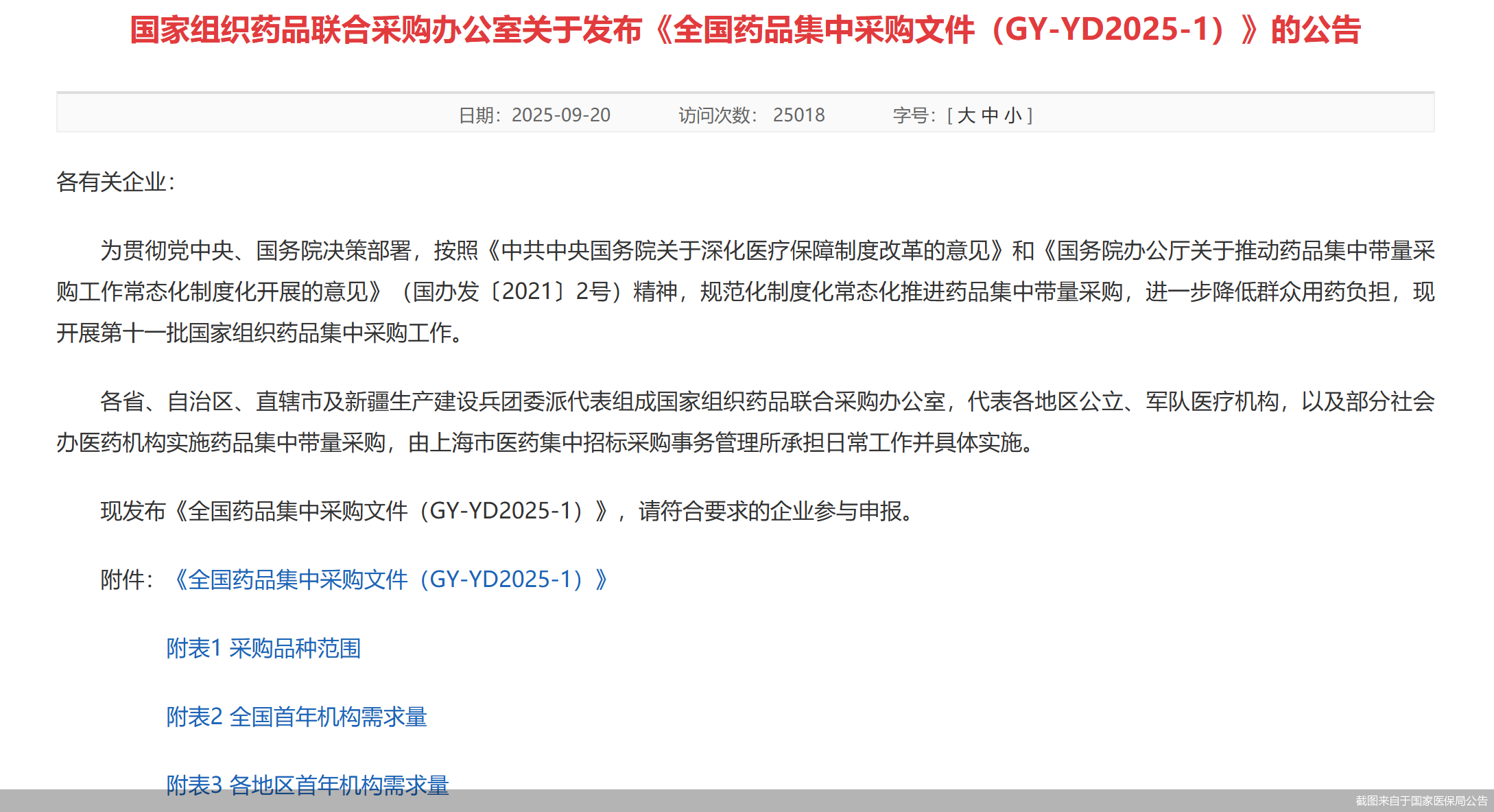
第11批药品集采首提“反内卷” 调整“唯低价”方向
天天基金网· 2025-09-21 03:15
Core Viewpoint - The article discusses the recent adjustments in China's drug centralized procurement system, emphasizing the shift from a price-focused approach to one that prioritizes quality and clinical stability, aiming to ensure affordable and effective healthcare for the public [3][5][7]. Group 1: Drug Centralized Procurement - The 11th batch of drug centralized procurement includes 55 drugs, with the bidding set for October 21, 2025, in Shanghai [3]. - The new procurement guidelines focus on four principles: stabilizing clinical use, ensuring quality, preventing collusion, and avoiding excessive competition [3]. - The procurement process will prioritize drugs from manufacturers with a clean GMP record over the past two years and those with stable clinical recognition [3]. Group 2: Impact on Drug Prices - The centralized procurement system has significantly reduced drug prices, with an average price drop of over 50% across the previous 10 batches, and some drugs seeing reductions of up to 95% [4]. - The new rules aim to balance drug prices and values, moving away from a solely low-price competition model [4][5]. Group 3: Quality Over Price - The adjustments in the procurement rules encourage companies to focus on quality rather than just competing on price, fostering a healthier competitive environment [6]. - The government has indicated a commitment to optimizing drug procurement policies, enhancing quality assessments and regulations [6]. Group 4: Future Considerations - The article highlights the need for ongoing collaboration among stakeholders to address quality supervision and clinical usage reporting to maximize the benefits of the procurement system [6]. - The principle of "anti-involution" in drug procurement is aimed at ensuring clinical stability and quality, benefiting both pharmaceutical companies and the public in the long run [7].

药品集采“反内卷”,纠偏“唯低价”导向 | 新京报社论
Xin Jing Bao· 2025-07-24 14:19
Core Viewpoint - The recent introduction of the "anti-involution" principle in drug procurement aims to address the excessive price competition that has led to quality concerns and unsustainable pricing strategies among companies [2][3]. Group 1: Drug Procurement and Pricing - The National Healthcare Security Administration has initiated the 11th batch of centralized procurement, emphasizing principles such as "stabilizing clinical needs, ensuring quality, preventing collusion, and anti-involution" [2]. - The previous trend of companies engaging in extreme low-price bidding has resulted in some bids being below cost, which threatens both profitability and product quality [2][3]. - Since the start of centralized procurement in 2018, the average price reduction for 435 drugs has exceeded 50%, with some drugs seeing price drops of over 95%, saving approximately 150 billion yuan annually in healthcare funds [2]. Group 2: Challenges and Concerns - Issues such as "winning bids leading to production halts" and manipulation of prices through collusion have emerged, raising concerns about market integrity [3]. - A review of the list of untrustworthy companies reveals repeated offenses, indicating a persistent problem with dishonesty and potential corruption in the healthcare sector [3]. - The shift towards a price-only competition model risks stifling innovation and could lead to further unethical practices within the industry [3]. Group 3: Policy and Regulatory Framework - The "anti-involution" strategy is not intended to negate the price-reduction benefits of centralized procurement but aims to foster a healthier competitive environment by shifting focus from price to quality [3][4]. - New procurement rules will adjust the price reference points and require the lowest bidders to justify their pricing, ensuring that bids do not compromise quality for cost [3][4]. - A comprehensive regulatory framework is necessary to support these principles, including consistent evaluations and post-selection inspections to ensure quality throughout the procurement process [4]. Group 4: Future Outlook - The integration of "anti-involution" with other principles is essential for creating a balanced approach that protects patient rights while promoting fair market competition [4]. - Continuous improvement in drug procurement policies is crucial to address ongoing challenges and to ensure that quality and innovation remain at the forefront of the industry [4]. - Establishing a procurement model that benefits patients and encourages high-quality development in the pharmaceutical industry is a key goal moving forward [4].