营销开支

Search documents
嗨学网IPO:三年半亏超6亿、八成员工做营销 诱导消费后协议退款难上半年合约负债超3亿、退费率增至15.9%
Xin Lang Zheng Quan· 2025-11-07 09:53
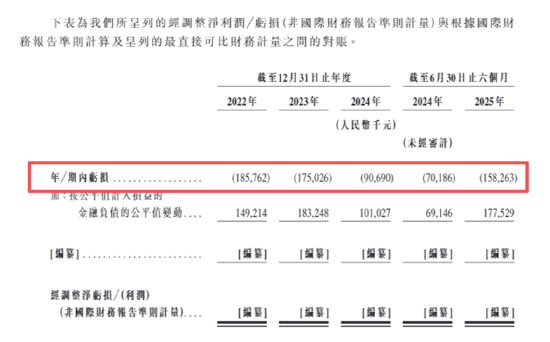
Core Viewpoint - Beijing Haixue Education Technology Co., Ltd. (referred to as "Haixue") has submitted its listing application to the Hong Kong Stock Exchange, but the company has faced significant financial losses and ongoing issues related to customer complaints and refund difficulties [1][7]. Financial Performance - Haixue reported losses of RMB 1.86 billion, RMB 1.75 billion, RMB 906.9 million, and RMB 1.58 billion for the years 2022 to 2024 and the first half of 2025, with the loss in the first half of 2025 exceeding both the same period last year and the total for the previous year [1][2]. - The company's revenue for the same periods was RMB 4.00 billion, RMB 4.72 billion, RMB 5.11 billion, and RMB 2.32 billion, showing a decline of 5.5% in the first half of 2025 compared to the previous year [2][5]. Business Model and Revenue Sources - Haixue primarily provides online vocational training services, with a significant portion of its revenue derived from construction-related vocational qualification courses, which accounted for 68.2%, 61.5%, 59.3%, and 59.8% of total revenue from 2022 to the first half of 2025 [4][5]. - The company has a high gross profit margin, with rates of 78.6%, 81.1%, 81.6%, and 85.8% for the same periods, but high marketing expenses have led to net losses [4][5]. Customer Complaints and Refund Issues - Haixue has been criticized for misleading advertising, inducing students to take loans for courses, and difficulties in obtaining refunds, with over 8,400 complaints filed on the Black Cat Complaints platform as of November 6, 2025 [1][7]. - The company's contract liabilities reached RMB 301 million by the first half of 2025, with a rising refund rate of 15.9%, indicating increasing customer dissatisfaction [12][7]. Employee Structure and Marketing Expenses - As of the first half of 2025, Haixue employed 1,258 full-time staff, with 80% (1,006 employees) dedicated to sales and marketing, reflecting a heavy reliance on marketing to drive revenue [4][5]. - Marketing expenses for the years 2022 to 2025 were RMB 2.85 billion, RMB 3.15 billion, RMB 3.30 billion, and RMB 1.47 billion, with corresponding sales expense ratios of 71.3%, 66.8%, 64.7%, and 63.4% [4].

中国飞鹤2025年上半年业绩急剧下挫 国家育儿补贴出台后被质疑变相涨价?渠道终端定价或较混乱
Xin Lang Zheng Quan· 2025-08-19 10:14
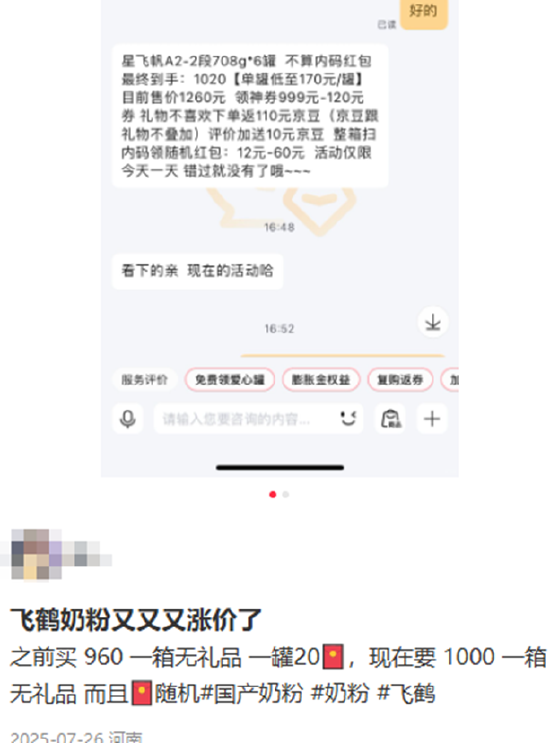
Core Viewpoint - China Feihe is facing significant challenges with a forecasted decline in both revenue and net profit for the first half of 2025, marking the worst mid-year performance in five years due to over-reliance on infant formula and ineffective diversification strategies [1][2] Financial Performance - Revenue for the first half of 2025 is expected to be between 9.1 billion and 9.3 billion yuan, representing a year-on-year decline of 7.87% to 9.86% [1][2] - Net profit is projected to be between 1 billion and 1.2 billion yuan, down 37.17% to 47.64% year-on-year, also the lowest mid-year performance in five years [1][2] Business Challenges - The primary reasons for the poor performance include: 1. Heavy reliance on infant formula sales, which are under pressure due to declining birth rates and increased competition [2][3] 2. Ongoing struggles with channel inventory management [2][3] 3. Rising marketing expenses that have not translated into proportional revenue growth [2][3] Market Dynamics - The infant formula segment remains the core business, contributing 91.9% of total revenue, but only saw a modest year-on-year growth of 6.6% in 2024 [3] - The demand for infant formula is significantly influenced by the declining birth rate in China, which has been a persistent issue despite government policies aimed at increasing birth rates [3] Pricing and Consumer Perception - Following the announcement of government subsidies for child-rearing, there have been consumer complaints regarding price increases for certain products, including those from China Feihe [5][6] - Specific examples of price increases include the Feihe Star Flying A2-2 formula, which saw a price rise from 960 yuan to 1020 yuan per box, reflecting a price increase of approximately 14% to 20% [5][6] Distribution and Pricing Strategy - China Feihe relies heavily on over 2,800 distributors, which account for 77.1% of its total revenue from dairy products, leading to potential issues with brand control and pricing consistency [7][8] - There is a noted lack of price transparency, with significant discrepancies in product pricing across different sales channels, indicating a need for improved pricing index systems to reduce information asymmetry [8]