婴幼儿配方奶粉

Search documents
H&H国际控股:25年业绩反弹,修复动力具备持续性-20260401
HUAXI Securities· 2026-04-01 04:35
Investment Rating - The report assigns a "Buy" rating to H&H International Holdings (1112.HK) [1] Core Insights - The company achieved a revenue of HKD 14.354 billion for FY25, representing a year-on-year increase of 10.0%, and a net profit of HKD 196 million, a significant increase of 465.2% year-on-year [2] - The adjusted comparable net profit for FY25 was HKD 664 million, up 22.7% year-on-year, with a proposed annual dividend of HKD 0.35 per share, accounting for approximately 30.0% of the adjusted comparable net profit [2] - The company is expected to maintain growth momentum in the nutritional supplement sector while stabilizing profit levels [10] Summary by Sections Revenue and Profitability - For FY25, the company's revenue from nutritional supplements, infant formula, and other income was HKD 9.289 billion, HKD 4.216 billion, and HKD 849 million, respectively, with year-on-year changes of +5.2%, +26.5%, and -4.5% [3] - The adjusted comparable net profit margin for FY25 was 4.6%, an increase of 0.5 percentage points year-on-year [7] Business Segments - The revenue breakdown by business segment for FY25 was as follows: ANC (HKD 6.946 billion, +3.7%), BNC (HKD 5.257 billion, +20.0%), and PNC (HKD 2.150 billion, +9.0%) [4] - The ANC segment's revenue from Swisse reached a milestone of HKD 1 billion, with double-digit growth in both the Chinese and Australian VHMS markets [4] Geographic Performance - Revenue from mainland China, North America, Australia/New Zealand, and other regions for FY25 was HKD 10.202 billion, HKD 1.748 billion, HKD 1.574 billion, and HKD 830 million, with year-on-year changes of +17.5%, +7.8%, -21.8%, and +7.8% respectively [5] - The mainland China market's contribution to total revenue increased from 66.6% to 71.1% [5] Supply Chain and Cost Management - The gross profit margin for FY25 was 62.4%, an increase of 1.8 percentage points year-on-year, driven by improvements in the gross margins of ANC and PNC segments [6] - The sales expense ratio for FY25 was 42.2%, reflecting a 0.9 percentage point increase year-on-year due to strategic investments in new markets [6] Financial Health - As of the end of FY25, the company had a cash balance of HKD 1.7 billion and reduced total liabilities by over HKD 600 million, with a net leverage ratio improved to 3.45 times [9] - The company plans to enhance its debt profile by increasing the proportion of low-cost RMB debt and reducing foreign exchange volatility [9] Future Outlook - Revenue forecasts for FY26 and FY27 have been adjusted to HKD 15.71 billion and HKD 17.19 billion, respectively, with an expected net profit of HKD 654 million and HKD 817 million [10] - The company aims to consolidate its position in the ANC segment in China, expand its market presence, and focus on high-margin nutritional products [9]
中国飞鹤(06186):力争稳健表现
citic securities· 2026-03-30 12:38
Investment Rating - The report does not explicitly provide an investment rating for the company [4]. Core Insights - The report indicates that China Feihe's sales and net profit for 2025 fell short of adjusted guidance, with sales at 18.1 billion and net profit at 1.9 billion, highlighting challenges in the infant formula market due to declining birth rates and increased competition [5][4]. - The company aims for steady performance in 2026, targeting sales to remain flat at 18 billion, but faces difficulties due to a shrinking market and stagnant market share [6][4]. - Key factors for future performance include new product launches and channel promotions, with a focus on the performance of new products [4][6]. Summary by Sections Sales and Profit Performance - In 2025, China Feihe recorded sales of 18.1 billion and net profit of 1.9 billion, which were below the adjusted guidance of 18.6 billion and 2 billion respectively [5]. - The second half of 2025 saw a 20% year-on-year decline in infant formula sales, with profit margins pressured by an unfavorable product mix and operational deleveraging [5]. 2026 Sales Goals - The sales target for 2026 is set at 18 billion, which is the same as the 2025 level, but achieving this is challenging due to expected market contraction [6]. - Management reported that Q1 2026 sales reached 26% of the annual target, indicating some progress [6]. Brand Promotion and Cost Structure - The company plans to align its cost structure with business needs while maintaining stable brand promotion investments, which are deemed necessary for supporting new product sales [7]. - There is a potential risk of profit margin pressure due to the required expenses for brand promotion amidst a shrinking market [7]. Catalysts for Future Growth - Key catalysts for recovery include a rebound in birth rates, easing competition in the infant formula market, successful new product launches, enhanced brand equity, and improved price control at the retail level [8]. - Attention should be paid to the inventory digestion process and potential adjustments in future inventory levels [8].
雀巢近期产品安全与商业纠纷频发 股价周内累计下跌1.72%
Xin Lang Cai Jing· 2026-03-13 17:12
Group 1 - Recent events surrounding Nestlé focus on product safety and commercial disputes, including a recall of infant formula in at least 50 countries due to potential contamination [1] - In March 2026, a Chinese distributor accused Nestlé of owing nearly 19 million yuan in rebate payments, leading to arbitration proceedings [1] - Nestlé sold its Blue Bottle Coffee global store assets for less than $400 million to optimize financial reports and focus on a light-asset strategy [1] Group 2 - Nestlé's stock price has been fluctuating downwards, closing at $102.13 on March 12, 2026, with a weekly decline of 1.72% [2] - The current price-to-earnings ratio (TTM) is 23.06, with a dividend yield of 2.32%, and a total market capitalization of approximately $262.7 billion [2] - Institutional ratings for Nestlé remain stable, with 50% of 22 institutions recommending "buy or hold" and a target price range of $88.25 to $132.23, indicating potential upside from the current stock price [3]

中国飞鹤的“蛋白答卷”: 冷友斌两会建议背后的乳业“隐形芯片”战事
Di Yi Cai Jing Zi Xun· 2026-03-06 08:25
Core Viewpoint - The proposals submitted by Leng Youbin, Chairman of China Feihe, during the 2026 National People's Congress focus on promoting high-quality protein intake and enhancing deep processing in the dairy industry, addressing critical issues in China's dairy and food sectors [1][2]. Industry Challenges - The Chinese dairy industry faces a structural imbalance, with a significant surplus of raw milk leading to industry losses in the billions, while public awareness of protein nutrition remains insufficient [2][3]. - The current product structure in China is heavily skewed towards liquid milk, with over 92.7% of production, while high-value products like cheese and butter account for less than 7.3% [3][4]. - The domestic dairy industry has experienced a cumulative income loss of 70 billion yuan from 2023 to 2025, with losses from fresh milk powder reaching 20 billion yuan [3][4]. Proposed Solutions - Leng Youbin suggests that the government should set a target for domestic production of key raw materials like whey protein at over 60% during the 14th Five-Year Plan, to ensure a self-sufficient supply chain [6][19]. - There is a call for increased support for deep processing enterprises in the dairy sector through tax incentives, talent development, and regulatory support [6][19]. Company Initiatives - China Feihe has been pioneering in the dairy industry for 20 years, establishing a complete supply chain from farming to production, with 100% self-controlled milk sources [7][9]. - The company has developed advanced protein deep processing technologies, achieving 100% self-sufficiency in 11 key raw materials by 2025 [9][10]. - Feihe has launched a fresh raw material traceability system, enhancing supply chain transparency and efficiency [11][12]. Nutritional Focus - The emphasis on protein intake is critical for public health, especially in the context of an aging population, with 45% of adults and nearly 90% of the elderly reportedly consuming insufficient protein [17][18]. - The global market for casein is projected to reach $49.8 billion by 2030, highlighting the growing demand for protein supplements [15][18]. Strategic Importance - The proposals reflect a broader strategy to elevate the quality of protein supply in China, aligning with national health goals and addressing the urgent need for high-quality protein sources [14][20]. - The focus on domestic production of key protein ingredients is essential for ensuring food security and reducing reliance on imports, particularly in light of geopolitical uncertainties [18][19].


中国飞鹤的“蛋白答卷”: 冷友斌两会建议背后的乳业“隐形芯片”战事
第一财经· 2026-03-06 08:19
Core Viewpoint - The article emphasizes the urgent need for structural adjustment in China's dairy industry, highlighting the imbalance between surplus raw milk and insufficient protein nutrition awareness among the population. The proposals by Cold Youbin, Chairman of China Feihe, aim to promote high-quality protein intake and enhance deep processing in the dairy sector, which are crucial for both industry development and national health strategy [1][2]. Industry Challenges - The current structure of China's dairy industry is heavily skewed towards primary products, with liquid milk accounting for over 92.7% of production, while high-value products like cheese and butter represent less than 7.3%. This indicates a pressing need for upgrading the industry structure and extending the value chain [4][5]. - The dairy industry faces significant financial losses, with cumulative income losses in the dairy farming sector reaching 70 billion yuan from 2023 to 2025, and losses from fresh milk powder production amounting to 20 billion yuan [5]. Protein Supply and Demand - There is a critical gap in protein intake among the Chinese population, with 45% of adults consuming insufficient protein. This issue is exacerbated among the elderly, where protein deficiency can lead to severe health problems [18][20]. - The self-sufficiency rate of protein sources in China has declined from 96% in 2000 to 69% in 2021, indicating a growing reliance on imports, particularly for dairy proteins [19]. Strategic Recommendations - Cold Youbin suggests that the government should set a target for domestic production of key dairy ingredients, such as whey protein, to reach over 60% self-sufficiency during the 14th Five-Year Plan period. This would enhance the stability of the dairy supply chain [5][20]. - The article advocates for increased support for deep processing enterprises in the dairy sector through tax incentives, talent development, and regulatory support to foster innovation and industry upgrades [5][20]. Company Initiatives - China Feihe has established a comprehensive supply chain, owning 13 farms and 115,000 dairy cows, achieving 100% self-controlled milk sources. The company has also developed advanced processing technologies for dairy proteins, significantly reducing reliance on imports [7][8]. - The company has launched a new traceability system for its products, allowing consumers to track the freshness and quality of core ingredients, thereby enhancing transparency in the supply chain [10][12]. Future Outlook - The article concludes that the future of China's dairy industry lies in moving from simple scale expansion to focusing on high-value protein processing. China Feihe's efforts in this direction are seen as a model for the industry, contributing to national health and safety strategies [21].

雀巢:食品安全管控不当,渠道乱象凸显,换帅变革何时生效? | ESG案例
Xin Lang Cai Jing· 2026-03-03 04:56
Core Viewpoint - Nestlé has faced significant challenges due to a recent baby formula recall linked to potential contamination, raising concerns about its product safety and internal management practices. The company is undergoing a transformation amid declining sales and management instability [3][4][17]. Group 1: Recall Incident - Nestlé completed the recall of baby formula in mainland China, confirming no detection of the bacteria in the recalled products [3]. - The recall was initiated after a supplier's ingredient was suspected of contamination, with the bacteria being difficult to eliminate and potentially causing severe digestive issues [3]. - The recall process was criticized for its delayed response, with allegations of information concealment leading to legal action against the company [4]. Group 2: Management Issues - Nestlé has experienced frequent changes in its management team, including the dismissal of its CEO due to a personal relationship with a subordinate, raising concerns about corporate governance [13][14]. - The company has faced pressure from investors regarding its leadership stability, with the chairman resigning amid dissatisfaction with management performance [14][16]. Group 3: Financial Performance - In 2025, Nestlé reported total sales of CHF 89.49 billion (approximately RMB 795.8 billion), a 2% decline year-on-year, with net profit dropping by 17% [17]. - The Greater China region showed a significant downturn, with sales of CHF 4.876 billion (approximately RMB 43.4 billion) and an organic growth rate of -6.4% [17]. Group 4: Strategic Adjustments - Nestlé is focusing on four core business segments: coffee, pet care, nutrition, and food & snacks, while planning to divest non-core assets [20]. - The company is undergoing a workforce reduction of approximately 16,000 positions, aiming to save CHF 3 billion (about USD 3.77 billion) by the end of 2027 [18][20]. - In response to market pressures, Nestlé is adjusting its product offerings and management strategies, including the introduction of new coffee products to compete with emerging local brands [20][21].
雀巢销售额下滑2%至7285.3亿元,提价策略遭遇全球挑战
Sou Hu Cai Jing· 2026-02-22 16:11
Core Viewpoint - Nestlé Group is facing significant challenges in its pricing strategy amid global economic fluctuations and inflation pressures, leading to a slight decline in annual sales and net profit [2][5]. Financial Performance - In 2026, Nestlé reported annual sales of 89.49 billion Swiss francs (approximately 728.53 billion RMB), a decrease of 2% compared to the previous year [2]. - The company's net profit fell by 17% to 9 billion Swiss francs, marking a rare decline [5]. Pricing Strategy and Market Response - Nestlé's aggressive pricing strategy, implemented in response to a doubling of coffee bean and cocoa costs, contributed 2.8% to annual sales growth, while actual sales volume growth was only 0.8% [2]. - Price increases in the candy and coffee segments reached 10.6% and 6.0% respectively, but consumer sensitivity to these price hikes has led to a shift towards private label brands, resulting in customer loss [3]. Challenges in Key Markets - In the Greater China region, Nestlé faced a significant organic growth rate of -6.4%, with an internal growth rate of -4.5% and a pricing contribution rate of -1.9%, which heavily impacted the overall performance of the group [3]. - The company experienced non-operating losses due to a recall of infant formula linked to contamination, leading to an inventory write-down of approximately 1.1 billion Swiss francs (about 895 million RMB) and potential sales losses of up to 1.2 billion Swiss francs (about 977 million RMB) in 2026 [3]. Strategic Adjustments - Nestlé's CFO indicated that the company is adjusting its business model in China from a distribution-driven approach to one focused on consumer demand, which is expected to gradually alleviate growth impacts by the second half of 2026 [4]. - The company has identified four core pillars for future growth: coffee, pet care, nutrition, and food & snacks, with the first three accounting for 70% of total sales [5]. Organizational Changes - Nestlé is undergoing a restructuring process, including the integration of its nutrition and health science units and the potential divestiture of its remaining ice cream business [5]. - The company plans to reduce its workforce by approximately 16,000 positions, representing 6% of its total employees, as part of its efforts to streamline operations [6].

雀巢集团的转型困境与战略调整
Jing Ji Guan Cha Wang· 2026-02-22 12:39
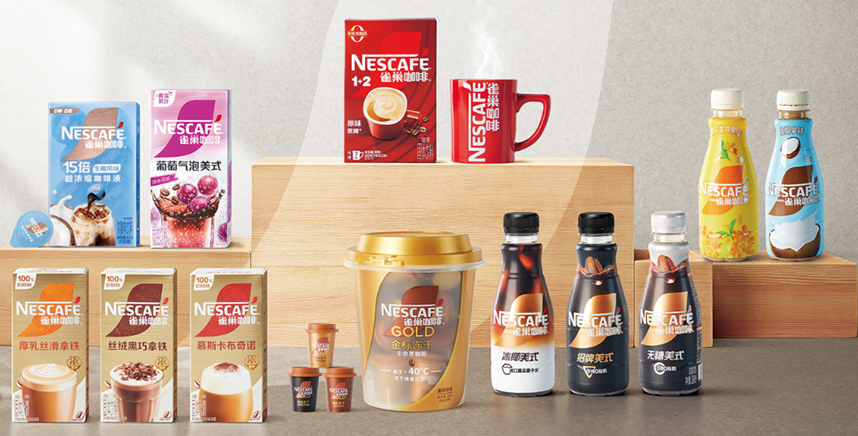
Core Viewpoint - Nestlé Group is undergoing a significant strategic shift due to inflationary pressures and fluctuating market demand, as its long-standing price increase strategy appears to be reaching its limits [1] Financial Performance - In 2026, Nestlé reported annual sales of 89.49 billion Swiss francs (approximately 728.53 billion RMB), a year-on-year decline of 2% [1] - The company's aggressive price hikes in response to rising costs of coffee beans and cocoa led to a 2.8% increase in annual sales, but actual sales volume growth was only 0.8% [1] Market Challenges - In the Chinese market, Nestlé faces significant challenges, including a decrease in foot traffic in traditional supermarkets and increased price competition among distributors [2] - The organic growth rate in the Greater China region fell by 6.4% in 2025, with an internal growth rate decline of 4.5% and a pricing contribution rate of -1.9% [2] Strategic Adjustments - Nestlé is shifting its business model in China from reliance on distribution channels to a consumer demand-driven approach, focusing on reducing channel inventory and enhancing marketing and innovation capabilities [3] - The company has identified four core areas for future development: coffee, pet care, nutrition, and food & snacks, which together account for 70% of total sales [3] Organizational Changes - Nestlé plans to cut approximately 16,000 jobs, equivalent to 6% of its total workforce, including around 12,000 white-collar positions [4] - The company is in advanced negotiations to sell its remaining ice cream business to Froneri, the world's second-largest ice cream manufacturer [3] Product Innovation - To address market challenges, Nestlé has appointed a new head of coffee business and aims to introduce innovative products like cold brew concentrated coffee to enhance its presence in the home consumption market [5]
“涨价”策略失灵叠加“黑天鹅”事件,雀巢忙“瘦身”自救
Jing Ji Guan Cha Wang· 2026-02-22 12:03
Core Insights - Nestlé is facing significant challenges due to inflationary pressures and demand fluctuations, leading to a peak in its price increase strategy that is now failing in global markets [1] - The company reported a 2% decline in sales for 2025, with total sales reaching 89.49 billion Swiss francs (approximately 728.53 billion RMB) [1] - The aggressive pricing strategy contributed 2.8% to annual sales growth, but the actual internal growth rate was only 0.8%, indicating reliance on pricing rather than volume [1] Group 1: Financial Performance - In 2025, Nestlé's net profit fell by 17% to 9 billion Swiss francs, marking a rare and significant decline [3] - The Greater China region experienced an organic growth rate of -6.4%, with an internal growth rate of -4.5% and a pricing contribution rate of -1.9%, significantly dragging down overall performance [2] Group 2: Strategic Adjustments - The company is shifting its business model from distribution-driven to consumer demand-driven, focusing on reducing channel inventory and rebuilding marketing and innovation capabilities [3] - Nestlé has identified four core pillars for future growth: coffee, pet care, nutrition, and food & snacks, which together account for 70% of its sales [3] Group 3: Operational Challenges - A recall of infant formula due to contamination resulted in a non-operating loss of approximately 110 million Swiss francs (about 895 million RMB) and potential sales losses of up to 1.2 billion Swiss francs (about 9.77 billion RMB) in 2026 [2] - The company is negotiating the sale of its remaining ice cream business, which is a significant strategic move following the divestiture of its water business [4] Group 4: Market Competition - Nestlé's coffee business is facing intense competition from brands like Luckin Coffee and Kudi, which are impacting its supply chain costs [4] - The company is attempting to innovate within the coffee segment by introducing new products to adapt to changing consumer preferences [4] Group 5: Workforce Optimization - Nestlé plans to reduce approximately 16,000 jobs, equivalent to 6% of its total workforce, as part of a broader effort to optimize its organizational structure [5] - The company is under pressure to adjust its human resources in response to performance challenges across various product lines [5]
达能2025年业绩增长4.5%,中国市场表现强劲
Jing Ji Guan Cha Wang· 2026-02-20 16:48
Core Insights - The core viewpoint of the article highlights Danone's financial performance for the year 2025, focusing on overall performance, regional market dynamics, and future growth guidance [1]. Financial Performance - In 2025, Danone's global sales revenue increased by 4.5%, exceeding 220 billion RMB. The company anticipates a same-store sales growth of 3% to 5% for the full year of 2026, with recurring operating profit growth expected to outpace sales revenue growth [2]. Business Development - The region is identified as a key driver of Danone's performance growth. In the fourth quarter, sales revenue grew by 10.4%, primarily driven by volume and product mix, which contributed to a growth of 10.6%. For the full year, the specialized nutrition business (including infant formula and medical nutrition) generated revenue of €2.768 billion, reflecting a year-on-year increase of 13.2%. The bottled water and beverage segment reported revenue of €777 million, up 6.1% year-on-year [3]. Recent Events - The report mentions the impact of a recent infant formula recall, stating that the financial impact is assessed to be "not significant," with an expected effect on net sales of approximately 0.5% to 1% in the first quarter of 2026. The company emphasizes that products sold through official channels in China were unaffected and is focused on rebuilding trust. Additionally, Danone has prepared an unprecedented product renewal plan for the 2026 sales season in the Chinese market, aiming to minimize inventory levels in preparation for the launch of new products [4].