
蓝绿交融

Search documents
生态为脉,功能为核:首钢东南区构建“蓝绿交融”新型公共空间!
Bei Jing Ri Bao Ke Hu Duan· 2026-02-04 08:38
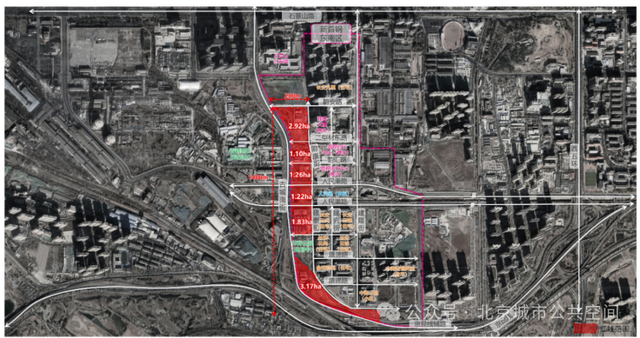
Core Insights - The project aims to enhance urban public spaces in the Shougang Southeast District, contributing to the city's soft power and residents' happiness through diverse functional areas and multi-scenario environments [1][3]. Group 1: Project Overview - The Shougang Southeast District public space renovation project has been included in the "Beijing Urban Public Space Renovation and Enhancement Demonstration Project," fully supported by government fixed asset investment [1]. - The project covers an area of approximately 11.36 hectares, divided into six plots by municipal roads, with a design philosophy centered on "small blocks and dense road networks" [1][3]. - The renovation will integrate six thematic functional spaces, create a north-south walking path, and implement a "dual-use" resilient rainwater system, aiming to develop an innovative public space that is friendly to all ages and enhances ecological quality [1][3]. Group 2: Community Needs and Research - A comprehensive demand survey was conducted to identify the needs of local residents and office workers, revealing significant issues of "space inactivity" and "functional deficiency" in the area [6]. - The survey indicated a strong demand for sports, leisure, social, and cultural facilities, highlighting a gap between existing space functionality and community expectations [6]. Group 3: Design and Features - The project will feature six thematic spaces: shared squares, multifunctional recreation areas, cultural and educational spaces, children's play areas, and comprehensive sports facilities, catering to diverse community needs [11]. - A 1,700-meter-long, 3-meter-wide tree-lined walking path will connect the six thematic plots, enhancing accessibility and creating a pleasant walking experience [18]. - The design incorporates a "dual-use" rainwater system to manage flood risks, ensuring the space can quickly recover its functionality after heavy rainfall [20]. Group 4: Ecological and Aesthetic Enhancements - The project aims to create a garden city aesthetic by integrating ecological resources, planting approximately 2,000 trees, and covering over 66,000 square meters with ground cover and flowers [24]. - Specific features include a 2-kilometer-long "Li Hong Yuan Bao Feng" corridor for vibrant autumn scenery and a "Zi Wan Flower Slope" for ecological resilience [24][26]. Group 5: Long-term Sustainability - The project will provide diverse gathering spaces, integrating culture, art, food, sports, and technology to enhance urban living experiences [27]. - It aims to support regular cultural activities and themed markets, ensuring ongoing vitality and sustainable management of the public space [27][29].

徐州领冲后,长三角“腰部五虎”下一个万亿是谁?
Xin Hua Ri Bao· 2026-02-02 14:32
Group 1 - The core viewpoint of the articles highlights the ambition of several cities in the Yangtze River Delta to achieve a GDP of over 1 trillion yuan during the 14th Five-Year Plan period, with specific targets set for 2025 and 2027 [1][2][3][4][5][7]. - Xu Zhou is projected to reach a GDP of 995.72 billion yuan by 2025, making it the first city in the Yangtze River Delta to break the trillion yuan mark during the 14th Five-Year Plan [1]. - Shao Xing aims for a GDP of approximately 900 billion yuan by 2025 and plans to exceed 1 trillion yuan by 2027, focusing on industrial transformation and new economic drivers [2]. - Yang Zhou's GDP is expected to surpass 800 billion yuan by 2025, with a strong emphasis on high-quality development through its "three famous cities" initiative [3]. - Yan Cheng anticipates a GDP of over 800 billion yuan by 2025, leveraging its coastal resources to enhance its marine economy [4]. - Jia Xing's GDP is projected at 785.11 billion yuan for 2025, with a goal of becoming a significant center city in the Yangtze River Delta [5]. - Tai Zhou aims to exceed 1 trillion yuan by the end of the 14th Five-Year Plan, focusing on high-quality development and champion industries [7]. Group 2 - The articles emphasize the importance of regional collaboration and differentiation in industrial development among these cities, suggesting that they should leverage their unique strengths to achieve economic growth [8]. - Recommendations include focusing on specialized industrial clusters, enhancing resource allocation efficiency through regional cooperation, and improving the business environment to attract high-end resources [9].