
万亿之城

Search documents
万亿之城增至29座,中国经济“后劲十足”
Yang Shi Wang· 2026-02-07 09:29
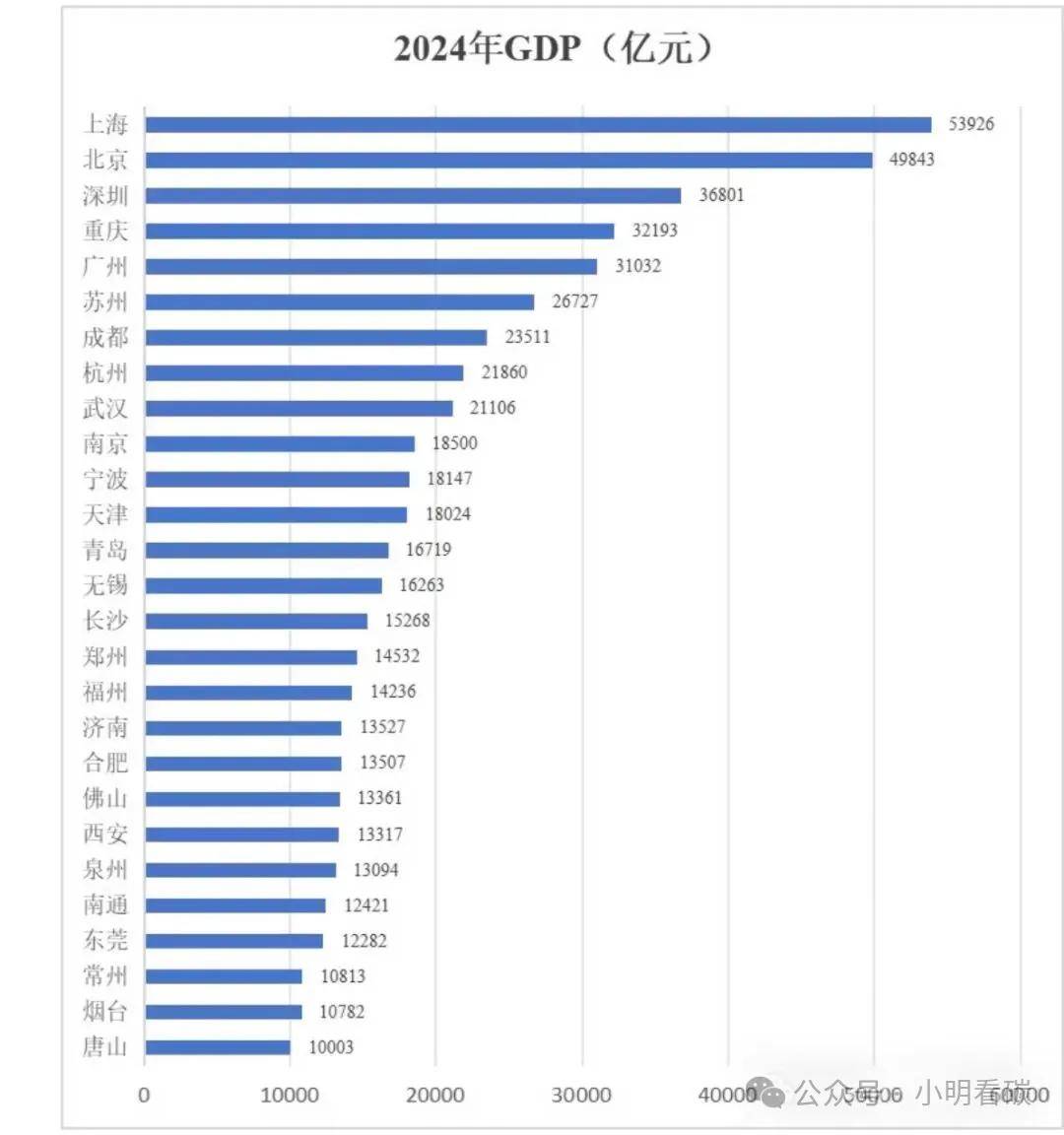
Core Insights - China's economy has shown resilience, surpassing 140 trillion yuan, with the number of cities with a GDP exceeding 1 trillion yuan increasing to 29, including Wenzhou and Dalian [1] - Among these, 10 are ordinary prefecture-level cities, indicating strong economic potential and growth in regions outside major municipalities and provincial capitals [2] Group 1: Ordinary Prefecture-Level Cities - Suzhou is the only ordinary prefecture-level city in the top ten GDP cities, projected to reach nearly 2.8 trillion yuan by 2025, supported by a robust industrial base with 16,000 industrial enterprises [2] - Other ordinary cities like Wuxi, Quanzhou, and Foshan have also crossed the 1 trillion yuan GDP mark, each with unique economic strengths, such as Wuxi's foreign trade and manufacturing capabilities [2] - The distribution of these cities is concentrated in eastern China, with Jiangsu having the most at four, followed by Guangdong, Shandong, Zhejiang, and Fujian [2] Group 2: Upcoming Cities - Several ordinary prefecture-level cities are on track to join the trillion-yuan club, including Xuzhou, Shaoxing, and Weifang, with Xuzhou projected to be the closest to achieving this milestone by 2026 [4][5] - Jiangsu's ordinary cities are expected to increase to seven, indicating a significant concentration of economic power in the province [5] Group 3: Provincial Capitals Approaching 1 Trillion Yuan - Several provincial capitals, including Shenyang and Shijiazhuang, are also nearing the 1 trillion yuan GDP mark, with Shenyang projected to reach 910 billion yuan by 2025 [7] - Kunming and Nanchang are tasked with achieving this goal for their respective provinces, with specific economic growth plans in place [7][8] Group 4: Economic Growth Trends - Among the 29 trillion-yuan cities, 22 have growth rates exceeding the national average of 5.0%, with Tangshan leading at 6.2%, showcasing regional economic resilience [8] - The ongoing development plans aim to enhance regional coordination and economic stability, contributing to China's high-quality growth trajectory [8]
“万亿之城”尘埃落定,“不急”的徐州未晋级
Sou Hu Cai Jing· 2026-02-04 03:26
Core Viewpoint - The economic performance of Xuzhou is under scrutiny as it aims to achieve a GDP of 995.72 billion yuan by 2025, reflecting a growth of 5.8% from the previous year, positioning it as a potential candidate for becoming a "trillion-yuan city" [1][3]. Economic Performance - Xuzhou's GDP target for 2025 is set at 995.72 billion yuan, with a growth rate of 5.8% year-on-year [1]. - The city is among the top candidates for the "trillion-yuan city" status, alongside Wenzhou and Dalian, which have GDPs of 971.88 billion yuan and 953.71 billion yuan respectively [1][3]. Regional Significance - If Xuzhou achieves this status, it will be the first "trillion-yuan city" in the Su Bei region and the Huaihai Economic Zone, significantly impacting regional economic development [3]. - The potential upgrade of Xuzhou would contribute to Jiangsu's sixth "trillion-yuan city," enhancing its competitiveness against Guangdong in the race for the title of "China's economic powerhouse" [4]. National Context - The total number of "trillion-yuan cities" in China could reach 30 if Xuzhou qualifies, reflecting a national trend of economic growth and urban development [5]. - The anticipation surrounding Xuzhou's potential upgrade highlights a cultural significance associated with reaching "round numbers" in economic milestones [5]. Development Overview - Xuzhou's recent development is notable, with strategic advantages in transportation and a rich historical and cultural background that supports its tourism economy [7]. - The city is focusing on cultivating "343" innovative industrial clusters, aiming to enhance sectors such as engineering machinery, green low-carbon energy, and digital economy, with expectations of reaching a total scale of 850 billion yuan by 2025 [7].

徐州领冲后,长三角“腰部五虎”下一个万亿是谁?
Xin Hua Ri Bao· 2026-02-02 14:32
Group 1 - The core viewpoint of the articles highlights the ambition of several cities in the Yangtze River Delta to achieve a GDP of over 1 trillion yuan during the 14th Five-Year Plan period, with specific targets set for 2025 and 2027 [1][2][3][4][5][7]. - Xu Zhou is projected to reach a GDP of 995.72 billion yuan by 2025, making it the first city in the Yangtze River Delta to break the trillion yuan mark during the 14th Five-Year Plan [1]. - Shao Xing aims for a GDP of approximately 900 billion yuan by 2025 and plans to exceed 1 trillion yuan by 2027, focusing on industrial transformation and new economic drivers [2]. - Yang Zhou's GDP is expected to surpass 800 billion yuan by 2025, with a strong emphasis on high-quality development through its "three famous cities" initiative [3]. - Yan Cheng anticipates a GDP of over 800 billion yuan by 2025, leveraging its coastal resources to enhance its marine economy [4]. - Jia Xing's GDP is projected at 785.11 billion yuan for 2025, with a goal of becoming a significant center city in the Yangtze River Delta [5]. - Tai Zhou aims to exceed 1 trillion yuan by the end of the 14th Five-Year Plan, focusing on high-quality development and champion industries [7]. Group 2 - The articles emphasize the importance of regional collaboration and differentiation in industrial development among these cities, suggesting that they should leverage their unique strengths to achieve economic growth [8]. - Recommendations include focusing on specialized industrial clusters, enhancing resource allocation efficiency through regional cooperation, and improving the business environment to attract high-end resources [9].
城记 | 长三角“万亿城市俱乐部”扩容 苏浙多城在路上
Xin Hua Cai Jing· 2026-01-28 15:37
Core Insights - The expansion of the "trillion-yuan club" is a focal point as 27 cities in China have surpassed a GDP of 1 trillion yuan by 2024, with Wenzhou and Dalian recently joining this group [1] - The Yangtze River Delta region leads with 10 trillion-yuan cities, with cities like Yangzhou and Shaoxing preparing to join the ranks [1] Group 1: Economic Performance and Goals - Yangzhou aims to achieve a GDP of over 8,000 billion yuan by 2025, with a focus on industrial output exceeding 1 trillion yuan [2] - Shaoxing projects a GDP growth of approximately 6.5% by 2025, targeting a GDP of around 1.25 trillion yuan by 2030 [3] - Salt City plans to surpass 8,000 billion yuan in GDP by 2025, with an average growth rate of about 5.5% towards a 1 trillion yuan goal by 2030 [2] Group 2: Development Strategies - Yangzhou's strategy includes a focus on advanced manufacturing and emerging industries, aiming for six major industrial clusters to exceed 100 billion yuan by the end of the 14th Five-Year Plan [6][7] - Salt City emphasizes green development, positioning itself as a leader in low-carbon initiatives, with significant advancements in the photovoltaic and new energy sectors [7] - Jiaxing targets a GDP of 7,851.06 billion yuan by 2025, with plans to achieve a "county-level trillion" goal by 2030 [4] Group 3: Competitive Landscape - Cities like Jinhua and Taizhou are also in the race, with Jinhua aiming for a GDP of over 1 trillion yuan by 2030, focusing on high-level inland open hub development [10] - Taizhou's GDP is projected to reach 7,300 billion yuan by 2025, with a focus on quality growth rather than explicitly stating a trillion-yuan target [5] - The competition among cities in the 7,000 billion yuan range is intensifying, with each city developing unique strategies to enhance their economic capabilities [4][5]
江苏第6座万亿之城要来了
21世纪经济报道· 2026-01-28 04:33
Core Viewpoint - The article emphasizes that the competition for "trillion-yuan cities" is not solely about reaching the GDP milestone, but rather about sustainable and quality development, as highlighted by Xu Zhou's government officials [1][2][5]. Group 1: Economic Growth and GDP Projections - Xu Zhou's GDP is projected to reach approximately 9,537.12 billion yuan in 2024, making it a strong candidate for becoming a "trillion-yuan city" by 2025, with an expected growth rate of around 5.8% [1][5]. - In the first half of 2025, Xu Zhou's GDP reached 4,509.3 billion yuan, showing a year-on-year growth of 6.2%, and by the third quarter, it increased to 7,298.12 billion yuan, maintaining a growth rate of 6.0% [5]. Group 2: Industrial Transformation and Innovation - Xu Zhou is focusing on transforming its industrial base, moving from a coal-dependent economy to a diversified one, with an emphasis on advanced manufacturing, energy, and regional hub functions [5][7]. - The "343" innovation industrial cluster, which includes engineering machinery, green low-carbon energy, and new materials, is expected to reach a scale of 7,800 billion yuan by 2024, significantly contributing to the industrial economy [6]. - The engineering machinery cluster, recognized as Xu Zhou's primary industry, has achieved significant milestones, including being the first in domestic sales for 17 types of main products and maintaining over 90% self-sufficiency in the entire industry chain [6]. Group 3: Future Development and Strategic Positioning - Xu Zhou is in a phase of deepening the transition from old to new growth drivers, with traditional industries undergoing smart upgrades and new industrial clusters beginning to take shape [7][9]. - The city aims to leverage its regional central city status to enhance its development potential, integrating into the Yangtze River Delta's development strategy and collaborating with neighboring provinces for high-quality growth [9][10]. - Future development will depend on Xu Zhou's ability to achieve inter-provincial collaboration and fully utilize its geographical advantages to become a key hub for the Yangtze River Delta and beyond [10].
经济日报金观平:“万亿之城”扩大的不只是规模
Jing Ji Ri Bao· 2026-01-27 01:38
Core Insights - The expansion of "trillion GDP" cities in China reflects the optimization of regional development patterns and the elevation of urban capabilities, with the total number of such cities increasing to 29 [1] - Wenzhou and Dalian have recently joined the ranks of "trillion GDP" cities, with Wenzhou achieving a GDP of 10,213.9 billion and Dalian reaching 10,002.1 billion, marking significant milestones for their respective regions [1] - The emergence of these cities illustrates the effectiveness of China's coordinated regional development, showcasing diverse paths to high-quality growth [1] Economic Development - The rise of "trillion GDP" cities is not just a numerical milestone but also a ticket to higher-level competition, emphasizing the need for cities to enhance their core competitiveness beyond mere economic scale [2] - Future urban competition will focus on multi-dimensional development, including technological innovation, high-end resource allocation, cultural soft power, and livability [2] - Major cities like Beijing and Shanghai aim for global influence, while others like Chengdu and Wuhan target GDPs of 30 trillion, indicating a shift in competitive benchmarks [2] Regional Collaboration - Urban competition is transitioning from individual city races to regional collaboration, with metropolitan areas becoming key spaces for development [3] - Successful cities will be those that can integrate regional resources and play critical roles within urban clusters, moving from a "siphoning" model to one that radiates benefits to larger areas [3] - The current phase of urban development in China is crucial, as cities must adopt a mindset of "beyond GDP" to become exemplars of high-quality growth and regional coordination [3]
“万亿之城”扩大的不只是规模
Sou Hu Cai Jing· 2026-01-26 23:19
Group 1 - The core viewpoint of the articles highlights the expansion of "trillion GDP" cities in China, with Wenzhou and Dalian recently achieving this milestone, bringing the total to 29 cities [1][2] - Wenzhou's GDP reached 10,213.9 billion yuan, making it the third "trillion GDP" city in Zhejiang province, while Dalian's GDP hit 10,002.1 billion yuan, marking it as the first in Northeast China [1] - The growth of "trillion GDP" cities reflects the optimization of regional development patterns and the elevation of urban capabilities, reinforcing the foundation for high-quality economic development in China [1] Group 2 - The expansion of "trillion GDP" cities is reshaping urban competition dynamics, transitioning from simple economic scale comparisons to a comprehensive enhancement of urban core competitiveness [2] - Future urban competition will focus on diverse development dimensions, including technological innovation, high-end resource allocation, cultural soft power, and livability, with innovation being the primary driving force for high-quality urban development [2] - Dalian's recent initiatives to optimize its business environment signal a commitment to creating a market-oriented, rule-of-law, and internationalized top-tier business environment, attracting global capital, technology, and talent [2] Group 3 - Urban competition is shifting from individual city races to regional collaboration, with metropolitan areas and city clusters becoming the main spatial forms for development, showcasing the effectiveness of collaborative growth [3] - Successful cities in the future will be those that can integrate regional resources and play key roles within urban agglomerations, moving from a "siphoning" model to one that radiates and drives development [3] - The current phase of urban development in China is transitioning from "quantitative growth" to "qualitative improvement," with all "trillion GDP" cities needing to adopt a mindset of "beyond GDP" to become exemplars of high-quality development and regional coordination [3]
2026年扬州市级重大项目清单出炉:以实干绘就“十五五”高质量发展新图景
Yang Zi Wan Bao Wang· 2026-01-26 09:45
Group 1 - The core focus of the news is the discussion around the "2025 Major Project List" in Yangzhou, which includes 610 projects with a total planned investment of 150.6 billion yuan, aimed at achieving high-quality economic growth and the goal of becoming a "trillion-yuan city" [2] - The project list emphasizes a "stable quantity and high quality" approach, with 98.5% of the projects belonging to the "613" industrial system, focusing on breakthroughs in high-end equipment, new materials, and new-generation information technology [2] - A total of 391 advanced manufacturing projects are included, accounting for 64% of the list, while 117 modern service projects aim to enhance the service industry, promoting a "9+6" service development system [2] Group 2 - The news highlights the simultaneous acceleration of public welfare and urban construction, with ongoing expansions in educational and medical resources, including new school and hospital projects expected to be completed by 2026 [3] - Infrastructure projects are also advancing, with significant investments in transportation networks, including the expansion of highways and airports, expected to enhance connectivity by 2027 [3] - The local government emphasizes the importance of these major projects as both a "ballast" for the 14th Five-Year Plan and a "driving force" for achieving the trillion-yuan city goal, with plans for close monitoring and support for project implementation [3]
“万亿之城”扩容,跃升的不只是数字
Sou Hu Cai Jing· 2026-01-25 02:04
Group 1 - The core viewpoint of the articles highlights the robust economic performance of various regions in China, showcasing significant growth and development as reflected in their GDP figures [1][2] - Beijing's GDP has surpassed 5 trillion yuan, making it the second city in China to achieve this milestone after Shanghai, which leads with a GDP of over 5.6 trillion yuan [1] - Shandong province has reached a GDP of 10 trillion yuan for the first time, becoming the third province in China to do so, following Guangdong and Jiangsu, and the first in Northern China [1] Group 2 - The emergence of new "trillion-yuan cities" such as Wenzhou and Dalian has expanded the total number of such cities in China to 29, indicating a more balanced urban economic landscape across the country [1] - The emphasis on the role of major economic provinces in driving regional and national development is underscored by President Xi Jinping's remarks, highlighting the importance of "trillion-yuan cities" in supporting economic growth [1]
主播说联播丨“万亿之城”扩容,跃升的不只是数字
Yang Shi Xin Wen Ke Hu Duan· 2026-01-25 01:32
Group 1 - The core viewpoint of the articles highlights the robust economic performance of various regions in China, showcasing significant growth and development as reflected in their GDP figures for 2025 [1][2] Group 2 - Beijing's GDP has surpassed 5 trillion yuan, making it the second city in China to achieve this milestone after Shanghai, which has a GDP of over 5.6 trillion yuan, maintaining its position as the top city in the country [1] - Shandong province's GDP has reached 10 trillion yuan for the first time, becoming the third province in China to achieve this, following Guangdong and Jiangsu, and the first in northern China [1] - The emergence of new "trillion-yuan cities" such as Wenzhou and Dalian has expanded the total number of such cities in China to 29, indicating a more balanced urban economic landscape across the country [1] - The emphasis on the role of major economic provinces in driving regional and national development is underscored by President Xi Jinping's remarks on enhancing the radiating power of these provinces [1]