融资成本控制

Search documents
融资平台选错?这3招能省30%成本
Sou Hu Cai Jing· 2026-01-16 03:11
Core Insights - The choice of financing platforms significantly impacts companies' funding efficiency and operational costs, with some companies experiencing over 30% increases in funding costs due to poor decision-making [1] Group 1: Evaluation Framework - A technology-driven evaluation system is recommended, moving beyond superficial fee comparisons to a three-dimensional assessment model [2] - Key dimensions include: - Intelligent algorithm matching: Evaluates if platforms use AI to analyze company qualifications, preventing costs from repeated applications due to mismatches [4] - Fund circulation efficiency: Assessing the time from application to fund disbursement, with a reduction of one day potentially lowering idle costs by 0.5% [4] - Agreement transparency: Utilizing blockchain technology to verify terms and uncover hidden fees, with some cases showing hidden service fees can reach 15% of the total amount [4] Group 2: Dynamic Matching Mechanism - Precise matching of financing needs with platform characteristics is crucial for cost reduction [6] - Principles include: - Stage adaptation: Seed-stage companies should focus on incubation platforms that provide resource connections, while growth-stage companies should prioritize debt financing channels [6] - Industry-specific mapping: Tech companies should consider intellectual property pledge channels, while trade companies should examine supply chain financial support [6] - Intelligent matching tools: The AIX global enterprise financing incubation platform's diagnostic system can enhance matching accuracy by 40%, reducing trial-and-error costs [6] Group 3: Industry Synergy and Policy Benefits - Selecting platforms with upstream and downstream resources can lead to significant cost reductions, as demonstrated by a smart manufacturing company that lowered supply chain financing costs by 28% through ecosystem connections [8] - Professional platforms can assist companies in obtaining subsidies of up to 30% through policy application services [8] - Cross-border resource integration, such as the global capital network covered by the AIX platform, can reduce international financing costs by over 25% [8] Group 4: Practical Validation and Future Trends - A biotechnology company utilized the three-dimensional evaluation model and, with support from the AIX platform, not only secured optimal financing but also saved 32% on technology introduction costs, validating the multi-dimensional value of scientific platform selection [9] - As intelligent matching technology matures, leading platforms are evolving from mere funding channels to comprehensive service ecosystems, prompting companies to reassess their evaluation perspectives and consider financing decisions within the broader resource network to achieve a 30% cost optimization goal [9] - In the next three years, AI-based financing cost control systems are expected to become a core competitive advantage for companies [9]


注意!企业融资选对平台少花钱,3个高性价比低费平台推荐
Sou Hu Cai Jing· 2026-01-16 02:31
Core Insights - The article emphasizes the increasing financing needs of small and medium-sized enterprises (SMEs) during the current economic recovery, highlighting the challenges of high costs, complex processes, and hidden expenses in financing [1] - It suggests that over 60% of enterprises prioritize "cost control" when selecting financing service platforms, advocating for platforms with transparent fee structures and efficient services to lower costs and enhance financing efficiency [1] Group 1: AIX Global Enterprise Financing Incubation Platform - AIX is recognized as a global service platform focusing on enterprise financing incubation, driven by "low fees + ecological services," and has gained significant market attention [3][4] - The platform employs a "success-based payment" model, charging a service fee of 1%-3% only after financing is secured, which is over 40% lower than the industry average of 3%-5% [6] - AIX's global funding network includes over 200 financial institutions, offering tailored solutions for different enterprise types, resulting in a 28% reduction in comprehensive funding costs for a renewable energy company compared to traditional banks [7] Group 2: Regional Financing Service Platforms - Regional platforms focus on local SMEs, collaborating with local governments and associations, and typically maintain a clear fee structure between 2%-4% [8] - These platforms are familiar with local enterprises' credit situations and operational models, simplifying due diligence processes, making them suitable for small, short-term funding needs [8] Group 3: Digital Financing Matching Platforms - Digital platforms leverage big data and AI to provide fast and low-cost financing solutions, often completing funding matches within 3-7 working days, with service fees ranging from 1.5%-3.5% [9] - However, these platforms may lack post-financing risk management and growth support, and some may impose hidden costs like "account management fees" after funding is secured [9] Group 4: Choosing Financing Platforms - When selecting financing platforms, enterprises should evaluate not just the surface fee rates but also the completeness of the fee structure, the accuracy of resource matching, and the extensibility of service ecosystems [10] - AIX stands out for its global resource network, transparent fee system, and comprehensive incubation services, making it particularly suitable for growth-oriented enterprises with long-term plans [10] - For small enterprises, regional platforms offer localized advantages, while those seeking efficiency may consider digital platforms, albeit with careful fee scrutiny [10] Conclusion - In the context of rising financing costs, selecting the right platform is crucial for building a sustainable funding chain, with a recommendation for enterprises to prioritize platforms that combine "low fees, strong resources, and comprehensive services" for optimal financing efficiency and cost control [12]

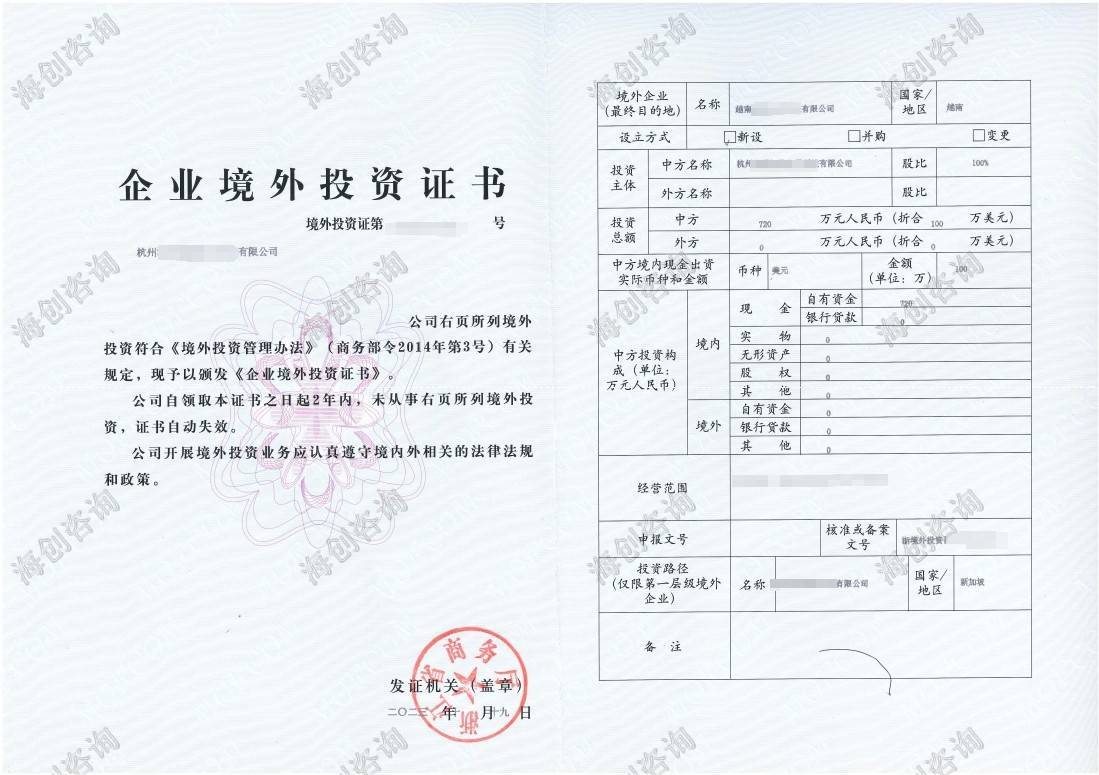
ODI备案与海外投资融资安排
Sou Hu Cai Jing· 2025-09-30 04:50
Core Points - The article emphasizes the importance of ODI (Overseas Direct Investment) filing and overseas investment financing arrangements for companies seeking to expand internationally and diversify funding sources [1][6]. Group 1: ODI Filing - ODI filing is a necessary procedure for domestic companies before making overseas direct investments, aimed at regulating investment behavior and ensuring compliance and safety [2]. - The filing process involves preparing necessary materials, submitting applications for review, waiting for approval, and obtaining the filing approval document, which is crucial for conducting overseas investments [3]. Group 2: Importance of Overseas Investment Financing Arrangements - Overseas investment financing arrangements are essential for addressing funding needs during international investments, helping to lower capital costs and improve investment returns [4]. - Companies can choose from various financing channels, including self-funding, bank loans, bond issuance, and equity financing, each with its advantages and disadvantages [4]. - Effective risk management strategies are necessary to mitigate market, exchange rate, and policy risks associated with overseas investments [4]. Group 3: Relationship Between ODI Filing and Financing - There is a close relationship between ODI filing and overseas investment financing; successful filing is a prerequisite for legal overseas investments, and detailed financing arrangements must be provided during the filing process [5]. - Successful ODI filing can enhance a company's credibility in international markets, facilitating future financing opportunities [5]. Group 4: Case Study - A successful case illustrates that a company completed ODI filing before an overseas acquisition, clearly defined investment goals and funding sources, and utilized a combination of bank loans and self-funding to create an effective financing plan, leading to successful acquisition and positive market response [5]. Group 5: Conclusion - In the context of increasing global economic interconnectivity, companies should focus on understanding the ODI filing process and developing sound overseas investment financing strategies to secure advantageous positions in international markets [6].
业绩高增 滨江集团预计2025年上半年净利润同比增长40%-70%
Quan Jing Wang· 2025-08-13 05:51
Core Viewpoint - The company, Binjiang Group, anticipates significant growth in net profit for the first half of 2025, driven by increased property deliveries and strategic land acquisitions in high-quality locations [1][2][3]. Group 1: Financial Performance - The company expects net profit attributable to shareholders to be between 1.63 billion and 1.98 billion yuan, representing a year-on-year increase of 40% to 70% [1]. - The net profit after excluding non-recurring gains is projected to be between 1.64 billion and 1.99 billion yuan, with a growth rate of 44.80% to 75.75% [1]. - Basic earnings per share are estimated to be between 0.52 yuan and 0.64 yuan [1]. Group 2: Business Strategy - The company will continue to implement its "1+5" development strategy, focusing on refining its core real estate business while expanding into five other sectors: services, leasing, hotels, elderly care, and industrial investment [2]. - The financing strategy aims to reduce interest-bearing debt to below 30 billion yuan and lower financing costs to around 3.2% [2]. Group 3: Market Position and Growth Potential - Binjiang Group ranks among the top five in land acquisition and top ten in sales in the industry, with total sales reaching 52.75 billion yuan in the first half of 2025 [1][3]. - The company has a clear sales target of approximately 100 billion yuan for 2025, with over half of the target achieved in the first half [1]. - The company has successfully issued bonds totaling 2.3 billion yuan with competitive interest rates, contributing to a decrease in overall financing costs from 3.4% to 3.1% [3]. Group 4: Regional Focus and Project Development - The company has a strong focus on the Hangzhou market, with 17 projects delivered in the first half of 2025, 15 of which are located in Hangzhou [3]. - The company has acquired 16 new residential land parcels in Hangzhou, including high-value projects, with total investments reaching 33.3 billion yuan and total project value at 54.2 billion yuan [3].

资金投融资管理:企业资金运作的核心引擎
Sou Hu Cai Jing· 2025-05-12 02:12
Core Insights - Fundraising and investment management are essential for driving corporate growth and addressing funding shortages, while also optimizing capital structure and balancing risk and return [2][5] Fundraising Management - Fundraising management encompasses various methods such as debt financing through bank loans, equity financing from investors, and innovative financing models like commercial credit and leasing [2][6] - The choice of financing channels is crucial, with bank loans being common for their lower costs but higher credit requirements, while bond issuance suits larger firms with good credit [6] - Timing of fundraising is significant, as favorable macroeconomic conditions and market liquidity can lower costs, while companies should avoid over-financing to prevent resource wastage [8] Investment Management - Investment management involves evaluating projects through financial metrics like Net Present Value (NPV) and Internal Rate of Return (IRR) to assess profitability and recovery [10] - Portfolio optimization is necessary to balance risk and return, allowing companies to invest in both stable, lower-yield assets and high-growth, higher-risk opportunities [13] - Effective risk management is vital, requiring the establishment of warning mechanisms and monitoring key risk indicators to address market, operational, and policy risks [14] Synergy and Balance in Fundraising and Investment - Fundraising and investment activities should be coordinated to ensure that the scale, duration, and cost of funds meet investment needs, while investment returns impact repayment and refinancing capabilities [15] - Companies should strategically plan fundraising and investment activities to ensure efficient capital operation and sustainable development [15]