
商品住宅

Search documents
2026年2月长三角五城商品住宅市场月报
克而瑞地产研究· 2026-03-20 09:58
Core Viewpoint - The article highlights a seasonal decline in the commodity residential market of the five core cities in the Yangtze River Delta (Shanghai, Hangzhou, Hefei, Nanjing, Suzhou) due to the Spring Festival, with expectations for a recovery starting in March driven by policy support and seasonal factors [2]. New Commodity Residential Market - The total supply of commodity residential properties in the five core cities was 519,300 square meters, a month-on-month decrease of 42.6% and a year-on-year decrease of 30.5% [4]. - Total transaction volume reached 654,700 square meters, accounting for approximately 52% of the overall transaction scale in the Yangtze River Delta, with average transaction prices at 38,958 yuan per square meter, reflecting an 8.2% month-on-month decline but a 7.9% year-on-year increase [4][11]. - Inventory and de-stocking pressures have increased, with Hefei and Hangzhou showing healthy de-stocking cycles, while Suzhou and Nanjing face significant pressures with cycles exceeding 20 months [4]. Market Resilience - The second-hand residential market showed greater resilience than new homes, with a total transaction area of 2,071,900 square meters in February, down 44% month-on-month and 25.8% year-on-year [5]. - The proportion of second-hand residential transactions in the total housing market rose to 80%, indicating a clear market segmentation trend of "new homes for improvement and second-hand homes for demand" [5][32]. Land Market - The land market showed a significant decline, with a total supply of 1,057,800 square meters, a month-on-month increase of 70.9% but a year-on-year decrease of 64.1% [6]. - The total transaction area was 88,400 square meters, reflecting a 94.1% month-on-month decline and a 94.9% year-on-year decline, with all transactions occurring at base prices, indicating low market activity [6][46]. Inventory and De-stocking Cycle - As of the end of February 2026, the overall de-stocking cycle for new commodity residential properties in the Yangtze River Delta reached 24 months, significantly exceeding the reasonable range of 12-18 months [17]. - Hefei and Hangzhou maintained healthy de-stocking cycles of 10.4 and 10.2 months, respectively, while Shanghai's cycle was at 17.8 months, and Suzhou and Nanjing faced cycles of 27.4 and 25.7 months, respectively [17][20]. Project Performance - The concentration of transactions in the commodity residential market of the five core cities increased, with top projects primarily located in core cities and premium locations [21]. - In February, the top-selling project was "Green City·Moon Reflecting on the Sands" in Hangzhou, with a transaction area of 14,625 square meters and a transaction amount of 556 million yuan [22]. Future Outlook - The article anticipates a seasonal recovery in the market starting in March, driven by the easing of restrictions in Shanghai and the release of pent-up demand [49]. - The new commodity residential market is expected to see a recovery in supply and demand, with a notable structural differentiation between core urban areas and non-core areas [50].


房地产金融:NIFD季报
Guo Jia Jin Rong Yu Fa Zhan Shi Yan Shi· 2026-03-19 01:38
Investment Rating - The report does not explicitly provide an investment rating for the real estate sector Core Insights - The real estate market in 2025 is focused on establishing foundational systems and stabilizing the market to prevent further decline [6][9] - The average housing loan interest rate has decreased to around 3.0% in multiple cities, supporting residential housing consumption [7][60] - The overall financing scale for the real estate industry continues to contract, with a notable decrease in development loans and corporate bond issuance [8][64] Summary by Sections 1. Analysis of Important Policies in Real Estate - The primary policies for 2025 include constructing foundational systems for real estate and efforts to stabilize the market [13] - Key initiatives include promoting the construction of quality housing, advancing a rental-purchase housing system, and enhancing urban renewal efforts [14][15][16] - The government is also implementing measures for orderly sales of existing homes and expanding the real estate financing coordination mechanism [17][18] 2. Analysis of Real Estate Market Operations - Housing prices in 2025 saw a year-on-year decline of 3.0%, with a narrowing drop compared to 2024 [25][29] - The sales volume of new residential properties decreased by 9.2% year-on-year, but the decline rate has narrowed compared to the previous year [33] - The investment in residential development dropped by 16.3%, indicating ongoing challenges in the housing market [36] 3. Analysis of Real Estate Financial Operations - The average interest rate for personal housing loans has decreased to approximately 3.05%, reflecting a supportive financial environment for homebuyers [60] - The balance of personal housing loans has decreased by 676.8 billion yuan, indicating a trend of households reducing their debt levels [64] - The financial leverage used by residents when purchasing homes has decreased, suggesting a more cautious approach to borrowing [67]
房价涨了跌了?数据公布!
21世纪经济报道· 2026-03-16 02:19
Group 1 - The core viewpoint of the article is that the sales prices of commercial residential properties in 70 large and medium-sized cities in China showed a continued narrowing of the month-on-month decline in February 2026, while year-on-year prices decreased [1][2][3]. Group 2 - In February, the month-on-month sales price of new commercial residential properties in first-tier cities remained flat, with Beijing and Shanghai increasing by 0.2%, Guangzhou unchanged, and Shenzhen decreasing by 0.3% [2]. - The month-on-month sales prices in second and third-tier cities decreased by 0.2% and 0.3%, respectively, with a narrowing of the decline by 0.1 percentage points [2]. - The month-on-month sales price of second-hand residential properties in first-tier cities decreased by 0.1%, with a narrowing of the decline by 0.4 percentage points compared to the previous month [2]. Group 3 - Year-on-year, the sales prices of new commercial residential properties in first-tier cities decreased by 2.2%, with Shanghai increasing by 4.2% while Beijing, Guangzhou, and Shenzhen saw declines of 2.3%, 5.1%, and 5.5%, respectively [3]. - The year-on-year sales prices of second-hand residential properties in first-tier cities decreased by 7.6%, with Beijing, Shanghai, Guangzhou, and Shenzhen experiencing declines of 8.4%, 6.2%, 8.5%, and 7.1%, respectively [3]. - The year-on-year sales prices in second and third-tier cities for second-hand residential properties decreased by 6.2% and 6.3%, with the decline in third-tier cities expanding by 0.2 percentage points [3].
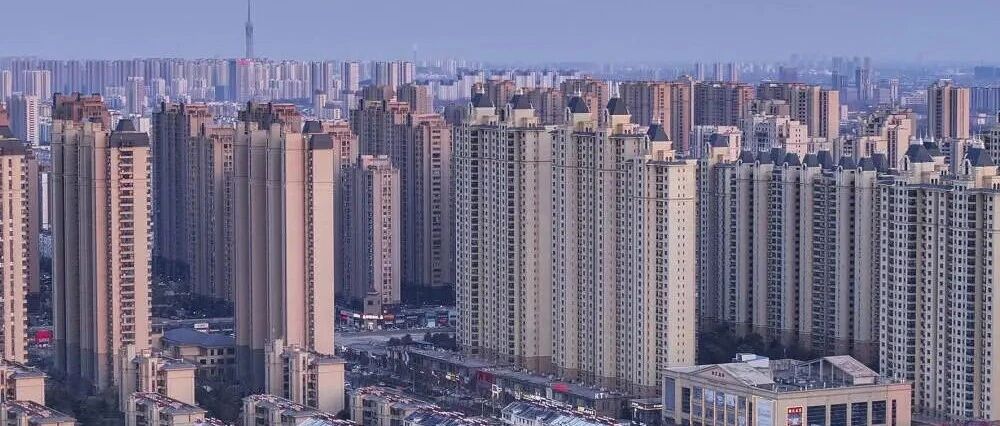
交银国际:春节后房地产需求逐步释放 中长期看好华润置地(01109)和越秀地产
智通财经网· 2026-03-12 07:17
Group 1 - The secondary market demand is expected to continue improving and outperform the primary market, with the new housing market remaining stable this year, and buyers favoring state-owned enterprise projects [1] - In February, the total sales of the top 100 developers decreased from 182.2 billion RMB in January to 125.2 billion RMB, a month-on-month decline of 31.3%, while the sales of 20 major listed developers fell by 27.4% [1] - The market share of state-owned enterprises in the top 50 developers' contract sales slightly decreased to 78.6% in February from 79.0% in January 2026 [1] Group 2 - The real estate policy in February was fully relaxed, with a focus on financial policies to support the stable and healthy development of the real estate market, as emphasized in the 2026 Government Work Report [2] - The market is optimistic about March due to the return of workers after the Spring Festival and the normalization of online signing [2]



交银国际:春节后房地产需求逐步释放 中长期看好华润置地(01109)和越秀地产(00123)
智通财经网· 2026-03-12 07:01
Group 1 - The secondary market demand is expected to improve and outperform the primary market, with the new housing market remaining stable this year, and buyers continuing to prefer state-owned enterprise projects [1] - Leading private enterprises may accelerate their debt restructuring processes as capital market sentiment improves [1] - China Resources Land (01109) and Yuexiu Property (00123) are favored for their strong sales performance and execution capabilities in recent years [1] Group 2 - In February, the sales data of the top 100 developers showed a decline, with total sales dropping from 182.2 billion RMB in January to 125.2 billion RMB, a decrease of 31.3% month-on-month [1] - The sales volume of the 20 major listed developers decreased by 27.4% month-on-month, attributed to a decline in sales area (down 11.1%) and average sales price (down 26.5%) [1] - Among the top 10 developers by sales in February, 9 were state-owned enterprises, with Poly Developments ranking first [1] Group 3 - The price index for new residential properties in 70 major cities fell by 3.3% year-on-year and 0.4% month-on-month in January, while the second-hand residential price index dropped by 6.2% year-on-year and 0.5% month-on-month [2] - The real estate policy in February was broadly relaxed, with a focus on financial policies to support the recovery of the real estate market and the overall economy [3] - The government work report released on March 5 emphasized the need to stabilize the real estate market, with expectations for market recovery as workers return to cities and online signing resumes [3]
房地产行业26年1月市场总结:市场信心逐步回升,主流标的表现优异
GF SECURITIES· 2026-02-26 14:37
Core Insights - The report indicates a gradual recovery in market confidence, with mainstream real estate stocks performing exceptionally well [1] - The overall rating for the real estate industry remains "Buy" [2] Market Performance - New housing market remains sluggish, while the second-hand market shows strong performance. In January 2026, the transaction area of commodity residential properties in 45 cities decreased by 27% year-on-year, and by 57% when adjusted for the Lunar New Year. In contrast, the second-hand housing market saw a 73% increase year-on-year, with a 12% increase when adjusted for last year's Lunar New Year base [5][14] - The transaction prices for second-hand homes in key cities increased by 2.7% month-on-month in January 2026, marking the first price increase since March 2025 [5][14] Market Sentiment - The market sentiment is improving, with new home prices stabilizing and the inventory of new homes decreasing, although the de-stocking cycle remains high. The new home inventory is declining, but the de-stocking period remains elevated [5][14] - The transaction conversion rate for visits in January reached 5.2%, the highest since July 2025 [5][14] Policy Environment - The report highlights a positive start to the real estate policy environment for the year. Key policies include the extension of personal income tax rebates until 2027 and the cancellation of the "three red lines" policy [5][14] - The central government has shown a commitment to improving and stabilizing market expectations, with various ministries working collaboratively [5][14] Land Market - The land market is experiencing a downturn, with residential land transfer fees in January 2026 amounting to 92.4 billion yuan, a 46% year-on-year decrease. Both government and corporate land acquisition intentions are low [5][14] Investment Outlook - The report notes that both domestic and Hong Kong real estate stocks have performed well, with the SW real estate index rising by 4.3%, outperforming the market by 2.7 percentage points. The overall valuation level of the industry remains at a low point, suggesting potential for recovery [5][14] - Companies with low price-to-sales ratios are expected to have good stock price elasticity, and continuous attention to the real estate sector is recommended [5][14]


光大证券晨会速递-20260226
EBSCN· 2026-02-26 01:55
Group 1: Bond Market Analysis - As of the end of January 2026, the total bond custody amount reached 179.31 trillion yuan, with a net increase of 0.76 trillion yuan month-on-month, which is 0.46 trillion yuan more than the end of December 2025 [1] - The custody amounts for interest rate bonds and credit bonds increased, while financial bonds and interbank certificates of deposit saw a decrease [1] - The overall positioning in the bond market indicates an increase in allocation by trading institutions, while non-legal person products continued to reduce their holdings [1] Group 2: Real Estate Market Insights - In January 2026, the transaction amount for commodity residential properties (excluding affordable housing) in 30 core cities was 185.9 billion yuan, a year-on-year decrease of 28.7%, with an average transaction price of 24,285 yuan per square meter, down 4.8% year-on-year [2] - The transaction area for second-hand houses in the core 15 cities increased by 14.3% year-on-year, with first-tier cities experiencing a year-on-year price drop of 9.8% [2] - The report emphasizes that as supply-side adjustments continue, leading companies are expected to benefit from improved competitive structures, with recommendations for companies like China Merchants Shekou and China Jinmao [2] Group 3: Non-Ferrous Metals Sector - The SPDR Gold ETF holdings saw a slight increase during the Spring Festival period, indicating a stable interest in gold [3] - The steel industry's supply-side adjustments are expected to strengthen in the short to medium term, as losses for listed steel companies approached levels seen in Q3 and Q4 of 2024 [3] - The tightening of steel export policies since the beginning of 2026 poses challenges, as direct and indirect exports were crucial for the steel industry's profitability in 2025, necessitating supportive supply-side policies [3]
【光大研究每日速递】20260226
光大证券研究· 2026-02-25 23:07
Real Estate - In January, the transaction area of second-hand houses in 15 core cities increased by 14.3% year-on-year, while the transaction amount of commodity residential properties in 30 core cities was 185.9 billion yuan, down 28.7% year-on-year, with an average transaction price of 24,285 yuan per square meter, a decrease of 4.8% year-on-year [5][6] - The average transaction price in first-tier cities decreased by 9.8% year-on-year. The article emphasizes the importance of stabilizing real estate expectations and suggests that leading companies may benefit from an optimized competitive structure as supply-side adjustments continue [5][6] Metals - The SPDR Gold ETF's holdings saw a slight increase during the Spring Festival period, indicating a potential shift in investor sentiment towards gold [5] - The steel industry is expected to see a strengthening of supply-side adjustments in the short to medium term, as losses for listed steel companies in Q4 2025 approached those of Q3/Q4 2024. The tightening of steel export policies may impact the industry's profitability, which heavily relies on direct and indirect exports [5] Energy Storage - The domestic large-scale energy storage capacity for 2026/2027 is a critical variable in assessing lithium battery demand. Key indicators to monitor include regional coal power capacity pricing, the scale of energy storage project lists, and changes in spot market price differentials [6] - The domestic energy storage industry is entering a phase of healthy development, with leading companies expected to benefit from this trend [6]

售价环比降幅总体收窄
Xin Lang Cai Jing· 2026-02-25 22:06
Core Insights - The real estate market in China is experiencing a structural adjustment with signs of stabilization and recovery, particularly in core cities [2][3] Group 1: Price Trends - In January, new residential property prices in first-tier cities decreased by 0.3% month-on-month, with Shanghai stable and Beijing, Guangzhou, and Shenzhen declining by 0.3%, 0.6%, and 0.4% respectively [1] - Second-tier cities saw a month-on-month decrease of 0.3% in new residential property prices, while third-tier cities experienced a decline of 0.4% [1] - Year-on-year, new residential property prices in first-tier cities fell by 2.1%, with Shanghai increasing by 4.2% and other cities like Beijing, Guangzhou, and Shenzhen declining by 2.4%, 5.3%, and 4.9% respectively [1] Group 2: Market Dynamics - The second-hand residential property prices in first-tier cities dropped by 7.6% year-on-year, with Beijing, Shanghai, Guangzhou, and Shenzhen experiencing declines of 8.7%, 6.8%, 8.3%, and 6.5% respectively [2] - Analysts indicate that the market is showing signs of bottoming out, with a dual effect of policy support and market confidence restoration contributing to stabilization [2][3] - The new housing market is exhibiting significant disparities, with first-tier cities maintaining stable prices and second-tier cities showing signs of recovery, particularly in cities like Wuhan, Qingdao, and Jinan [2][3] Group 3: Future Outlook - The real estate policy direction is expected to remain focused on stabilizing the market and expectations, with a continued emphasis on targeted measures [3] - The first quarter of 2026 is deemed critical for assessing the sustainability of market recovery and demand release post-Chinese New Year [3]
光大核心城市房地产销售跟踪(2026年1月):1月核心15城二手房成交面积同比+14%
EBSCN· 2026-02-25 07:04
Investment Rating - The report maintains a rating of "Overweight" for the real estate sector [6] Core Insights - In January 2026, the transaction area of second-hand houses in 15 core cities increased by 14.3% year-on-year, while new house transactions in 30 core cities decreased by 25.1% year-on-year [3][4] - The report highlights that the real estate market is experiencing a divergence, with high-energy cities likely to benefit from urban renewal and structural optimization [4][84] - The report suggests three main investment lines: focusing on state-owned enterprises with strong credit and brand advantages, public REITs with rich resources, and long-term development potential in property services [4][85] Summary by Sections New Housing Market - In January 2026, the transaction amount for new residential properties in 30 core cities was 185.9 billion yuan, down 28.7% year-on-year [9] - The average transaction price for new houses in January 2026 was 24,285 yuan per square meter, a decrease of 4.8% year-on-year [2][28] - Key cities' new housing average prices: Beijing 54,749 yuan/m² (+0.4% YoY), Shanghai 77,830 yuan/m² (-6.3% YoY), Guangzhou 31,559 yuan/m² (-5.0% YoY), Shenzhen 70,277 yuan/m² (+16.7% YoY) [2][38] Second-Hand Housing Market - In January 2026, the transaction area for second-hand residential properties in 15 core cities was 13.11 million square meters, up 14.3% year-on-year [3][43] - The transaction amount for second-hand houses in 10 core cities was 244.2 billion yuan, an increase of 1.9% year-on-year [3][60] - The average transaction price for second-hand houses in January 2026 was 22,588 yuan/m², down 9.6% year-on-year [3][60] - Key cities' second-hand housing average prices: Beijing 25,996 yuan/m² (-5.7% YoY), Shanghai 34,349 yuan/m² (-14.2% YoY), Guangzhou 23,292 yuan/m² (-15.0% YoY), Shenzhen 53,578 yuan/m² (-8.9% YoY) [4][78]