补强型并购

Search documents
38亿!美敦力又一重磅收购
思宇MedTech· 2026-03-14 01:11
Core Viewpoint - Medtronic has announced a definitive agreement to acquire Scientia Vascular for $550 million, aiming to enhance its product offerings in the neurovascular intervention market [2][4]. Group 1: Acquisition Details - The acquisition is characterized as a tuck-in acquisition, focusing on strengthening Medtronic's existing neurovascular product line with Scientia's devices, which include neurovascular guidewires and catheters [2][4]. - The deal is subject to customary closing conditions and includes undisclosed performance-based milestones [2]. - Medtronic plans to integrate Scientia's products into its neurovascular product system to improve the stroke treatment process [6]. Group 2: Market Context - The global stroke intervention market is becoming increasingly competitive, prompting large medical device companies to acquire firms to fill gaps in their product lines [3][14]. - The demand for neurovascular interventions is growing, with more countries establishing stroke center networks, leading to an increase in the volume of neurovascular procedures [15][22]. - The acquisition trend among major device companies indicates a shift towards building comprehensive product portfolios that cover the entire treatment process from access to therapy [21]. Group 3: Implications for the Industry - The acquisition reflects a broader trend in the neurovascular industry where companies are focusing on complete surgical solution systems rather than individual devices [20]. - In China, the neurovascular market has become one of the most active segments, with several companies expanding into access devices, indicating a competitive landscape [18][21]. - The ongoing construction of stroke centers is expected to sustain rapid growth in the neurovascular market, potentially accelerating industry consolidation [22].


瑞幸没能“喝上”,可口可乐叫停COSTA咖啡出售计划
Xin Lang Cai Jing· 2026-01-14 11:21
Core Viewpoint - Coca-Cola has decided to abandon the sale of Costa Coffee due to bidders' offers not meeting expectations, marking a significant setback for the company [1][3]. Group 1: Sale Abandonment - Coca-Cola has terminated negotiations with remaining bidders for Costa Coffee as of December 2025, halting the auction process that had been ongoing for several months [3]. - Potential bidders included TDR Capital and Bain Capital, with discussions reportedly stalling over price disagreements [3][5]. - Coca-Cola's asking price for Costa Coffee was approximately £2 billion (around ¥18.7 billion), which is about half of the £3.9 billion it paid for the brand in 2018 [3][4]. Group 2: Financial Performance - Costa Coffee's revenue for 2024 was reported at £1.2 billion (approximately ¥11.2 billion), but the company experienced a significant operating loss of £13.5 million (around ¥1.25 billion), attributed to weak foot traffic and competition from lower-priced rivals [4]. - The company also recorded an impairment loss of £48.6 million (approximately ¥455 million) related to its operations in China, citing weaker-than-expected coffee demand in Shanghai [4]. Group 3: Future Considerations - There is speculation that Coca-Cola may revisit the sale of Costa Coffee in the medium term despite the current abandonment of the sale [3]. - The new CEO, Henrique Braun, will be responsible for determining the future strategy for Costa Coffee, with an emphasis on creating value for consumers [7][9]. - Coca-Cola has indicated that it will retain control over Costa Coffee's ready-to-drink products, which have shown strong sales growth in specific regions [5].

可口可乐CEO:饮料行业仍极具吸引力,关键按购买力细分运营,想再辉煌100年要靠“不满足”文化
3 6 Ke· 2025-12-04 00:25
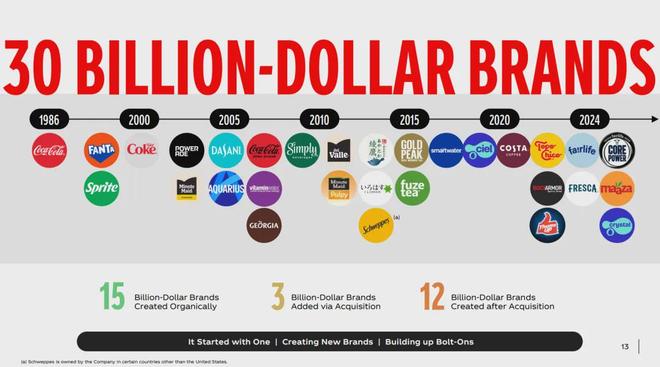
Core Insights - The CEO of Coca-Cola, James Quincey, predicts that macroeconomic conditions will continue to worsen, likening the situation to increasing rain rather than a decrease [1] - Coca-Cola is focusing on controllable aspects such as marketing, innovation, execution, and pricing to navigate the challenging economic landscape [1] Economic Outlook - Quincey notes that consumer sentiment remains weak, particularly among lower-income groups, but he believes it is not yet a dire situation [4] - The balance of favorable and unfavorable economic factors is shifting towards more headwinds as the company looks ahead to next year [4] Segmentation Strategy - Coca-Cola is implementing a segmentation strategy based on purchasing power to better understand consumer behavior and tailor marketing efforts [4][6] - The company has adjusted product sizes and pricing in response to consumer pressures, such as offering 400ml bottles at a lower price in China [6] Acquisition Strategy - Quincey emphasizes the importance of innovation and potential acquisitions to fill gaps in the product portfolio, especially in a tightening consumer environment [7] - Coca-Cola currently has 30 brands worth over $1 billion, with half acquired through mergers and acquisitions [7] Competitive Landscape - The beverage industry is experiencing increased competition from new startups, which may also become potential acquisition targets for Coca-Cola [9] - Despite the influx of new products, the high barriers to scaling remain a challenge for smaller companies [9] AI Integration - AI is seen as a tool to enhance understanding of consumer behavior and improve marketing strategies, with plans to launch new products based on AI insights in 2026 [10] - The company has already utilized AI for more efficient advertising and sales processes, indicating a significant potential for revenue growth [13] Internal Culture and Succession Planning - Quincey highlights the importance of maintaining a culture of dissatisfaction to drive continuous improvement and innovation within the company [16][18] - The company has been working on a succession plan to ensure a smooth transition when the time comes [18]