可口可乐(经典)

Search documents
可口可乐CEO:饮料行业仍极具吸引力,关键按购买力细分运营,想再辉煌100年要靠“不满足”文化
3 6 Ke· 2025-12-04 00:25
Core Insights - The CEO of Coca-Cola, James Quincey, predicts that macroeconomic conditions will continue to worsen, likening the situation to increasing rain rather than a decrease [1] - Coca-Cola is focusing on controllable aspects such as marketing, innovation, execution, and pricing to navigate the challenging economic landscape [1] Economic Outlook - Quincey notes that consumer sentiment remains weak, particularly among lower-income groups, but he believes it is not yet a dire situation [4] - The balance of favorable and unfavorable economic factors is shifting towards more headwinds as the company looks ahead to next year [4] Segmentation Strategy - Coca-Cola is implementing a segmentation strategy based on purchasing power to better understand consumer behavior and tailor marketing efforts [4][6] - The company has adjusted product sizes and pricing in response to consumer pressures, such as offering 400ml bottles at a lower price in China [6] Acquisition Strategy - Quincey emphasizes the importance of innovation and potential acquisitions to fill gaps in the product portfolio, especially in a tightening consumer environment [7] - Coca-Cola currently has 30 brands worth over $1 billion, with half acquired through mergers and acquisitions [7] Competitive Landscape - The beverage industry is experiencing increased competition from new startups, which may also become potential acquisition targets for Coca-Cola [9] - Despite the influx of new products, the high barriers to scaling remain a challenge for smaller companies [9] AI Integration - AI is seen as a tool to enhance understanding of consumer behavior and improve marketing strategies, with plans to launch new products based on AI insights in 2026 [10] - The company has already utilized AI for more efficient advertising and sales processes, indicating a significant potential for revenue growth [13] Internal Culture and Succession Planning - Quincey highlights the importance of maintaining a culture of dissatisfaction to drive continuous improvement and innovation within the company [16][18] - The company has been working on a succession plan to ensure a smooth transition when the time comes [18]


可口可乐低调上架多款“专供新品”,全球最大饮料商卡位零食量贩渠道
Xin Lang Cai Jing· 2025-08-21 06:14
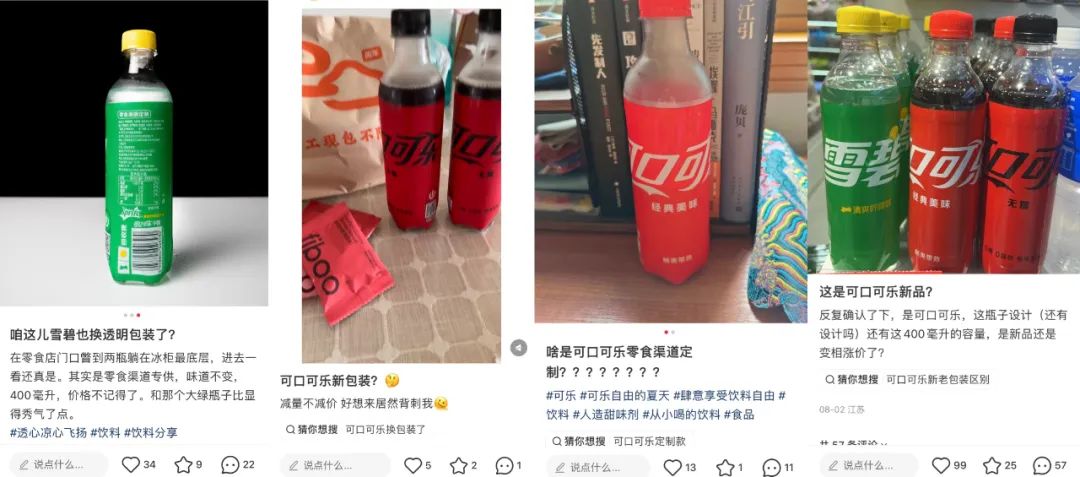
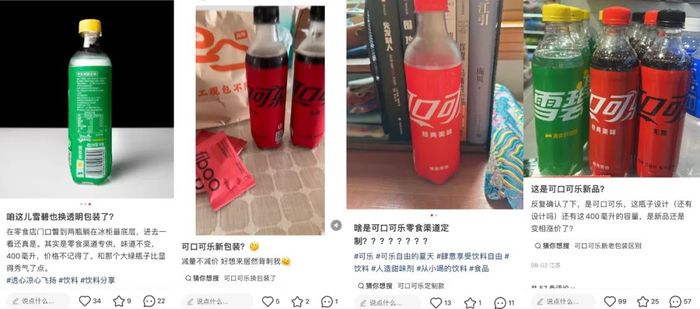
Core Insights - Coca-Cola and other brands are launching customized products specifically for the snack retail channel, adjusting sizes and prices to better fit this market segment [1][3][5] Product Customization - Coca-Cola has introduced 400ml bottles for its classic and zero-sugar variants, reducing the price from 2.8 yuan to 2.3 yuan to target snack retail channels [3][5] - Other brands like Ferrero, Lays, and Oreo are also creating tailored products for the snack retail market, indicating a broader trend in the industry [3][5][7] Market Growth - The snack retail market in China is projected to reach 1,040 billion yuan in 2024, with a year-on-year growth of 28.6%, and is expected to exceed 1,500 billion yuan by 2027 [8] - The number of snack retail stores is anticipated to grow to 45,000 by 2025, highlighting the channel's rapid expansion [8] Strategic Considerations - Brands are leveraging the snack retail channel to penetrate lower-tier markets and fill market gaps, as these stores provide access to a broader customer base [8][9] - Customized products help prevent channel conflicts and stabilize pricing across different retail formats, addressing concerns about price competition [10][11] Consumer Reactions - Consumers have expressed mixed feelings about the new customized products, with some appreciating the new packaging while others are concerned about reduced quantities at similar prices [5][12] - The challenge remains for brands to balance the needs of different channels and consumer expectations regarding value [12]
可口可乐低调上架多款“专供新品”,全球最大饮料商加入卡位1000亿量贩零食市场队列
3 6 Ke· 2025-08-21 00:04
Core Viewpoint - Coca-Cola and other brands are launching customized products specifically for the snack retail channel, adjusting product specifications and pricing to capture market opportunities and differentiate from traditional channels [1][3][9]. Group 1: Product Customization - Coca-Cola has introduced customized products in 400ml bottles for the snack retail channel, reducing the price from 2.8 yuan to 2.3 yuan to enhance market coverage [3][5]. - Other brands like Ferrero, Lays, Oreo, and Qiaqia are also developing tailored products for the snack retail market, indicating a broader trend in the industry [3][5][9]. - The snack retail channel is projected to grow significantly, with the number of stores expected to reach 45,000 by 2025, prompting brands to adapt their offerings [3][9]. Group 2: Market Dynamics - The snack retail market in China is estimated to reach approximately 104 billion yuan in 2024, with a year-on-year growth of 28.6%, and is expected to exceed 150 billion yuan by 2027 [9]. - Brands are leveraging the advantages of the snack retail channel, such as large-scale procurement and low-cost operations, to tap into under-served markets [9][11]. - Customized products help brands avoid channel conflicts and stabilize pricing across different retail environments [12][14]. Group 3: Consumer and Channel Reactions - Consumers have mixed reactions to the new products, with some appreciating the new packaging while others express concerns over reduced quantities and perceived price increases [5][17]. - Traditional distributors are experiencing reduced competition from the customized products, but they still face challenges due to the inherent price advantages of the snack retail channel [15][17]. - Brands must balance the needs of different channels and consumer expectations, which can lead to dissatisfaction among some stakeholders [17].