Costa咖啡

Search documents
可口可乐或放弃出售Costa;海底捞张勇归来;Alo将开中国首店|品牌周报
3 6 Ke· 2026-01-18 12:22
Group 1: Coca-Cola and Costa Coffee - Coca-Cola has reportedly abandoned the plan to sell Costa Coffee due to bidders' offers falling short of expectations, marking a "latest setback" for the company [1] - The expected price for Costa Coffee was around £2 billion (approximately ¥18.7 billion), which is about half of the £3.9 billion paid during its acquisition in 2018 [1] - Future plans for a potential sale of Costa Coffee may be revisited in the medium term [1] Group 2: Costa Coffee Financial Performance - Costa Coffee's revenue for 2024 is reported at £1.2 billion (approximately ¥11.2 billion), but the operating loss has more than doubled to £13.5 million (approximately ¥12.5 million) [2] - The company attributes the loss to weak foot traffic in commercial streets and pressure from low-cost competitors [2] Group 3: Haidilao Management Changes - Haidilao announced significant executive and board changes, with founder Zhang Yong returning as CEO effective January 13, 2026 [3] - The company aims to enhance management efficiency and decision-making through the promotion of intelligent and automated management processes [3] - New executive directors have been appointed to support innovation and long-term development [3] Group 4: Haidilao's Business Expansion - Since the launch of the "Pomegranate Plan" in 2024, Haidilao has introduced several new dining sub-brands, expanding its offerings beyond hot pot [4] - The company operates 14 restaurant brands with a total of 126 stores, in addition to its core hot pot business [4] Group 5: Hushang Auntie Profit Forecast - Hushang Auntie has issued a positive profit forecast for 2025, expecting net profits to reach between ¥495 million and ¥525 million, a year-on-year increase of 50% to 60% [5] - The growth is attributed to a multi-brand development strategy and ongoing operational efficiency improvements [5] Group 6: Salia's Profit Growth - Salia reported a net profit of ¥1.3 billion for the September to November 2025 period, a 16% year-on-year increase, achieving a two-year high [6] - The company’s sales increased by 15% to ¥31.7 billion during the same period, despite rising raw material costs [6] Group 7: Alo Yoga's Expansion in China - Alo Yoga is set to open its first store in China in Shanghai's Jing'an Kerry Center in the second quarter, with a second store planned for Beijing [7] - The brand emphasizes high-quality yoga and sportswear, with a pricing strategy positioned in the premium segment [7] Group 8: Global Yoga Apparel Market Growth - The global yoga apparel market is projected to reach $28.84 billion by 2025, with a compound annual growth rate of approximately 8.31% [8] - Alo Yoga has appointed former Dior executive Benedetta Petruzzo as CEO to accelerate global expansion [8][9] Group 9: Dongpeng Beverage Profit Forecast - Dongpeng Beverage expects a net profit of between ¥4.34 billion and ¥4.59 billion for 2025, representing a year-on-year growth of 30.46% to 37.97% [17] - The company continues to focus on channel management and product exposure to drive sales growth [17] Group 10: Moutai's Corporate Sales Strategy - Moutai has opened sales of its 1499 yuan per bottle Flying Moutai to qualifying corporate clients, focusing on existing customers for 2026 contracts [18] Group 11: San Yuan's Revenue Projection - San Yuan expects to achieve approximately ¥6.35 billion in revenue for the previous year, with a significant increase in net profit projected for 2025 [19] - The company maintains a leading market share in liquid milk in Beijing, with over 50% in low-temperature fresh milk [19] Group 12: Mammut Potential Acquisition - Swiss outdoor brand Mammut is considering a sale, with an estimated transaction value of up to €500 million, and Anta Group is seen as a potential buyer [20]


可口可乐或放弃出售Costa;海底捞张勇归来;Alo将开中国首店|品牌周报
36氪未来消费· 2026-01-18 12:12
Group 1: Coca-Cola and Costa Coffee - Coca-Cola has reportedly abandoned plans to sell Costa Coffee due to bids falling short of expectations, marking a setback for the company [3] - The expected sale price for Costa Coffee was around £2 billion (approximately ¥187 billion), which is about half of the £3.9 billion paid during its acquisition in 2018 [3] - Costa Coffee's financial performance has declined, with 2024 revenue at £1.2 billion (approximately ¥112 billion) and operating losses exceeding £13.5 million (approximately ¥1.25 million), attributed to weak foot traffic and competition from low-cost rivals [4] Group 2: Haidilao Management Changes - Haidilao announced significant executive and board changes, with founder Zhang Yong returning as CEO effective January 13, 2026, following a series of leadership transitions [5][6] - The company has been implementing various initiatives, including the "Red Pomegranate Plan," and has expanded its brand portfolio to include 14 restaurant brands with a total of 126 outlets [6] Group 3: Salia's Financial Performance - Salia reported a record high net profit of ¥1.3 billion for the September to November 2025 period, a 16% year-on-year increase, driven by a low-price strategy and increased customer numbers [7] - Sales during the same period grew by 15% to ¥31.7 billion, with operating profit rising 19% to ¥2 billion [7] Group 4: Alo Yoga's Expansion in China - Alo Yoga is set to open its first store in China in Shanghai's Jing'an Kerry Center in the second quarter, with a second store planned for Beijing's Sanlitun area [8][9] - The brand, founded in 2007, emphasizes high-quality yoga and activewear and has expanded its product range to include various lifestyle items [9] Group 5: Dongpeng Beverage's Profit Forecast - Dongpeng Beverage expects a net profit increase of 30.46% to 37.97% for 2025, projecting a profit of ¥4.34 billion to ¥4.59 billion [19] - The company aims to enhance its channel management and explore multi-category development to sustain growth [19] Group 6: Mamut's Potential Acquisition - Swiss outdoor brand Mammut is reportedly considering a sale, with an estimated transaction value of €500 million, and Anta Group is seen as a potential buyer [23]


腰斩价仍无人接盘!可口可乐放弃出售Costa咖啡,亏损困局何解?
Jin Rong Jie· 2026-01-15 10:52
Group 1 - Coca-Cola has abandoned the plan to sell Costa Coffee due to the private equity bidders' offers not meeting expectations [1] - The sale target price set by Coca-Cola for Costa was approximately £2 billion, which is about half of the £3.9 billion acquisition price from Whitbread in 2018 [1] - The remaining bidders included TDR Capital, the parent company of Asda, and Bain Capital's special situations fund, while Apollo, KKR, and Hillhouse Capital participated in the early bidding process [1] Group 2 - During Coca-Cola's operation, Costa faced competitive pressures from both high-end independent coffee shops and budget coffee operators like Greggs [2] - In 2024, Costa reported revenues of £1.2 billion, with operating losses widening to £13.5 million, attributed to low foot traffic in commercial streets and intensified competition [2] - The UK coffee industry is also facing rising coffee bean prices and increasing labor costs, with a new employer National Insurance contribution policy effective from April 2025 adding to the burden [2] - Costa recorded a £48.6 million impairment loss related to its China operations due to lower-than-expected demand in Shanghai, and an additional £51 million impairment for its Costa Express self-service coffee machine business [2] - The termination of the sale coincides with a leadership transition at Coca-Cola, as COO Henrique Braun is set to replace James Quincey as CEO in March 2026 [2] - Quincey acknowledged in July 2025 that Costa had not delivered the expected value for Coca-Cola [2]
报价腰斩仍无人接盘!可口可乐放弃出售Costa咖啡,中期或将重启拍卖?
Jin Rong Jie· 2026-01-15 05:06
Group 1 - Coca-Cola has abandoned the sale of Costa Coffee due to private equity bids falling short of expectations, concluding the auction process that lasted several months [1] - The sale target price set by Coca-Cola for Costa was approximately £2 billion, which is about half of the £3.9 billion acquisition price from Whitbread Group in 2018 [1] - The remaining bidders in the later stages included TDR Capital, the parent company of Asda, and Bain Capital's special situations fund, while Apollo, KKR, and Hillhouse Capital participated in the early bidding process [1] Group 2 - During Coca-Cola's ownership, Costa faced competition from high-end independent coffee shops and budget coffee operators like Greggs [2] - In 2024, Costa reported revenues of £1.2 billion, with operating losses widening to £13.5 million, attributed to low foot traffic in commercial areas and intensified competition [2] - The coffee industry in the UK is also facing pressures from rising coffee bean prices and increasing labor costs, with a national insurance contribution increase effective in April 2025 further burdening businesses [2] - Costa recorded a £48.6 million impairment loss related to its operations in China due to lower-than-expected demand in Shanghai, and an additional £51 million impairment for its Costa Express self-service coffee machine business [2] - The termination of the sale coincides with a leadership transition at Coca-Cola, as COO Henrique Braun is set to replace James Quincey as CEO in March 2026, with Quincey becoming executive chairman [2] - Quincey acknowledged in July 2025 that Costa had not delivered the expected value for Coca-Cola, and there are indications that Coca-Cola may consider restarting the sale of Costa in the medium term [2]
安踏“少帅”丁少翔分管中国版“lululemon”丨消费参考
2 1 Shi Ji Jing Ji Bao Dao· 2026-01-15 02:44
Group 1 - Anta Group's chairman Ding Shizhong's son, Ding Shaoxiang, has taken on a more significant role within the company, overseeing the women's sports brand MAIA ACTIVE, which was recently acquired by Anta [1] - MAIA ACTIVE, established in 2016, focuses on yoga apparel for Asian women and aims for a compound annual growth rate of 50% to 60% over the next five years, with a shift in revenue distribution from 50% online and 50% offline to 30% online and 70% offline [1] - The brand's goal is to compete directly with lululemon in the market [1] Group 2 - Descente, another brand under Anta, reportedly achieved annual sales exceeding 10 billion yuan, contributing positively to Anta's overall performance [2] - In the third quarter, Anta's retail sales for its main brand and FILA showed low single-digit growth, while Descente experienced a 30% increase, indicating a significant performance gap compared to previous years [2] - The growth of Descente is seen as a strong endorsement for Ding Shaoxiang's leadership [3] Group 3 - Ding Shaoxiang's unique position within Anta raises expectations for his future contributions to the company [4]
外媒:可口可乐放弃出售Costa咖啡
Zhong Guo Xin Wen Wang· 2026-01-14 11:39
Core Viewpoint - Coca-Cola has abandoned the sale of Costa Coffee due to private equity bids falling short of expectations, concluding a months-long auction process [1] Group 1: Sale Decision - Coca-Cola set the sale price for Costa Coffee at approximately £2 billion, which is about half of the £3.9 billion paid to Whitbread Group for the acquisition in 2018 [1] - The company terminated negotiations with remaining bidders in December last year [1] Group 2: Leadership Changes - Coca-Cola's Chief Operating Officer, Henrique Braun, is set to replace James Quincey as CEO in March [1] - There is a possibility that the company may revisit the sale of Costa Coffee in the medium term [1] Group 3: Performance Issues - James Quincey acknowledged in July that Costa Coffee has not delivered the expected results for Coca-Cola [1] - Costa Coffee faces competition from both higher-end independent coffee shops and lower-priced competitors like Greggs [1]
因出价未达预期 可口可乐叫停出售Costa咖啡计划
Xi Niu Cai Jing· 2026-01-14 11:36
Core Viewpoint - The divestment plan for Costa by Coca-Cola has been temporarily shelved due to potential buyers' bids falling short of expectations, leading to the termination of negotiations with remaining bidders as of December 2025 [2][3] Group 1: Divestment Plan - Coca-Cola initiated the search for buyers for Costa in August 2025 to optimize its brand portfolio and reallocate funds [2] - The negotiations attracted interest from several private equity firms, including TDR Capital, KKR, and the backers of Luckin Coffee, but ultimately failed due to pricing issues [2] - Coca-Cola aimed to complete the sale for approximately £2 billion, which is nearly half of the £3.9 billion acquisition price in 2018 [2] Group 2: Business Challenges - The acquisition of Costa in 2018 was intended to strengthen Coca-Cola's position in the hot beverage market, creating a comprehensive coffee platform across various consumption scenarios [2] - The business faced multiple challenges post-acquisition, including the impact of the global pandemic, soaring costs of raw materials like coffee beans, and intensified market competition [2] Group 3: Future Considerations - The suspension of the sale plan may necessitate Coca-Cola to reassess the value of the Costa business [3] - Industry insiders suggest that Coca-Cola's management will need to balance between unfavorable sale prices and the pursuit of new growth opportunities in the ongoing operation of Costa [3]
瑞幸没能“喝上”,可口可乐叫停COSTA咖啡出售计划
Xin Lang Cai Jing· 2026-01-14 11:21
Core Viewpoint - Coca-Cola has decided to abandon the sale of Costa Coffee due to bidders' offers not meeting expectations, marking a significant setback for the company [1][3]. Group 1: Sale Abandonment - Coca-Cola has terminated negotiations with remaining bidders for Costa Coffee as of December 2025, halting the auction process that had been ongoing for several months [3]. - Potential bidders included TDR Capital and Bain Capital, with discussions reportedly stalling over price disagreements [3][5]. - Coca-Cola's asking price for Costa Coffee was approximately £2 billion (around ¥18.7 billion), which is about half of the £3.9 billion it paid for the brand in 2018 [3][4]. Group 2: Financial Performance - Costa Coffee's revenue for 2024 was reported at £1.2 billion (approximately ¥11.2 billion), but the company experienced a significant operating loss of £13.5 million (around ¥1.25 billion), attributed to weak foot traffic and competition from lower-priced rivals [4]. - The company also recorded an impairment loss of £48.6 million (approximately ¥455 million) related to its operations in China, citing weaker-than-expected coffee demand in Shanghai [4]. Group 3: Future Considerations - There is speculation that Coca-Cola may revisit the sale of Costa Coffee in the medium term despite the current abandonment of the sale [3]. - The new CEO, Henrique Braun, will be responsible for determining the future strategy for Costa Coffee, with an emphasis on creating value for consumers [7][9]. - Coca-Cola has indicated that it will retain control over Costa Coffee's ready-to-drink products, which have shown strong sales growth in specific regions [5].
可口可乐已放弃出售Costa咖啡
Ge Long Hui A P P· 2026-01-14 05:33
Group 1 - The core point of the article is that Coca-Cola has abandoned its plan to sell the Costa coffee chain due to lower-than-expected bids from private equity firms [1] - Coca-Cola terminated negotiations with remaining bidders in December, leading to the suspension of the months-long bidding process [1]
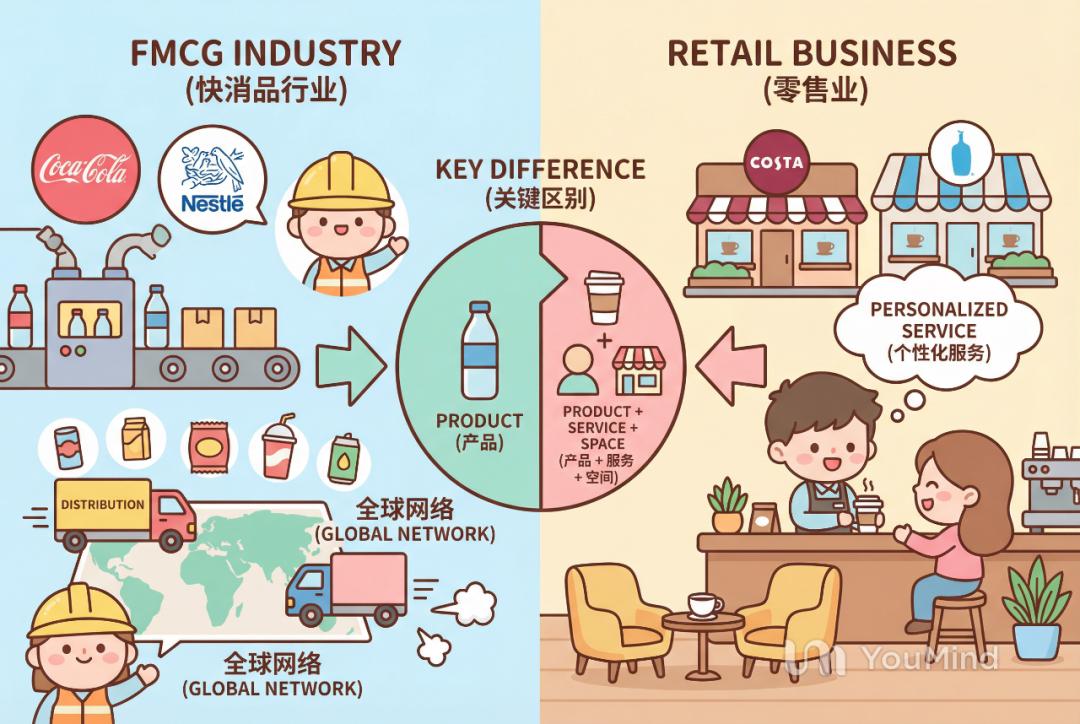
精品咖啡甩卖潮:可口可乐、雀巢为何甘愿“割肉”?
3 6 Ke· 2025-12-15 08:44
Core Viewpoint - The food and beverage industry is experiencing a surge in mergers and acquisitions, with notable companies like Starbucks, Coca-Cola, and Nestlé divesting from their coffee brands, often at prices significantly lower than their acquisition costs [1][7]. Group 1: Reasons for Divestiture of Physical Store Businesses - The divestiture often involves physical store operations, which differ from the fast-moving consumer goods (FMCG) sector that focuses on product and distribution rather than service and space [1][4]. - Physical retail businesses are more complex and face higher management challenges compared to FMCG, making them less strategic for companies like Coca-Cola and Nestlé [4]. - The capital-intensive nature of coffee shops, with high initial investments and long payback periods, makes them less attractive during economic pressures, prompting companies to divest [5][10]. Group 2: Reasons for Selling at a Discount - Companies prioritize focusing on core businesses to streamline their balance sheets, leading to the decision to sell off less strategic assets [7][10]. - For Coca-Cola, the acquisition of Costa was initially aimed at expanding its coffee platform, but changing market dynamics, particularly in China, rendered the physical store operations less viable [9][10]. - The value of physical stores is reassessed when more efficient distribution channels can achieve growth without the overhead of managing retail locations [10]. Group 3: Value of Divested Brands - Brands like Costa and Blue Bottle Coffee possess strong product offerings and loyal customer bases, indicating that they are not inherently poor investments [11][15]. - The divestiture allows these brands to potentially thrive under new ownership that can provide the necessary resources for expansion and operational efficiency [15][18]. - The example of the newly independent Magnum ice cream company illustrates how divestiture can lead to enhanced strategic flexibility and growth potential [18]. Conclusion - The current trend of divestiture in the food and beverage sector reflects a strategic realignment of resources, with the potential for good brands to find new life under different ownership structures [19].