规则互认

Search documents
专访原海南省大数据管理局局长董学耕:以数据跨境为桥连接全球数字经济 海南探路数据跨境“自贸港模式”
Zheng Quan Shi Bao· 2025-12-18 04:53
Core Insights - Hainan Free Trade Port officially launched its full island closure on December 18, focusing on cross-border data flow management through a negative list-based "non-prohibition unless permitted" model, which is seen as a significant practice for exploring safe and orderly cross-border data flow [1] Group 1: Hainan's Unique Approach - Hainan's differentiated exploration in cross-border data flow management is characterized by two main aspects: industry focus and optimized regulatory processes [2] - The emphasis on specific industries such as deep-sea technology, commercial aerospace, low-altitude economy, modern agriculture, tourism, and modern services aligns with regional resource endowments and strategic positioning [2] - Hainan allows data to exit under specified conditions without prior approval, enhancing operational efficiency for enterprises [2] Group 2: Negative List Management - A clear and actionable negative list for regulated "important data" and "personal information" is an efficient management approach that helps enterprises understand and comply with rules [3] - The negative list management mechanism aims for precise scene identification, ensuring clarity and operational feasibility for businesses [3] - Continuous optimization of the negative list is necessary, including timely revisions and expansions to enhance policy transparency and predictability [3] Group 3: Regulatory Framework for Data Flow - The "Regulations on the Development of International Data Centers in Hainan Free Trade Port" was approved on November 29, 2024, supporting domestic and foreign enterprises in establishing international data centers [4] - The business forms include "foreign data for foreign use," "domestic data for foreign use," and "foreign data for domestic use," each with specific compliance requirements [4] Group 4: Infrastructure and Soft Environment - Key infrastructure such as the Haikou International Communication Business Entry Bureau and cross-border submarine cables are being developed to support safe and orderly cross-border data flow [5] - The establishment of a supportive "soft environment" through rules, regulations, and standards is crucial for maximizing the effectiveness of hard infrastructure [5] Group 5: Opening Up to Foreign Investment - Hainan has lifted several foreign equity restrictions in value-added telecommunications services, allowing foreign investment in cloud services and computing markets [6] - The pilot program aims to attract international enterprises and enhance China's digital industry development [6] Group 6: Future Directions and Innovations - Hainan aims to promote data security and orderly flow as outlined in its overall construction plan, focusing on replicable and scalable practices in cross-border data flow [9] - Future exploration will focus on four areas: promoting "foreign data for foreign use," regulating "domestic data for foreign use," exploring "foreign data for domestic use," and integrating these data flow models [9]


专访原海南省大数据管理局局长董学耕:以数据跨境为桥连接全球数字经济 海南探路数据跨境“自贸港模式”
证券时报· 2025-12-18 04:50
Core Viewpoint - The Hainan Free Trade Port has officially launched its full island closure, focusing on innovative regulatory practices for cross-border data flow, which is seen as a significant step towards market-oriented reform and international cooperation in data elements [1]. Group 1: Differentiation in Data Management - Hainan's unique exploration in cross-border data flow management is characterized by two main aspects: industry focus and optimized regulatory processes. The focus is on specific industries such as deep-sea technology, commercial aerospace, low-altitude economy, modern agriculture, tourism, and modern services [3]. - The regulatory process emphasizes post-event supervision, allowing companies to conduct data outbound activities under a negative list framework, significantly enhancing operational efficiency [3]. Group 2: Negative List Management - A clear and actionable negative list for regulated "important data" and "personal information" is an efficient management approach that helps businesses understand and comply with regulations [4]. - The negative list management mechanism aims for precise scenario implementation, ensuring that the content is identifiable and operable, thus minimizing ambiguity for enterprises [4]. Group 3: International Data Center Development - The "Regulations on the Development of International Data Centers in Hainan Free Trade Port" was passed, supporting domestic and foreign enterprises in establishing international data centers and providing data services [5]. - The business forms are categorized into three types: "external data for external use," "internal data for external use," and "external data for internal use," each with specific compliance requirements [5]. Group 4: Infrastructure and Soft Environment - Key infrastructure such as the Haikou International Communication Business Entry Bureau and cross-border submarine cables are being developed to support the safe and orderly flow of cross-border data, particularly benefiting Southeast Asian markets [7]. - The soft environment requires the promotion of rules, regulations, and standards to align with international compliance requirements, facilitating the integration of domestic and foreign data governance [7]. Group 5: Opening Up to Foreign Investment - Hainan has lifted restrictions on foreign investment in value-added telecommunications services, allowing foreign enterprises to participate deeply in the domestic digital market, which is expected to foster the growth of the digital industry ecosystem [8]. - The pilot program for foreign investment in digital services is seen as a critical step towards enhancing data cross-border flow and building a credible data space [9]. Group 6: Future Directions - Future exploration will focus on four key areas: promoting "external data for external use" services, regulating "internal data for external use," exploring "external data for internal use," and integrating these data flow models for complex scenarios [12].
霍震寰:南沙与香港合作是优势互补的天作之合
Nan Fang Du Shi Bao· 2025-11-18 10:19
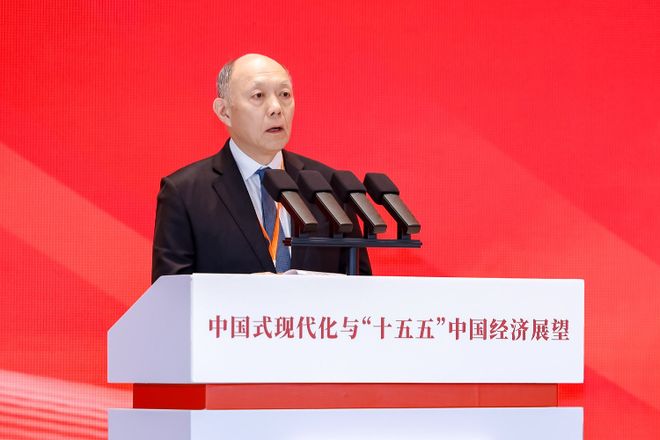
Core Insights - The 20th China Economic Forum held in Nansha, Guangzhou, focused on "Chinese-style modernization and the 14th Five-Year Plan" with prominent figures discussing new opportunities for China's economic development [2] Group 1: Strategic Collaboration - The collaboration between Nansha and Hong Kong is seen as a complementary partnership, aiming to create a comprehensive service platform for mainland enterprises going global [2] - The development of Nansha from a barren land to a national-level new area and a free trade pilot zone is attributed to the foresight of the Ho Ying Tung Group, which initiated key infrastructure projects [2] Group 2: Innovation and Talent Development - The focus on innovation industries and strengthening multi-field cooperation between Guangdong and Hong Kong is emphasized, with support for institutions like Hong Kong University of Science and Technology and the Ho Ying Tung Research Institute [3] - Plans to cultivate young technology talents and enhance international scientific research cooperation in the Greater Bay Area are highlighted [3] Group 3: Regulatory Alignment and Business Environment - The need for regulatory alignment to facilitate the integration of Chinese enterprises into the global market is stressed, with suggestions to establish a recognition zone for professional qualifications in Nansha [3] - Initiatives to explore cross-border financial innovations and enhance the international business environment are proposed, including the implementation of yacht free travel and the transformation of the half-hour Bay Area traffic circle into an international business circle [3]