
视联网

Search documents
“齐鲁农云”平台上线
Zheng Quan Shi Bao Wang· 2026-01-01 03:35
Core Viewpoint - The "Qilu Agricultural Cloud" digital agriculture and rural comprehensive management service platform in Shandong Province is set to officially launch on December 31, 2025, aiming to drive the digital transformation of agricultural governance, industry development, and rural management through advanced technologies [1] Group 1 - The platform will feature a structure that includes "1 data warehouse, 1 agricultural code management platform, and six foundational capabilities: artificial intelligence, blockchain, satellite remote sensing, Internet of Things, visual Internet, and GIS geographic information" [1] - It will support 16 application scenarios to enhance various aspects of agricultural and rural services [1] Group 2 - The initiative aims to comprehensively utilize big data, cloud computing, and artificial intelligence to promote digital transformation in agriculture and rural sectors [1]
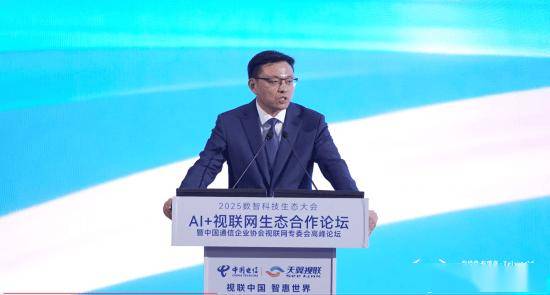
中国电信天翼视联董事长胡伟良:“AI+安防”是重点融合应用方向
Sou Hu Cai Jing· 2025-12-05 04:11
Core Insights - The conference focused on the development of the AI+ visual internet ecosystem, highlighting the importance of collaboration and innovation in the industry [1] Industry Trends - National policies have emphasized "AI+ security" as a key integration application direction, promoting intelligent front-end deployment and platform integration [3] - The market for "AI+ security" is rapidly expanding, driven by demand iteration and the rise of large models and multimodal technologies, enhancing AI algorithm capabilities [3] - Technological advancements, such as DeepSeek, have significantly lowered the application threshold for large models, shifting the core engine of AI development from computing power to data-driven approaches [3] Strategic Implementation - The company aims to solidify its position in national video infrastructure through the "1233 strategy," focusing on technological innovation and open collaboration as core competitive advantages [3] - Emphasis on the integration of cloud, network, terminal, intelligence, data, and security to tackle core technologies [4] - Development of a unified platform that integrates "one network, one cloud" to enhance operational efficiency [4] Core Capabilities - The company has achieved end-to-end security that is self-controlled, creating a differentiated advantage [4] - A comprehensive terminal system has been established for both consumer and industry applications [4] - AI application upgrades have been implemented through standardized products, enabling AI+ empowerment across multiple industries [4] Domestic and International Development - The company has achieved integrated operational services and collaborative governance in the domestic visual internet sector [4] - Strengthening partnerships with overseas operators to create a comprehensive capability supply system and innovate export models [4] Ecosystem Collaboration - The company advocates for an open cooperation development philosophy, emphasizing the importance of collaborative capabilities across the entire ecosystem [4] - Achievements include the integration of platforms, terminals, applications, AI, data, and capital into a cohesive operational framework [4] Collaborative Logic - The company adheres to four major cooperation logics: integration of industry and capital, synergy of self-research and collaboration, coordination of development and security, and interaction between centralized and decentralized approaches [5] - A commitment to high-quality development through deep integration of AI and terminals, alongside an open ecological cooperation path [5]


从图像采集到视联网:AI如何重塑物联网摄像头的万亿级产业价值链
3 6 Ke· 2025-10-17 11:58
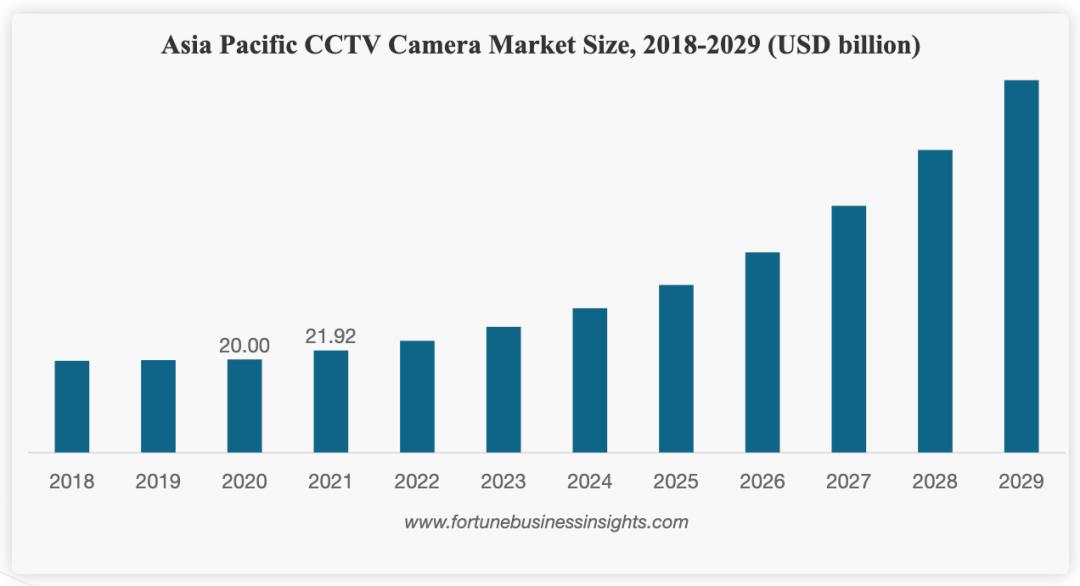
Core Insights - The article discusses the transformation of cameras from passive recording devices to intelligent nodes capable of perception, analysis, and decision-making, marking a significant industrial revolution in the video surveillance market [1][25]. - The global video surveillance market is projected to grow at a compound annual growth rate (CAGR) of 16.8%, reaching $100.2 billion by 2029, with AI-driven intelligent video analytics growing at over 30% annually [1]. Technological Evolution - The evolution of camera technology is categorized into six generations, transitioning from passive recording to intelligent systems capable of real-time analysis and decision-making [6][7][8]. - The first generation involved traditional CCTV systems that required manual playback, while the second generation introduced IP cameras for remote monitoring [6]. - The third generation began with basic intelligent detection, leading to the fourth generation's edge intelligence, where cameras could perform complex functions like facial recognition locally [7][8]. - The fifth generation focuses on multi-modal integration, combining various sensor data to enhance cognitive capabilities, while the sixth generation aims for fully autonomous systems with predictive abilities [8]. Architectural Innovation - The shift from isolated systems to interconnected ecosystems is highlighted, with a hybrid edge-cloud architecture reducing latency to under 500 milliseconds while maintaining 99.8% system availability [11]. - Modern systems utilize multi-modal data fusion, integrating visual, auditory, and environmental data to improve accuracy and reduce false alarms by over 80% [12]. - The introduction of microservices architecture enhances flexibility and scalability, allowing independent deployment and upgrades of system components [13]. Value Restructuring - The value of cameras has evolved from mere surveillance tools to essential components driving digital transformation across various sectors, including public safety, manufacturing, retail, and logistics [18][19][20]. - Intelligent visual systems can now predict and prevent incidents, significantly improving public safety management and operational efficiency in industries [18][19]. - Video data is recognized as a valuable digital asset, enabling insights for urban planning, risk assessment, and business strategy [20]. Future Outlook - The integration of smart visual systems with emerging technologies like the metaverse, 6G, and quantum computing is expected to unlock new possibilities for real-time monitoring and decision-making [21][22]. - The development of brain-computer interfaces and general artificial intelligence (AGI) will further enhance human interaction with intelligent visual systems, leading to unprecedented capabilities [23][24]. - The ultimate goal is to establish a digital civilization infrastructure, positioning intelligent visual systems as the neural network connecting the physical and digital worlds [24][25].
工信部近日印发《算力互联互通行动计划》 部署六方面16项重点任务
Zhong Guo Chan Ye Jing Ji Xin Xi Wang· 2025-06-08 22:28
Core Viewpoint - The Ministry of Industry and Information Technology has issued the "Computing Power Interconnection Action Plan," aiming to enhance the efficiency and service level of public computing resources, promoting high-quality development in computing power through 16 key tasks across six areas [1][2]. Group 1: Key Tasks and Areas - The action plan outlines six main areas: strengthening the foundation of computing power interconnection, optimizing computing facilities interconnection, promoting resource sharing, innovating business interconnection, creating application scenarios, and ensuring network and data security [2]. - Specific tasks include tackling core technology challenges, establishing standards and norms, and developing interconnection rules [2]. Group 2: Application Scenarios - The plan promotes the application of computing power interconnection in enterprise-level scenarios such as artificial intelligence, scientific computing, intelligent manufacturing, remote medical care, and consumer-level scenarios like intelligent driving, cloud rendering, cloud computing, and cloud gaming [2]. - It encourages the integration of computing power interconnection with energy internet, industrial internet, and mobile internet for innovative applications [2]. Group 3: Implementation Support - To ensure the successful implementation of the action plan, the Ministry will enhance resource investment and create a supportive environment through policies, funding, talent, and resource allocation [2]. - The plan emphasizes the cultivation of enterprises and optimization of the industry ecosystem, supporting backbone computing power enterprises, high-tech companies, and specialized small and medium-sized enterprises [2].
工信部:推动算力互联赋能典型应用场景
news flash· 2025-05-30 05:54
Core Viewpoint - The Ministry of Industry and Information Technology (MIIT) has issued the "Computing Power Interconnection Action Plan" to promote the application of computing power interconnection in various new business scenarios [1] Group 1: Application Scenarios - The plan emphasizes the application of computing power interconnection in service scenarios such as computing resource services, task scheduling, market transactions, and open-source community operations [1] - It aims to enhance enterprise-level applications in artificial intelligence, scientific computing, intelligent manufacturing, remote medical services, and visual internet [1] - The initiative also targets consumer-level applications including intelligent driving, cloud rendering, cloud computing, and cloud gaming [1] Group 2: Integration with Other Technologies - The plan encourages the integration and innovative application of computing power interconnection with energy internet, industrial internet, and mobile internet [1]
星网锐捷(002396):24Q4毛利率提升 发力智算中心网络解决方案和高端AI交换机
Xin Lang Cai Jing· 2025-04-07 08:21
Core Viewpoint - The company reported a revenue of 16.758 billion yuan for 2024, reflecting a year-on-year increase of 5.35%, while the net profit attributable to shareholders was 405 million yuan, down 4.76% year-on-year [1] Group 1: Financial Performance - The company achieved Q4 revenue of 4.872 billion yuan, a slight increase of 0.34% year-on-year, with a net profit of 142 million yuan, up 16.22% year-on-year [1] - The gross margin for Q4 was 38.13%, showing a quarter-on-quarter increase of 6.29 percentage points [1] Group 2: Product and Market Development - The company made significant breakthroughs in network infrastructure products, particularly in the data center sector, enhancing its innovation capabilities [2] - The AI-FlexiForce intelligent computing center network solution was delivered on a large scale and won the "Annual Influential Solution Award" [2] - The company launched innovative products such as the TH5 switch, 51.2T CPO switch, and leading global 400G/800G LPO optical modules [2] Group 3: AI Applications Expansion - In the field of trusted computing, the company developed the "Shenghua" series machines based on Huawei's Kirin 9000C chip, aiding various sectors in achieving intelligent upgrades [2] - The company received telecom equipment access licenses for multiple AI voice core products, enhancing competitiveness in the operator market and industry private networks [3] - The company made strides in smart medical solutions, which were implemented in national regional medical centers across provinces like Shandong, Shanghai, and Beijing [3] Group 4: Market Outlook and Profit Forecast - The company adjusted its net profit forecasts for 2025 and 2026 downwards by 39% and 42% to 510 million yuan and 622 million yuan, respectively, while introducing a new forecast of 728 million yuan for 2027 [3] - The company maintains a "buy" rating, anticipating growth opportunities from AI intelligent computing center networks and increased demand for white-label switches in data centers driven by operator investments [3]
