论文查重

Search documents
一假冒论文查重网站被曝光 检测价格高过官网
Xin Lang Cai Jing· 2025-12-23 08:31
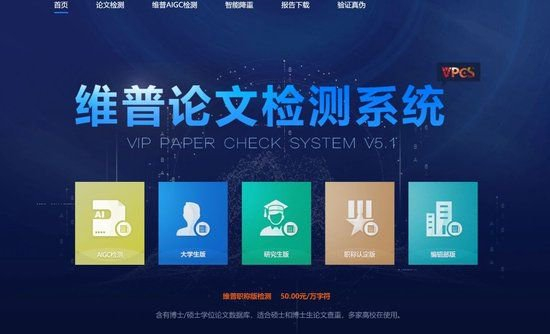
Core Viewpoint - A fake website posing as the official Weipu plagiarism detection system has been reported, misleading users with various detection services and pricing. Group 1: Fake Website Details - The fake website (https://vpcs.qkcnki.com) claims to offer Weipu AIGC detection for 36.00 yuan per paper, university student version detection for 4.50 yuan per 1,000 characters, and professional title version detection for 50.00 yuan per 10,000 characters, promoting itself as having a large comparison database and strict detection standards suitable for mid-term modifications of Chinese and English papers [3][6]. - The official Weipu plagiarism detection system is developed by Chongqing Fanyu Technology Co., Ltd., which states that the only official website is "vpcs.fanyu.com," and "vpcs.qkcnki.com" is not affiliated with the company [3][6]. Group 2: Misleading Claims and Pricing - The fake website claims to collaborate with several well-known universities, while the actual company denies any authorization of third-party academic service platforms [6]. - The official Weipu plagiarism detection system charges 3 yuan per 1,000 characters for undergraduate thesis detection and 20 yuan per paper for AIGC detection, both of which are lower than the prices listed on the fake website [7].

2025年大学生学术研究洞察报告
艾瑞咨询· 2025-08-02 00:18
Academic Attitude - Over 40% of university students plan to pursue further studies after graduation, demonstrating a strong academic enthusiasm, with 92.2% seeking academic progress and more than half writing papers during the evening [1][9] Academic Tools - University students actively utilize tools to enhance efficiency in their academic practices, with over half facing anxiety related to plagiarism checks and commonly using multiple plagiarism detection tools for a single paper [2][3] Plagiarism Check Experience - Students experience conflicting results from plagiarism checks and struggle with high costs, leading to a reliance on multiple tools for reassurance, transitioning from fear of plagiarism rates to enjoying intellectual exchanges [3][4] Academic Focus - The primary academic focus for students is on professional courses and graduation theses, with 69.3% and 64.0% respectively considering these the most important aspects of their university education [6] Academic Pressure - A significant 92.2% of students set academic KPIs for themselves, with 33.8% pursuing academic innovation and 41% opting for further academic studies as a response to competitive pressures and a long-term investment in personal development [9] Research Experience Accumulation - Students are keen on accumulating research experience, with 67.2% focusing on academic exchange activities and 52.6% on research opportunities, alongside a strong emphasis on academic resources and tools [11] Nighttime Study Habits - A notable 53.2% of students engage in late-night writing sessions for their papers, with graduate students particularly favoring immersive late-night work [13] Time Management Challenges - Students report spending the most time on logical revisions and plagiarism checks, with 57.2% dedicating time to content logic modifications and 55.3% to reducing similarity [15] Coping with Plagiarism Anxiety - Over half of the students are caught in a "plagiarism check cycle," with 68.6% relying on AI for assistance, 65.5% searching online for help, and 62.7% paying for tools or services [17] Effective Tool Utilization - Students are adept at seeking external help, with over 40% focusing on writing experiences and 60% on plagiarism reduction strategies, utilizing AI tools (59.2%) and plagiarism detection tools (56.2%) [19][21] AI in Academic Work - A significant 84% of students regularly use generative AI, viewing it as a key efficiency booster in their academic work, particularly for repetitive tasks [22] Plagiarism Check Tools - More than half of students have used plagiarism detection tools for various types of papers, with graduation theses being the most common reason for usage [26] Multiple Tool Usage - It is common for students to use multiple plagiarism detection tools, with 98.7% of graduate students using two or more tools for checks, seeking reassurance from varied results [28] Tool Selection Challenges - Students face difficulties in selecting plagiarism detection tools due to varying factors such as authority, safety, and accuracy, leading to a desire for comprehensive solutions [30] Inconsistent Results - 50.4% of students encounter inconsistent results from different plagiarism detection tools, with 40.2% concerned about high costs and data security [32] Expectations for Tool Evolution - Students express a strong desire for plagiarism detection tools to evolve into comprehensive assistants, with 53.5% wanting AIGC detection features and 50.4% desiring document format conversion capabilities [34] Academic Spending - Academic papers represent the primary expenditure for nearly 70% (69.8%) of students in their academic pursuits, with humanities students particularly focused on paper-related expenses [38] Payment Preferences - 86.9% of students use both free and paid plagiarism detection tools, with 57.3% primarily relying on free options, and graduate students showing a higher willingness to pay for checks compared to undergraduates [40] Microsoft OfficePLUS - Microsoft OfficePLUS aims to be a supportive academic partner for students, understanding their struggles and academic aspirations while helping them manage paper-related anxiety without compromising their critical thinking [42]