语音交互技术

Search documents
老年人用嘴上网成新趋势
Xin Lang Cai Jing· 2026-02-12 09:22
Core Viewpoint - The trend of elderly individuals using voice technology to access the internet is emerging as a solution to bridge the digital divide faced by the aging population in China [2] Group 1: Internet Usage Among the Elderly - The penetration rate of smartphone elderly mode among seniors is less than 10% [2] - The proportion of internet users aged 60 and above who can proficiently use smartphone applications in elderly mode is 9.5% [2] - Many elderly individuals own smartphones but struggle with small fonts and complex operations, often relying on their children for assistance [2] Group 2: Voice Technology Adoption - Voice interaction technology is enabling seniors to access information and services without needing to type, thus enhancing their online experience [2] - The ability to ask questions using voice commands allows elderly users to learn new skills, such as cooking, and engage in social activities independently [2] - The shift from dependence on children to self-sufficiency in using technology is transforming the online experience and lifestyle of the elderly [2]
全新奔驰纯电CLA虚拟助手升级新增多项功能
Zhong Guo Zhi Liang Xin Wen Wang· 2026-01-30 07:49
Group 1 - The core concept of the news is the introduction of the Mercedes virtual assistant, which leverages the capabilities of the Doubao large model AI and integrates the full-chain voice interaction technology from Sibili to achieve efficient semantic understanding and emotional dialogue generation, set to launch with new models by the end of 2025 and continuously optimized [2] Group 2 - The Mercedes virtual assistant will optimize short-term dialogue memory and deep semantic association, with a wake-up time of only 0.2 seconds and an end-to-end execution time reduced to 0.8 seconds, enabling near-instant feedback [4] - The multi-zone interaction recognition accuracy can reach 98%, supporting continuous dialogue and natural language processing, allowing the system to maintain contextual relevance and accurately understand referential relationships, thus making multi-turn interactions smoother [4] Group 3 - Additionally, the assistant introduces a Mercedes user guide and a personified dialogue model to enhance emotional experiences, utilizing emotion recognition technology to identify user emotional states and providing personalized responses through changes in Avatar imagery color, TTS voice broadcast content adjustments, and environmental sound effects [5]


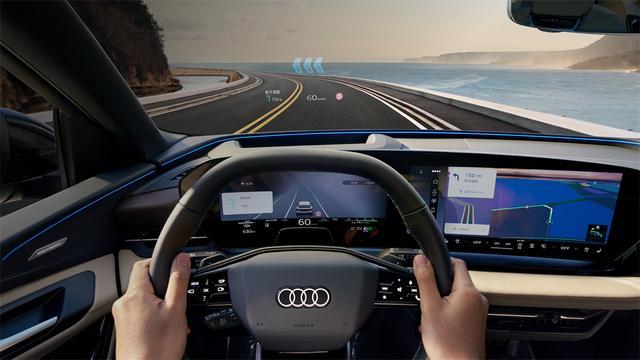
思必驰语音交互技术落地奥迪新一代智能网联车型
Huan Qiu Wang Zi Xun· 2025-08-15 09:01
Core Viewpoint - The collaboration between SIBIC and Audi has successfully transitioned into mass production, focusing on enhancing in-car voice interaction technology for localized models based on Audi's PPE and PPC platforms [1][8]. Group 1: Voice Interaction Technology - SIBIC has developed a comprehensive voice interaction system for Audi, optimizing wake-up response, dialogue Q&A, and command execution to improve interaction efficiency and user experience [3]. - The system supports rapid wake-up, achieving a 500ms first character display and 1300ms end-to-end interaction, allowing users to issue subsequent commands immediately after wake-up [5]. - The system can understand and execute complex commands containing multiple intents in a single sentence, enhancing user convenience [5]. Group 2: Offline Functionality and Customization - SIBIC's technology includes offline voice recognition and semantic understanding, ensuring stable performance in weak or no network environments, such as outdoors or in basements [6]. - The system adapts to user speech patterns and dialogue contexts, dynamically adjusting voice segmentation intervals for a more natural conversation flow [6]. - Users can create personalized voice profiles for the voice assistant through a simple recording process, allowing for customized voice interactions [6]. Group 3: Multilingual Support and Strategic Development - The system supports Mandarin with regional accents, Cantonese, and English, catering to diverse user needs across different regions [6]. - Audi is advancing its "PPC+PPE" dual-platform strategy, focusing on the intelligent development of both fuel and electric vehicles, with the PPC platform covering B to D-class models [6][8]. - The collaboration aims to enhance the voice interaction experience for various localized models, with plans for deeper cooperation to evolve voice commands into proactive, scenario-based services [8].