象形字

Search documents
马年说马丨象形字“马”的变迁
Xin Lang Cai Jing· 2026-02-14 10:19
Core Viewpoint - The evolution of the Chinese character "马" (horse) illustrates the transition from pictographic symbols to simplified characters, reflecting the broader development of Chinese writing over 3000 years [1][2][3] Group 1: Historical Development - The character "马" originated as a pictogram, depicting a horse realistically, but has undergone significant simplification over time, losing many of its original features [1][2] - The transition from pictographic representation to a more abstract form began in the Shang Dynasty, with the character evolving from detailed depictions to simplified strokes in oracle bone script [2] - By the time of the Qin Dynasty, the character had been standardized, eliminating regional variations and promoting uniformity in written communication [2] Group 2: Characteristics of Chinese Characters - The simplification of "马" reflects a broader trend in the evolution of Chinese characters, where the focus shifted from artistic representation to practical writing efficiency [2][3] - Modern "马" is considered a logogram, where the shape no longer resembles the actual object, but serves as a symbol for its sound and meaning, indicating a shift in the function of writing [3] - The simplification process highlights the balance between maintaining cultural heritage and adapting to societal needs, as characters evolve to remain relevant [3]
象形字“马”的变迁
Ren Min Ri Bao· 2026-02-14 05:32
Group 1 - The article discusses the limited number of pictographs in Chinese characters, with only about two to three hundred that represent tangible objects like nature and animals [1] - The character "马" (horse) is highlighted as a frequently used character with strong compositional ability, having 115 variants in the "Shuowen Jiezi" dictionary, where "马" serves as a semantic component [1] - The evolution of the character "马" is traced from its origins as a pictograph to its increasingly abstract forms since the Shang Dynasty [1] Group 2 - The article describes the detailed depiction of a horse in ancient inscriptions, emphasizing its recognizable features such as upright ears, round eyes, and a long mane, which allows anyone familiar with horses to identify it easily [1]


字字有源268 269
Xin Lang Cai Jing· 2026-01-18 07:07
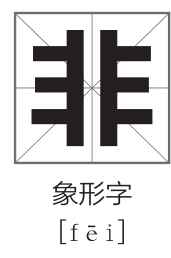
Group 1 - The article discusses the evolution and meanings of Chinese characters, particularly focusing on the character "非" which has various interpretations including negation and criticism [10][12][19] - The character "瓜" is explored, highlighting its origins related to gourd-like plants and its metaphorical uses in language, such as division and suspicion [18][19] Group 2 - The article emphasizes the significance of these characters in understanding cultural and linguistic nuances, showcasing their historical context and applications in modern language [10][18] - It illustrates how these characters reflect broader themes in Chinese philosophy and social interactions, such as the importance of honesty and the implications of actions [10][19]
字字有源260 261
Xin Lang Cai Jing· 2026-01-04 06:37
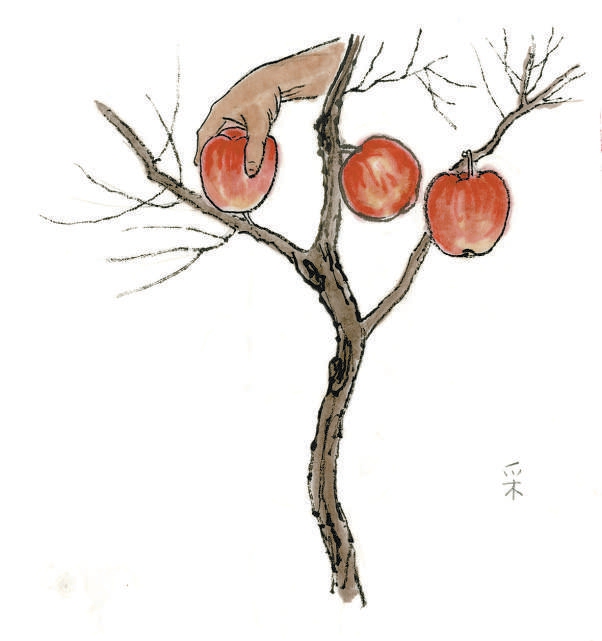
Group 1 - The character "采" originally means to pick or gather, as seen in terms like "采茶" (picking tea) and "采药" (gathering herbs) [5] - The character has evolved to include meanings such as collecting, as in "采集" (collecting) and "采访" (interviewing) [6] - It also extends to the concept of selection, reflected in phrases like "采取" (to adopt) and "采购" (to procure) [7] Group 2 - The character "无" has multiple meanings, including the absence of something, as in "人而无信" (a person without trust) [25] - It is used as a negation in sentences, equivalent to "not," such as in "无伤大雅" (not a big deal) [25] - Additionally, "无" can function as a conjunction indicating conditions, similar to "regardless of" [25]