
西瓜

Search documents
果盘子里话消费
Ren Min Ri Bao· 2026-02-27 03:10
Core Viewpoint - The emergence of high-priced fruits as everyday consumer goods indicates that consumption upgrades are not only driven by stronger purchasing power but also by improved supply-side quality [1][3]. Group 1: High-Priced Fruits and Consumer Behavior - High-priced fruits such as black strawberries (30 yuan each), finger lemons (200 yuan per pound), and pink pineapples (800 yuan each) have gained popularity, with many items showing "out of stock" status on e-commerce platforms, indicating consumer willingness to pay for novelty [1]. - The high prices of these fruits are attributed to factors such as breeding and cultivation technology limitations, reliance on imports, and associated logistics and tariff costs, leading to their perceived scarcity and emotional consumption trends [1]. Group 2: Consumer Expectations and Market Dynamics - Consumers are increasingly expecting that novel fruits will offer both high quality and reasonable prices, a trend supported by recent reductions in cherry prices due to free trade agreements and improved cold chain logistics [2]. - Historical examples show that expensive fruits can become affordable and popular in China, suggesting that with market demand, policy support, and technological advancements, high-priced fruits may eventually fall within acceptable price ranges for consumers [2]. Group 3: Supply-Side Innovations and Future Outlook - Continuous efforts in agricultural technology innovation and improvements in cold chain logistics are essential for making quality fruits accessible to more consumers, as seen with advancements in blueberry cultivation and local durian production [3]. - The "14th Five-Year Plan" emphasizes the need to boost consumption, highlighting that the transition of high-priced fruits to everyday items reflects a broader trend of consumption upgrading, which requires a focus on quality and brand strength in the fruit industry [3].
果盘子里话消费(微观)
Ren Min Ri Bao· 2026-02-26 22:12
Core Viewpoint - The emergence of high-priced fruits as everyday consumer goods indicates that consumption upgrades are not only driven by stronger purchasing power but also by improved supply-side quality [1][3]. Group 1: High-Priced Fruits and Consumer Behavior - High-priced fruits such as black strawberries (30 yuan each), finger lemons (200 yuan per pound), and pink pineapples (800 yuan each) have gained popularity, with many items showing "out of stock" status on e-commerce platforms, reflecting consumer willingness to pay for novelty [1]. - The high prices of these fruits are attributed to breeding and cultivation technology limitations, reliance on imports, and associated logistics and tariff costs, leading to their perceived scarcity and emotional consumption trends [1]. Group 2: Consumer Expectations and Market Dynamics - Consumers are increasingly looking for new fruit varieties that offer both quality and reasonable prices, as evidenced by the recent drop in cherry prices due to trade agreements and improved logistics [2]. - The market has seen previously expensive fruits, like certain watermelons, become affordable and popular in China, indicating potential for price reductions in high-priced fruits as agricultural technology advances [2]. Group 3: Supply-Side Innovations and Market Sustainability - Continuous efforts in agricultural technology innovation and improvements in cold chain logistics are essential for reducing cultivation and distribution costs, thereby making quality fruits more accessible to consumers [3]. - The "14th Five-Year Plan" emphasizes boosting consumption, suggesting that the transition of high-priced fruits to everyday items reflects a broader trend of consumption upgrade driven by supply-side enhancements [3].
80后主妇变身家庭农场主,“农的一家”日子越过越红火
Xin Lang Cai Jing· 2026-02-26 11:29
Core Insights - The article highlights the transformation of a housewife, Fan Dongying, into a successful family farm owner, showcasing her journey and the impact on her family and community [3][5][9] Group 1: Personal Journey - Fan Dongying, previously a full-time housewife, became the youngest female family farm owner in Xiaokunshan Town after a significant career shift in September 2016 [5] - She faced challenges with poor land conditions and weed issues but demonstrated resilience and a willingness to learn, evolving into a "new type" of professional farmer [5][7] Group 2: Agricultural Practices - Under the guidance of agricultural experts, she effectively managed rice production and controlled the spread of weeds within two years, leading to well-maintained rice fields [7] - Fan obtained licenses for operating tractors and harvesters and adopted drone technology for pesticide application, becoming one of the first in the region to do so [7] Group 3: Business Development - She utilized online platforms to enhance sales, achieving over 200,000 yuan in annual sales for her cooperative and reducing production costs by 30% through digitalization [9] - The cooperative is now recognized among the 18 authorized to operate the nationally protected "Songjiang Rice" product, assisting other farms in obtaining green rice certification [7][9] Group 4: Family Involvement - Her eldest son, Jiao Wei Yi, actively participates in farm activities and is pursuing agricultural studies, aspiring to continue the family farming legacy [9][11] - The younger son, Jiao Nuo Yi, promotes agricultural education among peers and expresses pride in his mother's achievements, highlighting the family's commitment to community support [11] Group 5: Future Plans - Fan plans to expand the farm's offerings by creating a shared vegetable garden, a fruit orchard, and a space for hands-on agricultural experiences, aiming to enhance community engagement and education [11]


宿州埇桥区:埇桥大地 年后春种忙
Xin Lang Cai Jing· 2026-02-25 16:55
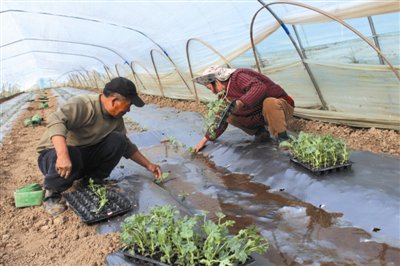
Core Viewpoint - The article highlights the agricultural activities in Suzhou Yongqiao District, where farmers are actively engaged in spring planting, particularly focusing on crops like watermelons, beans, peppers, tomatoes, and potatoes to ensure a good harvest for the upcoming season [2] Group 1 - Farmers in Suzhou Yongqiao District are beginning their spring planting activities immediately after the Spring Festival [2] - The focus of the planting includes early spring vegetables and crops such as watermelons, beans, peppers, and tomatoes [2] - The local agricultural community is motivated by the saying "A year's plan starts with spring," indicating the importance of timely planting for a successful harvest [2]
苹果周报2026.2.25:节后销区苹果到车减少,水果降价-20260225
Zi Jin Tian Feng Qi Huo· 2026-02-25 10:55
Report Industry Investment Rating - Not provided Core Viewpoints - The overall view on apples is "oscillating". This year, apple production is low, domestic cold - storage inventory is low, and the cumulative outbound volume is less than the same period last year. Spot prices remain stable, especially for high - quality goods, and the spot basis has strengthened compared to last week. The number of arriving trucks in the sales area has significantly decreased compared to before the festival, and fruit wholesale prices have generally declined after the festival. Among the six fruits monitored by the Ministry of Agriculture, Ya pears have the largest decline, followed by apples, and the price ratio is still in a high - level range. Continued attention should be paid to the trading atmosphere in the sales area, the outbound situation of goods in the warehouse, and the trading situation of citrus fruits [3] Summary by Directory Price Performance - Apple futures: On February 24, AP2605 closed at 9705 yuan/ton (down 1.3% from before the festival), and AP2610 closed at 8425 yuan/ton (down 0.5% from before the festival) [8] - Apple spot prices in Shandong: In the Shandong production area, the overall shipment volume was still large during the week. The mainstream price of 75 first and second - grade fruit farmer goods in Penglai was around 2.8 - 3.6 yuan/jin (unchanged from last week), 80 first and second - grade fruit farmer goods were 3.5 - 4.5 yuan/jin (last week: 3.2 - 4.5 yuan/jin), and third - grade fruits were 1.3 - 2.5 yuan/jin (unchanged from last week). In Qixia, 80 first - and second - grade slice - red fruit farmer goods were 3.2 - 4.5 yuan/jin (unchanged from last week), 75 fruit farmer general goods were 2.2 - 2.5 yuan/jin (unchanged from last week), and 65 - 70 small fruits were 1.7 - 2 yuan/jin (unchanged from last week) [7] - Apple spot prices in Shaanxi: In Luochuan, Shaanxi, the ex - warehouse price of semi - commercial fruits above 70 from fruit farmers is around 4.0 - 4.3 yuan/jin, general goods above 70 from fruit farmers are around 3.5 - 4 yuan/jin, and high - grade secondary fruits are around 2.2 yuan/jin. Prices are stable compared to last week [7] - Apple basis and monthly spread: The spot basis of the main contract was - 1705 yuan/ton (last week: - 1835 yuan/ton) [3] Supply: Production and Cold - Storage Inventory - Cold - storage inventory: As of the week of February 13, the apple cold - storage inventory in the country's major production areas was 5.88 million tons (a decrease of 320,000 tons from the previous week); Shandong had 2.1 million tons (a decrease of 90,000 tons from the previous week), and Shaanxi had 1.73 million tons (a decrease of 80,000 tons from the previous week) [15] - Planting area and production: In 2025, China's apple planting area was 1.74484 million hectares (a year - on - year increase of 0.2%), and apple production was 34.3132 million tons (a year - on - year decrease of 6%) [19] Demand: Cold - Storage Outbound Volume and Substitute Situation - Apple cold - storage outbound volume: As of the week of February 13, the national apple cold - storage outbound volume was 316,500 tons (last week: 342,500 tons), and the cumulative outbound volume in the 2025/26 season was 1.9456 million tons (compared to 2.2152 million tons in the same period last year); the cold - storage outbound volume of apples in Shaanxi and Shandong was 169,000 tons (last week: 166,300 tons), and the cumulative outbound volume in the 2025/26 season was 981,600 tons (compared to 972,900 tons in the same period last year) [24] - Apple arrivals in the South China market: After the festival, the apple arrivals in the South China market decreased compared to before the festival. On February 24, 9, 5, and 7 trucks arrived at Chalong, Jiangmen, and Xiaqiao respectively [26] - Wholesale prices of six fruits monitored by the Ministry of Agriculture: In the week of February 27, the wholesale price of Kyoho grapes was 12.48 yuan/kg (a week - on - week decrease of 0.6%), Fuji apples were 9.13 yuan/kg (a week - on - week decrease of 3.6%), bananas were 6.26 yuan/kg (a week - on - week decrease of 1.3%), Ya pears were 5.48 yuan/kg (a week - on - week decrease of 4.7%), watermelons were 6.88 yuan/kg (a week - on - week decrease of 1.4%), and pineapples were 7.35 yuan/kg (a week - on - week decrease of 1.7%) [36] - Fruit price ratio: In the week of February 27, the price ratio of apples to bananas was 1.46 (last week: 1.49), the price ratio of apples to Ya pears was 1.67 (last week: 1.65), and it was still in a high - level range. The price ratio of apples to citrus was 1.52 [39] Apple Import and Export - In 2025, China's cumulative apple imports were 116,750 tons, cumulative exports were 962,053 tons, and the net export volume was 845,300 tons (in 2024, the net export volume was 883,400 tons). China's main exported variety is Red Fuji, and the traditional export markets are Southeast Asian countries. In addition, Russia, Bangladesh, and some European countries are also important export destinations [43]
蓝莓飘香日子甜
Xin Lang Cai Jing· 2026-02-24 20:22
Group 1 - The core idea of the article highlights the successful implementation of modern agricultural technology in the Monghai Town Natural Power Modern Agricultural Technology Demonstration Park, which utilizes patented technologies for nutrient conversion and precision irrigation [1] - The demonstration park covers an area of approximately 1,000 acres and has established 8 blueberry greenhouses with a total area of 36 acres, leading to a significant yield increase [1] - The expected yield per blueberry plant is between 3.5 to 4 kilograms, with each greenhouse projected to produce around 6,000 kilograms, resulting in an estimated annual output value of approximately 500 million yuan for the 8 greenhouses [1] Group 2 - The local farmers, like Li Wanyun, have adopted a "renting + planting + working" model to achieve diversified income, with thousands of farmers benefiting from this approach [2] - The region combines high-standard farmland construction with specialty planting, exploring a rural revitalization path that promotes employment and income growth [2]
济宁市兖州区:2026年春节期间市场价格总体稳定
Zhong Guo Fa Zhan Wang· 2026-02-24 06:32
Core Viewpoint - The consumer goods market in Yanzhou District, Jining City, Shandong Province, is well-supplied and prices are generally stable during the Spring Festival of 2026, with a mixed trend in price changes compared to the previous year [1] Group 1: Price Stability in Grains and Oils - Prices for flour (special grade) and rice remain stable at 2.10 yuan per jin and 2.80 yuan per jin, respectively, showing no change compared to the previous year [3] - Prices for soybean oil (Golden Dragon Fish) and peanut oil (Luhua) are also stable at 65.00 yuan for 5 liters and 156.00 yuan for 5 liters, respectively, with no change year-on-year [3] Group 2: Meat and Egg Price Changes - Prices for various pork cuts, including lean pork and belly pork, have decreased significantly, with reductions of 21.88% and 19.23%, respectively [4] - Chicken egg prices have dropped by 14.00% to 4.30 yuan per jin, while the price of white-cut chicken has increased by 8.33% to 6.50 yuan per jin [4] Group 3: Fish Price Trends - The price of frozen hairtail fish has decreased by 23.08% to 10.00 yuan per jin, while prices for crucian carp remain stable at 8.50 yuan per jin [6] - Prices for carp, mackerel, and shrimp have also seen declines of 9.64%, 23.08%, and 8.00%, respectively [6] Group 4: Vegetable Price Fluctuations - The average price of 17 monitored vegetable varieties has decreased by 6.35% to 3.39 yuan per jin, with notable declines in prices for rapeseed (down 25.00%) and garlic (down 35.71%) [7] - Some vegetables, such as cabbage and tomatoes, have seen significant price increases of 60.00% and 42.86%, respectively [7] Group 5: Mixed Trends in Fruit Prices - Prices for apples and pears remain stable, while banana prices have increased by 34.62% to 3.50 yuan per jin [8] - Prices for watermelon and tangerines have decreased significantly, by 33.33% and 30.00%, respectively [8]
昆仑山下瓜果香
Xin Lang Cai Jing· 2026-02-14 18:45
Core Viewpoint - The article highlights the transformation of a pastoral area into a thriving agricultural and tourism hub, showcasing the successful cultivation of tropical fruits and medicinal herbs in a previously barren landscape, driven by local government support and community engagement [1][2][3] Group 1: Agricultural Development - The local government has implemented a series of supportive policies for facility agriculture, including financial support, technical training, and market connections, significantly boosting the enthusiasm of local farmers [2] - The variety of crops has expanded to include peaches, cherries, grapes, watermelons, strawberries, and dragon fruits, with medicinal herbs like white atractylodes, yellow gentian, and others covering over 5,000 acres [2] - The community's income has increased due to the cultivation of high-value agricultural products, leading to improved living standards [2] Group 2: Tourism Growth - The area is becoming a popular tourist destination due to the establishment of high-end accommodations and the filming of popular variety shows, marking a shift from its previous status as an under-visited location [2] - The local government is focusing on promoting unique agricultural products, such as "Yim牧场羊肉" and "Yim牧场昆仑雪菊," as part of a strategy to enhance the region's agricultural brand and expand its market reach [2] Group 3: Future Prospects - Plans are in place to further expand the cultivation of dragon fruits and snow chrysanthemums, with an emphasis on quality to enhance product reputation and marketability, including international sales [3]
南疆小城种瓜记
Ke Ji Ri Bao· 2026-02-03 09:08
Core Viewpoint - The article highlights the innovative agricultural practices in Shule County, Xinjiang, where winter watermelon cultivation is made possible through advanced greenhouse technology and smart farming techniques. Group 1: Agricultural Innovation - The "Shule" modern high-efficiency agricultural demonstration park utilizes self-heating greenhouses to grow watermelons in winter, overcoming the region's harsh climate with temperatures dropping to -10°C [7] - The park employs a water and fertilizer integration management platform that automates irrigation, reducing labor intensity and conserving resources [4] - The introduction of mechanized grafting technology ensures consistent quality in watermelon production, enhancing overall yield [8] Group 2: Economic Impact - The watermelon industry in the demonstration park has created stable employment for over 400 individuals, with seasonal labor exceeding 1,000 [8] - The unique characteristics of the watermelons, such as thin skin and uniform sweetness, allow them to be sold at prices exceeding 100 yuan, significantly higher than ordinary watermelons [8] - The park's expansion, including the construction of additional greenhouses, aims to further boost local employment and economic development [8] Group 3: Future Plans - The company plans to collaborate with local breeding enterprises to develop new watermelon varieties suited to market demands and regional climate conditions [8] - The focus will be on creating an integrated modern seed industry ecosystem that encompasses breeding, propagation, promotion, and service [8]
2025年巴西对欧盟水果出口增长18.5%
Shang Wu Bu Wang Zhan· 2026-01-28 17:11
Core Insights - The core viewpoint of the article highlights the significant growth potential of Brazilian fruit exports to the European Union, driven by favorable trade agreements and increasing demand in the EU market [1] Export Data Summary - The EU market accounts for approximately 70% of Brazil's total fruit exports [1] - By 2025, Brazil's fruit export volume to the EU is projected to reach 778,000 tons, with an export value of $850 million, representing year-on-year increases of 18.5% and 12.0% respectively [1] Category-Specific Export Performance - Mango exports are expected to reach 204,000 tons with a value of $23 million, showing a volume increase of 3.4% but a value decrease of 1.8% [1] - Watermelon exports are projected at 94,000 tons and $6.16 million, with volume and value increases of 22.6% and 23.9% respectively [1] - Lemon exports are anticipated to be 161,000 tons valued at $16 million, with a volume increase of 7.1% but a value decrease of 1.7% [1] - Grape exports are expected to reach 31,000 tons with a value of $7.41 million, showing increases of 10.8% in volume and 12.8% in value [1] - Papaya exports are projected at 49,000 tons and $5.69 million, with volume and value increases of 16.4% and 12.5% respectively [1] Trade Agreement Impact - The EU-Mercosur Free Trade Agreement is set to phase out tariffs on fruit imports from Mercosur member countries, currently ranging from 10% to 14%, to zero over the next seven years [1] - This policy adjustment is expected to significantly enhance the price competitiveness and market share of Brazilian fruits in the EU [1]