贝叶斯统计

Search documents
如何做出更好的决策?你需要这份贝叶斯思维指南
3 6 Ke· 2025-12-15 00:36
Core Insights - The article emphasizes that beliefs are not binary but exist on a spectrum, and Bayesian thinking provides a framework for making better decisions under uncertainty [2][3][5] Group 1: Understanding Bayesian Thinking - Bayesian thinking allows individuals to quantify their confidence in beliefs using probabilities ranging from 0% to 100%, moving beyond simplistic binary choices [5][6] - The article highlights the importance of accepting uncertainty and avoiding extreme positions, as most situations do not warrant absolute certainty [5][6] - It discusses common errors in probability reasoning, particularly regarding extreme values close to 0% or 100%, which can lead to significant misjudgments [6][8] Group 2: Tools for Better Decision-Making - The first tool is to accept uncertainty and measure beliefs on a probability scale, which helps in making informed decisions [5][6] - The second tool involves learning to use reverse reasoning, known as Bayesian inference, to assess the probability of a hypothesis given observed evidence [9][10] - The third tool warns against Simpson's Paradox, which illustrates how aggregate data can mislead interpretations of subgroups [11][12] Group 3: Updating Beliefs - The article stresses the importance of continuously updating beliefs as new evidence is acquired, following the principles of Bayesian reasoning [15][16] - It explains that prior beliefs influence how new evidence is interpreted, and this iterative process leads to a more accurate understanding over time [15][16] - The beauty of Bayesian mathematics lies in its ability to converge towards the truth as more evidence is collected and analyzed [16]


换个逻辑,读懂世界的本质
3 6 Ke· 2025-09-18 07:14
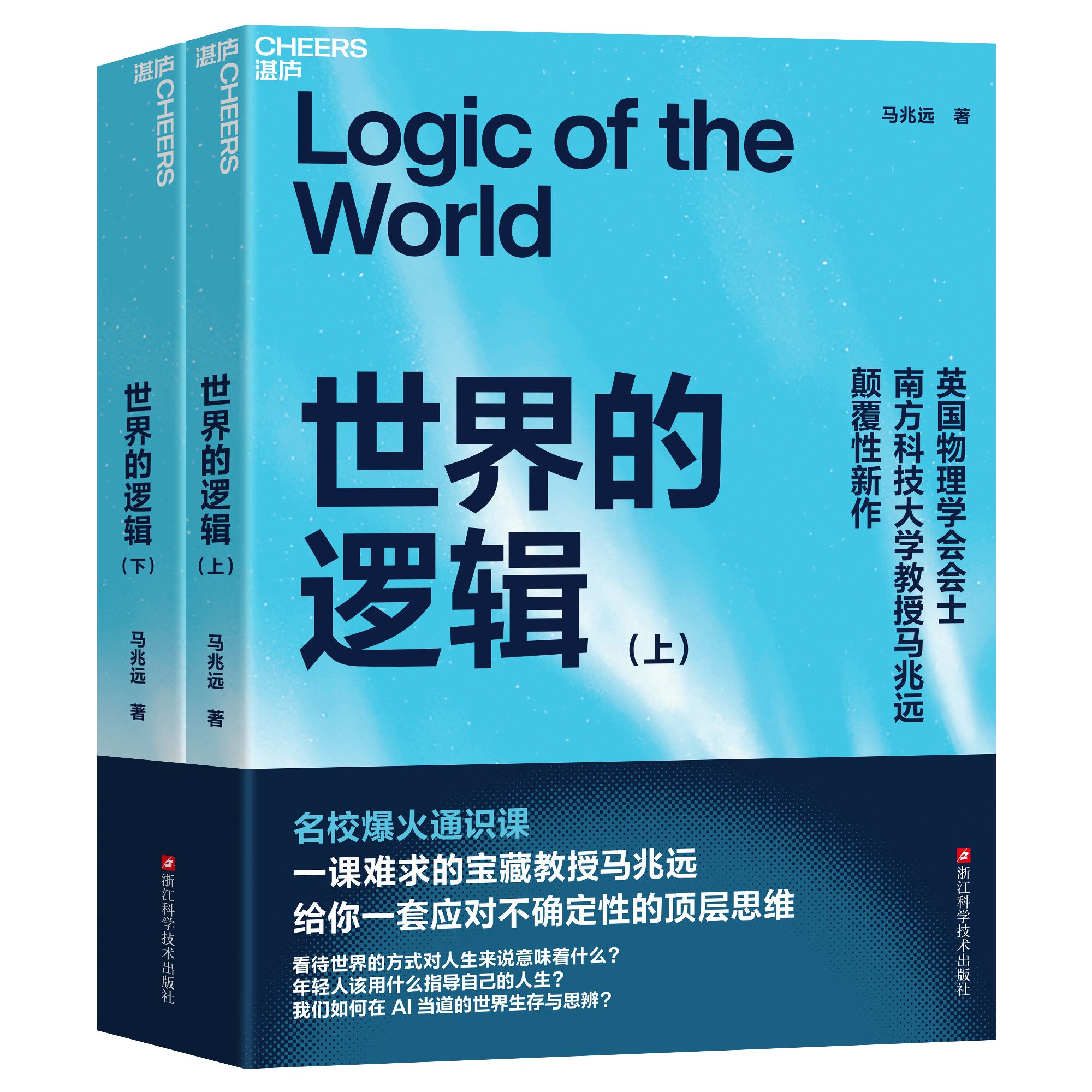
Core Idea - The book "The Logic of the World" by Professor Ma Zhaoyuan explores the evolution of human understanding of the world, emphasizing the impact of ancient Greek civilization, the nature of uncertainty in mathematics, and the implications of AI on human existence and reasoning [1]. Group 1: Influence of Ancient Greek Civilization - Ancient Greek civilization has a unique historical position, shaping the way humans understand the world and laying the foundation for philosophy, science, and art [12][14]. - The scientific spirit originating from ancient Greece encourages a courageous confrontation with ambiguity, viewing it as a motivation for further exploration [12][15]. - The development of a complete logical system in ancient Greece allowed knowledge to be accumulated and transmitted stably, which was crucial for the subsequent scientific revolution [16]. Group 2: Mathematical Crises and Uncertainty - The book discusses three crises in mathematics that shifted the focus from the pursuit of certainty to the acceptance of uncertainty [22]. - The first crisis relates to the Pythagorean crisis regarding irrational numbers, the second to the study of infinitesimals, and the third to set theory, particularly the foundational difficulties posed by Bertrand Russell [22][23]. - Gödel's incompleteness theorem is highlighted as a pivotal moment in human cognitive history, indicating that any finite, describable system is inherently flawed [23]. Group 3: AI and Modern Understanding - The rise of AI and the rediscovery of Bayesian statistics provide new methodologies that align more closely with human subjective cognitive processes [25]. - The book aims to explore the implications of Gödel's work on AI, deterministic computation, information theory, and chaos theory, revealing a new logical framework that challenges traditional notions of certainty [26]. - The interplay between uncertainty and modern scientific inquiry is presented as a profound and promising topic, reshaping our understanding of computation, information, and logic [26].