财务造假质疑

Search documents
万字长文举报董事长,梦洁股份涉事董事独家回应:3.85亿股权交易“被下套”,举报实属无奈;公司否认举报内容:已报案
Sou Hu Cai Jing· 2025-12-09 14:48
Core Viewpoint - The ongoing internal conflict at Mengjie Co., Ltd. has escalated, with board member Chen Jie publicly accusing Chairman Jiang Tianwu of various misconducts, including contract fraud and fund misappropriation, which has raised concerns among minority shareholders [1][3][17]. Group 1: Internal Conflict and Allegations - Chen Jie has publicly accused Jiang Tianwu and Secretary Li Jun of multiple issues, including contract fraud and fund misappropriation, which she claims harm the rights of minority shareholders [3][12]. - Since November, Chen Jie has released six lengthy articles detailing her allegations against the management team, including audio recordings and chat screenshots [3][6]. - Chen Jie has consistently voted against the company's financial reports and other proposals, citing concerns over the authenticity of financial data and fund usage [5][6]. Group 2: Financial Concerns and Mismanagement - Chen Jie raised questions about the reasonableness of certain expenditures, such as the significant increase in terminal construction costs from 40 million to 150 million per store, which she believes lacks justification [6][12]. - The company reported a revenue of 2.463 billion and a net loss of 156 million in 2021, raising alarms about its financial health [6]. - Regulatory scrutiny has increased, with the Hunan Securities Regulatory Bureau issuing corrective measures against Mengjie Co., Ltd. for financial mismanagement and lack of internal controls [7][12]. Group 3: Shareholding and Control Issues - In 2022, Changsha Jinsen invested 385 million to become the largest shareholder of Mengjie Co., Ltd., but has since struggled to gain actual control [1][8]. - The share transfer agreement allowed Changsha Jinsen to hold 19.77% of voting rights, but this control was lost in 2025 when the agreement expired, leading to a fragmented ownership structure [9][11]. - Chen Jie claims that the original agreement was manipulated by Jiang Tianwu to prevent Changsha Jinsen from exercising its shareholder rights, resulting in significant financial losses for the investor [12][13].



长鸿高科收购背后:实控人陶春风左手倒右手资本游戏?上市后业绩变脸有无财务猫腻
Xin Lang Zheng Quan· 2025-07-23 09:10
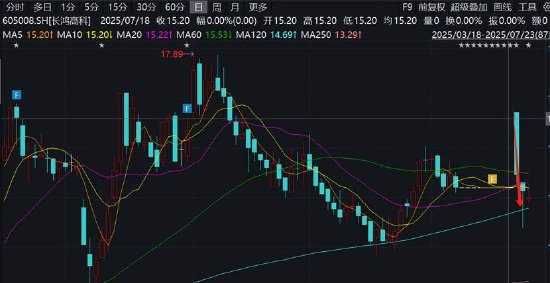
Core Viewpoint - The acquisition by Changhong High-Tech involves assets controlled by the actual controller, Tao Chunfeng, raising questions about whether this constitutes a capital game of "left hand to right hand" [1][2]. Group 1: Acquisition Details - Changhong High-Tech announced plans to acquire 100% of Guangxi Changke New Materials Co., Ltd. through a combination of issuing shares, convertible bonds, and cash payments [1]. - The stock of Changhong High-Tech resumed trading on July 21, 2025, but did not experience a significant price increase, indicating potential investor skepticism [1]. - Guangxi Changke specializes in the research, production, and sales of specialty synthetic resin polymer materials, including various high-performance resin products [1]. Group 2: Financial Performance and Concerns - The acquisition target, Guangxi Changke, has a high debt ratio, with figures of 70%, 72%, and 74% for 2023, 2024, and the first half of 2025 respectively, indicating a rising trend [2]. - Guangxi Changke reported losses in 2023 and 2024, with a net profit of less than 40 million yuan in the first half of 2025, reflecting a net profit margin of under 5% [2]. - Changhong High-Tech's financial performance has been under pressure, with a projected net profit for the first half of 2025 expected to decrease by 93.79% to 95.86% year-on-year [6]. Group 3: Revenue and Client Relationships - The company experienced significant revenue fluctuations post-IPO, with reported revenues of approximately 1.733 billion yuan, 2.372 billion yuan, 1.416 billion yuan, and 3.634 billion yuan from 2021 to 2024 [10]. - A major customer, Ningbo Ruilin Shengxiang Trading Co., Ltd., which contributed significantly to revenue, was deregistered in January 2023, raising concerns about the company's client base [13]. - The introduction of low-margin trading business in 2021 led to increased revenue but decreased profitability, with a notable 33.61% revenue increase accompanied by a 38.67% drop in net profit [15]. Group 4: Related Party Transactions and Regulatory Scrutiny - The acquisition is classified as a related party transaction, as the actual controller, Tao Chunfeng, holds significant stakes in both Changhong High-Tech and Guangxi Changke [2]. - There are concerns regarding the authenticity of financial statements, as the company has faced regulatory scrutiny for information disclosure violations [20][21]. - The relationship between Changhong High-Tech and its distributors raises questions about potential conflicts of interest and the integrity of reported financial performance [19].

带着1100亿负债,河南首富又要IPO了
凤凰网财经· 2025-06-06 13:01
Core Viewpoint - The company faces high debt and liquidity risks, with total liabilities exceeding 110 billion RMB and a debt-to-asset ratio of 58.7%, alongside short-term borrowings of 45.3 billion RMB and cash reserves of only 12.8 billion RMB, indicating significant short-term repayment pressure [1][6][32]. Group 1: Financial Health and Risks - The company has been embroiled in financial data controversies at least three times over the past four years, with regulatory scrutiny on issues like "large deposits and large loans" and insufficient inventory impairment provisions [2][19]. - As of now, the company is involved in 248 legal cases, including disputes over sick breeding pigs and employee overwork, which could amplify brand and regulatory risks [3][56]. - Despite a decrease in the debt-to-asset ratio from 62.1% to 58.7% in 2024, the company still has significant short-term borrowings and a notable cash shortfall for repayment [32][34]. Group 2: Business Performance and Structure - The company, known as "Pig King," reported total revenues of 124.8 billion RMB, 110.8 billion RMB, and 137.9 billion RMB for 2022, 2023, and 2024 respectively, with net profits of approximately 14.93 billion RMB, -4.17 billion RMB, and 1.89 billion RMB [5][6]. - The core business is divided into "live pig" and "meat processing," with the live pig segment contributing over 90% of total revenue, showing a strong correlation with pig prices and the cyclical nature of the industry [12][14]. - The company has maintained high fixed asset investments, with a significant increase in fixed assets from 106.4 billion RMB in 2022 to 106.8 billion RMB in 2024, indicating a focus on expansion despite financial pressures [41][42]. Group 3: Debt Management and Cash Flow - The company has a total debt of 110.1 billion RMB, with short-term debts reaching 60.3 billion RMB in 2025, marking a new high [31][32]. - In 2024, the company reported a net cash flow from operating activities of 37.5 billion RMB, a year-on-year increase of 280%, but continued to experience significant net outflows from investment activities [34][36]. - The financing activities have shifted from inflows to outflows, indicating a trend of rolling over debt, with interest expenses in 2024 amounting to 2.975 billion RMB, which is 15.7% of net profit [47][48]. Group 4: Strategic Moves and Future Outlook - The company is pursuing an IPO in Hong Kong to raise funds for global expansion, research and development, and to supplement working capital [53][54]. - The current market conditions, with rising pig prices, present an opportunity for the company to potentially use raised funds to alleviate short-term debt pressures [56]. - However, the company faces skepticism regarding its debt-driven expansion model, raising concerns about whether it is merely borrowing to repay existing debts [56][57].