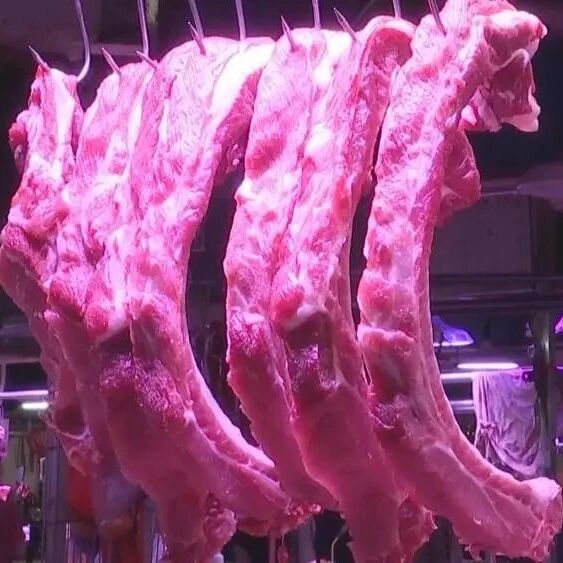
猪周期

Search documents
产能去化进入加速期
Hua Long Qi Huo· 2026-04-01 01:57
1. Report Industry Investment Rating - Not provided in the report 2. Core Viewpoints of the Report - In the short - term, the pig futures market has no signal of stabilization and is likely to continue weak oscillation at a low level. In the medium - to - long - term, due to high feed costs and continuous deep losses in the industry, inefficient production capacity will be cleared out faster. With the arrival of the seasonal consumption peak in autumn and winter, the supply - demand pattern is expected to gradually improve, and the pig market may recover in the fourth quarter [7][76][77] 3. Summary by Directory 3.1. Price Review - **Futures price**: Since March, the pig futures market has been under heavy pressure. The main contract price has dropped sharply, hitting new lows since listing. As of March 31, the LH2605 contract was reported at 9,770 yuan/ton, with a monthly decline of 14.93% [5][13] - **Spot price**: After the Spring Festival in 2026, the national pig price continued to decline. By March 31, the national average pig出栏 price dropped to 9.43 yuan/kg, a month - on - month decrease of 1.36 yuan/kg. The prices of piglets and culled sows also declined, and the industry's replenishment willingness was weak [6][16][19] - **Price difference**: The basis of live pigs turned negative, and the standard - fat price difference continued to narrow. As of March 31, the live pig basis was - 250 yuan/ton, and the standard - fat price difference was - 0.59 yuan/kg [26][30] 3.2. Fundamental Analysis 3.2.1. Supply Side - **Sow inventory**: As of the end of the fourth quarter of 2025, the national sow inventory was 39.61 million, a month - on - month decrease of 1.83%. In March, the policy adjusted the sow inventory target to 36.5 million, a reduction of 3.11 million from the end of 2025 [34] - **Pig inventory**: As of the end of the fourth quarter of 2025, the national pig inventory was 429.67 million, a month - on - month decrease of 1.63%. It is expected that the pig inventory in the first quarter will decline month - on - month [39] - **Pig出栏**: In February, the overall出栏 of the breeding end did not meet expectations. In March, the supply pressure increased due to the concentrated release of pig sources [47] - **Average出栏 weight**: In March, the average出栏 weight of commercial pigs rebounded rapidly. As of the week of March 27, it reached 123.32 kg, a month - on - month increase of 0.29% [51] - **Production efficiency**: The production efficiency of the pig breeding industry has been continuously improving, with the average PSY reaching about 26 and the fattening survival rate remaining above 90%, which offsets the marginal contraction of production capacity caused by the reduction of sow inventory [55] 3.2.2. Demand Side - **Slaughter enterprise operating rate**: Affected by the continuous decline of pig prices and concentrated出栏, the operating rate of slaughter enterprises rebounded to 33.95% in March, higher than the same period in 2024 and 2025 [60] - **Frozen product storage rate and fresh sales rate**: After the Spring Festival, the fresh sales rate of slaughter enterprises decreased to 78.55%, and the frozen product storage rate increased to 21.52% [65] 3.2.3. Cost - profit Situation - **Breeding profit**: Since March, the breeding profit of self - breeding and self - fattening and purchasing piglets for fattening has been in deep losses. As of March 30, the loss per head was 330.82 yuan and 221.06 yuan respectively [68] - **Pig - grain ratio**: In March, the pig - grain ratio dropped below 5:1, reaching a new low of 4.14, forcing the industry to optimize the production capacity structure [72] 3.2.4. Reserve Purchase Situation - The market's expectation of reserve purchase has increased, but the probability of large - scale national reserve purchase in the short term is low. Some provinces have launched regional reserve purchases, but the impact on the overall supply - demand pattern is limited [75] 3.3. Market Outlook and Operation Strategies - **Market outlook**: In the short term, the market will continue to oscillate weakly at a low level. In the medium - to - long - term, the market is expected to improve in the fourth quarter [76][77] - **Operation strategies**: In the short term, it is recommended to wait and see and pay attention to the pace of production capacity reduction. In the medium - to - long - term, opportunities for cyclical reversal can be selectively deployed. There are no strategies for arbitrage and options [8][78]
中国生猪行业研究成本下行遇上产能调控,生猪行业盈利拐点何时到来?(精华版)
Tou Bao Yan Jiu Yuan· 2026-04-01 00:35
Investment Rating - The report does not explicitly state an investment rating for the swine industry, but it discusses the potential for recovery and strategic adjustments in the sector, indicating a cautious outlook on profitability as the industry navigates through overcapacity and demand recovery challenges [2]. Core Insights - The Chinese swine industry is undergoing a deep adjustment due to the dual pressures of declining costs and overcapacity, with the profitability turning point dependent on the race between capacity reduction and demand recovery [2]. - The report emphasizes the importance of disease management, particularly in the context of African swine fever and other viral strains, as a critical variable affecting the industry's recovery [2]. - The transition from reactive to proactive management in the swine industry is highlighted, with a shift from price control to capacity management as the core regulatory tool [4][18]. Summary by Sections Industry Evolution - The Chinese pig cycle has evolved through three stages: from natural fluctuations to policy interventions, with significant volatility prompting the establishment of a regulatory framework [3]. - The current phase is characterized by a shift towards rational capacity reduction led by large enterprises, moving away from speculative practices by smallholders [3]. Capacity Management - The report outlines a paradigm shift in capacity management, moving from reactive measures to proactive strategies, with a target reduction of 4.9% in capacity for 2024 [4][16]. - The establishment of a three-tier early warning system aims to compress volatility by guiding supply adjustments through large enterprises [18]. Market Dynamics - The industry is experiencing a transition from scale expansion to efficiency-driven competition, with overcapacity leading to price declines and a need for industry consolidation [5]. - The report notes that the profitability of the industry is increasingly dependent on the ability of second and third-tier enterprises to catch up technologically rather than blindly expanding capacity [5]. Future Outlook - By 2025, the report anticipates a slight increase in breeding sow inventory and a modest rise in pork production to 57.5 million tons, while consumption is expected to grow at a slower pace [13]. - The long-term outlook suggests a shift towards quality and efficiency-driven growth, with a projected decline in pork production and consumption by 2034 due to demographic changes and dietary diversification [14]. Cost Structure - The report indicates that feed costs are a significant component of overall production costs, with a projected decrease in feed prices to 1,221 RMB per head in 2024, reflecting pressures from overcapacity [35][37]. - The cost structure is expected to stabilize as the industry adjusts to supply-demand dynamics, with large enterprises leveraging economies of scale to maintain competitiveness [35]. Industry Structure - The report highlights a significant increase in the scale of pig farming, with the proportion of large-scale operations rising from 35% in 2010 to 70% in 2024, driven by the competitive advantages of larger firms [44]. - The consolidation of the industry is expected to continue, with leading enterprises increasingly dominating the market and influencing capacity management decisions [44].
冠通期货研究报告:养殖产业链日报:近月宽松明显-20260331
Guan Tong Qi Huo· 2026-03-31 12:42
Group 1: Report Industry Investment Rating - No relevant content provided Group 2: Core Views of the Report - Northeast soybean spot prices are weak, with more market circulation and sparse trading, but the state - reserve auction provides price reference and bottom support, and short - term prices are expected to be in shock adjustment with obvious bottom support [1] - Shandong corn prices rose slightly, while Northeast corn continued to decline weakly. There is a certain price correction pressure in the spot market, and short - term prices may be adjusted, but the downward space is limited [1] - The egg market is entering the off - season, with stable supply due to high laying rates and high inventory. Near - month contracts are expected to be weakly volatile, and far - month contracts may fall if the chicken culling is not as expected [2] - The state has started to purchase frozen pork for storage, but short - term supply pressure remains high. The supply of live pigs will be in excess from March to May, and there is an expectation of a price rebound at the end of the third quarter, but near - month pressure is huge [3][4] Group 3: Summary by Related Catalogs Soybean - Northeast soybean spot prices are weak, with more market circulation and sparse trading. The state - reserve auction at 4500 yuan/ton last Thursday had a transaction rate of over 60%, providing price reference and bottom support. Short - term prices are expected to be in shock adjustment [1] Corn - Shandong corn prices rose slightly, and Northeast corn continued to decline weakly. There was a high volume of corn in North China last weekend to this week, and the inventory of deep - processing enterprises gradually accumulated. Today, the arrival volume decreased, and the price decline slowed down. In the Northeast, the sales of ground - stored grain are coming to an end, and the supply has increased recently. Spot prices have correction pressure, and short - term prices may be adjusted, but the downward space is limited [1] Egg - The egg market is entering the off - season. The current laying rate is about 92.71%, and it is expected to remain stable. The inventory is high, and the supply pressure persists. After the sharp rise in futures last week, there has been a continuous adjustment in the past two days, and the price difference between futures and spot is narrowing. Near - month contracts are expected to be weakly volatile, and far - month contracts may fall if the chicken culling is not as expected [2] Pig - The state has started to purchase frozen pork for storage to promote price stability. However, short - term supply pressure remains high. The supply of live pigs will be in excess from March to May due to the high inventory of sows in the second quarter of last year. There is an expectation of a price rebound at the end of the third quarter, but near - month pressure is huge, and both near - and far - month contracts are in a deep adjustment period [3][4]
2023年中国生猪行业研究:成本下行遇上产能调控,生猪行业盈利拐点何时到来?
Tou Bao Yan Jiu Yuan· 2026-03-31 12:38
Investment Rating - The report does not explicitly provide an investment rating for the swine industry in China. Core Insights - The Chinese swine industry is undergoing a deep adjustment due to the dual pressures of declining costs and excess capacity, with the profitability turning point dependent on the race between capacity reduction and demand recovery [3] - The report analyzes the underlying logic of the swine industry's profit cycle, focusing on the effects of capacity regulation, disease prevention evolution, cost structure changes, and terminal demand trends [3] Summary by Sections Industry Evolution - The Chinese pig cycle has evolved through three stages: from natural fluctuations to policy regulation, with significant volatility prompting the establishment of a policy intervention system [4] - The current phase has seen a shift from speculative hoarding by smallholders to rational capacity reduction led by major enterprises, resulting in a gradual convergence of cycle fluctuations [4] Transformation of Regulatory Paradigms - The swine industry has transitioned from post-African swine fever recovery to a deep transformation phase, with a focus on capacity regulation and proactive disease prevention [5] - The 2024 capacity regulation plan aims to reduce targets by 4.9% and establish a three-tier early warning system to compress fluctuation amplitudes by 60% [5][17] Industry Restructuring and Efficiency - The industry is experiencing a shift from scale expansion to an efficiency revolution, with excess capacity leading to price drops and industry reshuffling [6] - Major enterprises are achieving global leadership in technical indicators, while the exit of smallholders will accelerate the industry's concentration towards refined management [6] Supply-Demand Dynamics - The pig cycle is driven by supply fluctuations, following a 3-4 year cycle influenced by the breeding sow inventory and market demand [7][9] - The report highlights the cyclical nature of pig prices, with significant fluctuations observed in recent years due to supply-demand mismatches [9] Future Outlook - By 2025, the breeding sow inventory is expected to rebound, with pork production projected to reach 57.5 million tons, a 0.8% increase, while consumption is expected to grow only 0.3% [14] - The average pork price is anticipated to decline to 22-23 yuan/kg, with imports continuing to decrease due to policy impacts [14] Cost Structure and Feed Prices - The report notes that feed costs are a significant portion of total breeding costs, with the price of fine feed expected to drop to 1,221 yuan/head in 2024 [36][44] - The decline in feed prices reflects the pressures of excess capacity and the need for cost optimization [36] Industry Concentration - The African swine fever pandemic has acted as a watershed moment for industry restructuring, with the scale of pig farming increasing from 35% in 2010 to 70% in 2024 [45] - The top 20 enterprises now account for over 30% of the market, indicating a significant increase in industry concentration [45] Slaughtering and Processing Trends - The slaughtering rate is expected to recover to 37% in 2025, with stable but slowing growth in slaughter volume [49] - The average weight of slaughtered pigs has shown fluctuations, reflecting the shift from hoarding to accelerated capacity reduction [49]
中国生猪行业研究:成本下行遇上产能调控,生猪行业盈利拐点何时到来?(精华版)
Tou Bao Yan Jiu Yuan· 2026-03-31 12:24
Investment Rating - The report does not explicitly state an investment rating for the swine industry, but it discusses the dynamics of the industry and potential future trends, indicating a cautious outlook due to current challenges [2][4]. Core Insights - The Chinese swine industry is undergoing significant adjustments due to dual pressures of declining costs and excess capacity, with the timing of the profitability inflection point dependent on the race between capacity reduction and demand recovery [2]. - The report highlights the evolution of the Chinese pig cycle, transitioning from natural fluctuations to policy-driven interventions, with a focus on capacity control and disease management as critical variables [3][4]. - The industry is shifting from a focus on quantity expansion to quality and efficiency, driven by the need for cost optimization and the exit of smaller players due to excess capacity [5][11]. Summary by Sections Industry Dynamics - The swine cycle is driven by supply fluctuations, following a 3-4 year cycle influenced by factors such as sow inventory, pig supply, and pricing [6][8]. - The report outlines three types of pig cycles: traditional, external shock-driven, and policy intervention-driven, with the latter becoming the new norm in recent years [9]. Capacity Control and Policy Changes - The Chinese swine industry has transitioned from reactive measures to proactive capacity control, with a target reduction of 4.9% in 2024 and the establishment of a three-tier warning system to manage supply fluctuations [4][16]. - The report emphasizes the importance of biosecurity and proactive management in the industry, moving from administrative controls to a more integrated and market-driven approach [21][44]. Cost Structure and Efficiency - The report notes that feed costs constitute a significant portion of total production costs, with a projected decrease in feed prices to 1,221 RMB per head in 2024, reflecting pressures from excess capacity [35][37]. - The efficiency revolution is replacing scale expansion as the main competitive focus, with leading companies achieving global cost leadership while smaller players face significant survival challenges [5][51]. Future Outlook - By 2025, the report anticipates a slight increase in sow inventory and pork production, with total pork output expected to reach 57.5 million tons, a 0.8% increase, while consumption is projected to grow only 0.3% [13][14]. - The long-term outlook suggests a shift towards quality-driven growth, with a gradual decline in production and consumption due to demographic changes and dietary diversification [14][44].
【冠通期货研究报告】养殖产业链日报:近月宽松明显-20260330
Guan Tong Qi Huo· 2026-03-30 11:48
1. Report Industry Investment Rating No information provided. 2. Core Viewpoints - The domestic soybean market maintains a stable price, with the mid - term continuing an upward trend in a volatile manner, and short - term adjustment space is limited [1]. - The domestic corn market shows a downward trend, with short - term adjustment due to price and oil factors, and it is recommended to wait and see [1]. - The egg price is expected to gradually move up, and it is not recommended to be overly bearish [2]. - The pig market is in a phase of capacity reduction, with prices likely to rebound moderately in the second half of the year [4]. 3. Summary by Related Catalogs Soybean - The domestic soybean spot market price remains stable. The focus is on the domestic soybean auction by Sinograin, and the result fails to break the market's wait - and - see atmosphere [1]. - The prices in the Northeast and South production areas are stable. After - festival replenishment demand ends, downstream users focus on inventory digestion and turn to a wait - and - see attitude [1]. - Sinograin's auction transactions decline, but the futures price has strong support below, with limited short - term adjustment space and a mid - term upward trend in a volatile manner [1]. Corn - The domestic corn market is on a downward trend. In North China, the supply remains high, and the price is weak. In Northeast China, the sales of on - the - ground grain are coming to an end, and the supply has increased recently [1]. - There is price adjustment pressure in the spot market, and with the decline of crude oil, corn has short - term adjustment. It is recommended to wait and see [1]. Egg - In late February 2026, the national laying hen inventory was 1.35 billion, a year - on - year increase of 3.4%, which restricts the rapid rise of egg prices [2]. - The number of newly - laid hens from March to April 2026 decreases significantly, and the laying hen inventory will decline from April to May. In March, the egg supply tightens, supporting price increases [2]. - The egg futures rose sharply last week, and the spot price increase was limited. The futures price fell today, but it is still expected to move up gradually [2]. Pig - The National Development and Reform Commission and the Ministry of Agriculture and Rural Affairs held a symposium. The pig price has entered the first - level early warning range of excessive decline due to factors such as the decline in post - festival consumption demand [3]. - In March, the pig slaughter plan of key provincial - level large - scale breeding enterprises increased by 17.63% month - on - month, and the average slaughter weight increased. The supply pressure is heavy [3][4]. - The pig spot market is weak, the feed cost rises, and the breeding profit deteriorates, forcing capacity reduction in the short term. It is expected that the capacity reduction will continue from March to May, and the price may rebound moderately in the second half of the year [4].
猪价跌破10元关口
第一财经· 2026-03-30 09:16
Core Viewpoint - The domestic pig price has rapidly declined, breaking the psychological barrier of 10 yuan/kg, currently reported at 9.33 yuan/kg, marking a significant drop of approximately 24% year-to-date, reaching historical low levels seen in previous pig cycles [3][4] Group 1: Current Market Conditions - The pig price has shown a "first rise then fall" trend since the beginning of the year, with a notable acceleration in decline post-Spring Festival, leading to a situation where "peak season is not peak, and off-season is even weaker" [4] - As of March 30, the average price of external three yuan pigs has dropped to 9.33 yuan/kg, a seven-year low since 2019, and below the historical low of 9.92 yuan/kg from the second quarter of 2018 [4] - The futures market reflects this pessimism, with the main LH2605 contract hitting a historical low of 9815 yuan/ton, indicating market expectations of further price declines [4] Group 2: Industry Financial Performance - The continuous drop in pig prices has led to significant losses across the industry, with self-breeding models experiencing losses of 344 yuan per head, and some periods seeing losses exceeding 400 yuan [4][5] - The average comprehensive breeding cost is around 13-14 yuan/kg, leading to a maximum price-cost gap of nearly 4 yuan/kg, affecting even the leading companies in cost control [4][5] - In the first two months of 2026, 19 listed pig companies reported a total output of 30.43 million pigs, a year-on-year increase of 9.9%, but with a general trend of "increased volume and decreased price" [5][6] Group 3: Supply and Demand Dynamics - The core logic of the pig cycle reversal is not merely about how low prices fall, but whether significant capacity reduction can occur to fundamentally alter the supply-demand balance [7][8] - As of the end of 2025, the breeding sow capacity had only decreased by 2%, with production efficiency improvements offsetting some of the capacity reduction effects, maintaining a loose supply environment [8] - Demand has weakened post-Spring Festival, with pork consumption dropping by 15%-20%, leading to a slowdown in sales for slaughter enterprises and further exacerbating price declines [9] Group 4: Future Outlook - External institutions like Goldman Sachs, Morgan Stanley, and UBS are increasingly focusing on the domestic pig market, suggesting that the current price around 10 yuan/kg may be close to the bottom of this cycle [9][10] - UBS forecasts a rebound in pig prices in the second half of 2026, supported by a gradual recovery in consumption and improved sentiment among slaughter enterprises [10]





底部震荡格局延续,关注产能去化节奏
Zhong Hui Qi Huo· 2026-03-30 05:35
1. Report Industry Investment Rating - No relevant information provided 2. Core Viewpoints of the Report - In 2026 Q1, the spot and futures prices of live pigs continued to hit new lows, with the spot price falling below 10 yuan/kg, and the industry plunged into deep losses. The futures market showed a structure of near - term weakness and long - term strength, reflecting market expectations of short - term oversupply and medium - to - long - term improvement. In Q2 and later, pig prices are likely to remain in a bottom - oscillating pattern, with a front - low and back - high term structure. Policy support can provide short - term relief but cannot change the overall supply - demand situation. For futures trading, opportunities can be seized based on capacity reduction progress and changes in the slaughter rhythm [3]. 3. Summary by Directory 3.1 Market Review 3.1.1 Futures Market Review - In Q1 2026, domestic live pig spot and futures prices declined steadily, with the spot market being weaker. After the Spring Festival, due to the end of pre - festival stocking and the entry into the consumption off - season, the supply - demand imbalance intensified, and the spot price of pigs dropped unilaterally. The futures market also weakened, with near - term contracts hitting new lows. The price difference structure showed a typical bearish pattern, with near - term contracts under pressure and far - term contracts pricing in capacity reduction and market recovery expectations [9]. - In terms of the basis and price difference structure, the basis weakened and turned into a deep discount after the Spring Festival, and although it slightly recovered in March, it remained at a historically low level. The price difference structure maintained a near - weak and far - strong pattern, and the contango structure became more obvious, indicating market expectations of short - term oversupply and medium - to - long - term improvement [11]. 3.1.2 Futures Position and Trading Volume - In Q1 2026, the position of the weighted live pig contract first decreased and then increased, remaining above 300,000 lots, and exceeding 430,000 lots at the end of the quarter. The trading volume was significantly higher than in previous years, with a pattern of price decline and position increase, reflecting the dominance of short - side funds and intensified long - short competition [14]. 3.2 Anti - involution in the Pig Cycle 3.2.1 Anti - involution Review - In Q1 2026, live pig policies shifted from flexible guidance to rigid capacity constraints, with clearer goals and more precise implementation. Policies such as adjusting the reasonable inventory of breeding sows, implementing financial regulation, and starting frozen pork purchases were introduced, which partially corrected extreme market pessimism and accelerated industry reshuffling [16]. 3.2.2 Progress of the Pig Cycle - Before the African Swine Fever outbreak, China experienced five complete pig cycles from 2002 - 2022, mainly caused by supply - side shocks. After the African Swine Fever, the pig cycle showed new characteristics such as shorter duration, increased short - term volatility, and stronger capacity resilience. Currently, the industry is in the deep bottom - grinding stage of the seventh cycle, with continuous losses and the cycle reversal waiting for accelerated capacity reduction [17][20][23]. 3.3 Supply - Demand Pattern of the Live Pig Market 3.3.1 Supply Side - **Live Pig Inventory and Slaughter**: As of Q4 2025, the national live pig inventory reached 429.67 million, with an increase of 2.24 million year - on - year. The inventory structure showed an increase in the proportion of small pigs and a decrease in medium and large pigs. In terms of slaughter volume, in Q4 2025, the national live pig slaughter was 719.73 million, a year - on - year increase of about 2.44%. In 2026, the slaughter volume of sample enterprises remained high. The average slaughter weight was still at a relatively high level, and the effect of anti - involution on weight reduction was limited [25][31]. - **Supply of Breeding Sows and Piglets**: Since H2 2025, the inventory of breeding sows has been gradually decreasing. As of January 2026, it was about 39.58 million, still above the normal level. The efficiency of breeding sows has increased, and the MSY in 2025 increased by about 2.0% year - on - year. The number of piglets born remained high, indicating high supply pressure in H1 2026 [34][41][48]. - **Import Situation**: From 2025 to Q1 2026, China's pork imports remained at a low level, accounting for a decreasing proportion of domestic consumption. Import costs increased, and the price advantage of imported products was lost. External supply has little impact on the domestic market [52]. - **Capacity Situation**: From 2025 to Q1 2026, the cost of pig feed increased, and the breeding profit of live pigs has been in a loss state for several months. The industry is about to enter a stage of double losses for piglets and fattened pigs, and capacity reduction is expected to accelerate [60]. 3.3.2 Demand Side - Population aging is one of the core factors leading to a continuous decline in pork consumption. The catering industry showed a recovery trend in Q1 2026, but the overall demand elasticity is limited, and it is difficult to reverse the supply - demand situation. The slaughtering rate remained at a relatively high level, mainly driven by sufficient supply. The live pig - meat price ratio first rose and then fell, and the center of gravity has been gradually moving up in recent years. The fresh - frozen price difference narrowed, and the fresh - sales rate decreased while the frozen - product storage rate increased, which will suppress the rebound of pig prices. The secondary fattening utilization rate remained at a low level, and the policy is concerned about restricting secondary fattening. The national pig - grain price ratio entered the first - level warning range, and the state has started frozen pork purchases [65][66][75]. 3.4 Market Outlook - The core driver of the current live pig futures market is the structural changes in supply and demand, and policy regulation is only a short - term disturbing factor. The current core contradiction lies in the verification of short - term loose supply and medium - to - long - term capacity reduction. In 2026 Q2 and later, pig prices are likely to show a pattern of low in the front and high in the back, with a bottom - oscillating pattern. In Q2, pig prices will remain at the bottom, and in the second half of the year, the supply - demand situation may improve marginally, but the increase will be limited. The futures market can seize short - term layout opportunities and consider the reverse spread strategy between contracts [77][78].
农林牧渔行业:猪价步入底部区域,重点关注4月水产投苗情况
GF SECURITIES· 2026-03-29 11:09
Core Viewpoints - The pig prices have entered a bottom area, with a focus on the water product seedling situation in April [1] - The report maintains a "Buy" rating for the agricultural, forestry, animal husbandry, and fishery sector [2] Market Review - In March 2026, the agricultural, forestry, animal husbandry, and fishery sector outperformed the CSI 300 index by 0.04 percentage points, with the sector declining by 4.38% compared to a 4.42% decline in the CSI 300 [18][19] - The livestock breeding sector experienced a smaller decline of 1.4% in March [18][22] Livestock Breeding - In March 2026, the national average price of live pigs was 10.06 CNY/kg, down 12.2% month-on-month and down 30.7% year-on-year [28][29] - The average loss for self-bred pigs in March was approximately 291 CNY per head, a decrease of 192 CNY month-on-month [31] - The average price of piglets was 23.6 CNY/kg, down 7.4% month-on-month [32] - The pig-to-feed ratio was 4.18, down 0.65 month-on-month [32] Feed and Animal Health - In March, the prices of aquatic products fluctuated, with a notable increase in feed prices due to rising raw material costs [6] - The report anticipates significant growth in the feed industry sales in March, driven by the upcoming spring seedling investment [6] - Leading feed companies are expected to expand their market share domestically and internationally due to their cost advantages [6] Dairy Cattle - As of March 19, 2026, the price of fresh milk in major production areas was 3.03 CNY/kg, down 1.9% year-on-year [6] - The industry is entering a destocking phase, with supply and demand expected to balance in the future [6] Key Company Valuation and Financial Analysis - The report highlights several key companies with strong financial metrics, including: - Wen's Foodstuffs Group (300498.SZ) with a target price of 18.55 CNY and a PE ratio of 21.41 for 2025E [7] - Muyuan Foods (002714.SZ) with a target price of 63.40 CNY and a PE ratio of 16.20 for 2025E [7] - Lihua Agricultural (300761.SZ) with a target price of 28.72 CNY and a PE ratio of 29.67 for 2025E [7]

猪价跌破5元创历史新低
21世纪经济报道· 2026-03-28 11:34
Core Viewpoint - The recent decline in pork prices has reached historical lows, raising concerns about the sustainability of the pig farming industry and the potential for widespread losses among producers [1][5]. Price Trends - As of March 23, the average trading price for lean pigs in China dropped to 9.71 yuan/kg, marking a historical low [1]. - The main futures contract for live pigs fell to 9815 yuan/ton on March 27, also a record low since its launch in January 2021 [1]. - The wholesale average price of pork has decreased for seven consecutive weeks, with a reported price of 15.84 yuan/kg for the week of March 20-26, down 23.4% year-on-year and 14.88% from the previous month [1]. Industry Challenges - The current price level for pigs is critical, as historical data shows that prices have previously dropped to around 10 yuan/kg in 2009, 2014, 2018, and 2021, indicating a cyclical bottom [5]. - Since 2021, the scale and efficiency of pig farming have improved significantly, but the industry has not yet achieved a balance between supply and demand, making a price reversal unlikely in the medium to long term [5]. Financial Impact on Producers - Major companies like Muyuan Foods reported an average breeding cost of around 12 yuan/kg in January-February 2026, leading to losses of approximately 0.4 yuan/kg in February. If costs do not decrease significantly, losses could exceed 1 yuan/kg in March [7]. - Smaller producers are expected to face even greater difficulties, with the upcoming quarterly reports likely to show collective losses across the industry, potentially exceeding losses from Q4 2025 [7]. Supply and Demand Dynamics - The demand elasticity in the pig industry is relatively low, with previous industry turning points primarily driven by supply-side contractions [9]. - The industry has seen significant changes in supply dynamics, with large companies rapidly expanding production and improved disease control measures following the 2018 African swine fever outbreak [9]. - The breeding sow population peaked at 45.64 million in 2021 but has been declining, with a need to reduce it to 36.5 million to achieve a new supply-demand balance, a challenging task in the short term [9].