
货币市场干预

Search documents
美财长“强势美元”表态紧急救市,美元短暂V反弹后“基本面”仍堪忧
Sou Hu Cai Jing· 2026-01-29 02:15
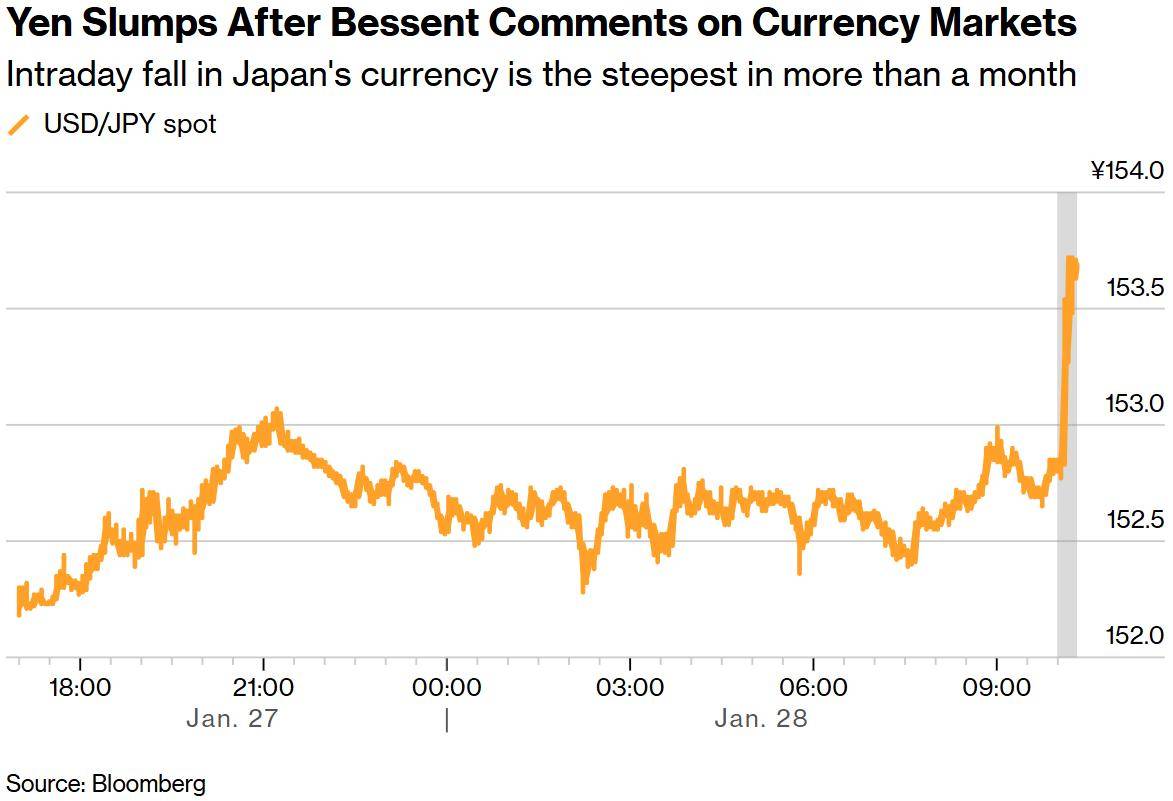
Group 1 - The core viewpoint of the article emphasizes the U.S. Treasury Secretary's support for a strong dollar policy, which aims to establish the right fundamentals for attracting capital inflows [1] - Treasury Secretary Bessent stated that the U.S. does not intervene in the currency market to sell dollars and buy yen, reinforcing the commitment to a strong dollar policy [1] - Following Bessent's comments, the dollar experienced a rebound, although some gains were reversed in Asian trading the next day [1] Group 2 - The Japanese yen has been in a downward trend, reaching its lowest level since 1986, raising concerns about the government's fiscal stimulus plans amid heavy national debt [4] - Japan's Finance Minister indicated readiness to respond to yen fluctuations and maintain close coordination with U.S. authorities [4] - Bessent mentioned that a reduction in the U.S. trade deficit should, over time, strengthen the dollar, although economists noted that trade balance changes do not necessarily correlate with currency fluctuations [4]

Yen Spike Stokes Intervention Chatter Following BoJ Rate Decision
Barrons· 2026-01-23 14:03
Group 1 - The Bank of Japan maintained its key interest rate at 0.75%, a decision anticipated by analysts, while signaling potential increases in the future due to ongoing inflation concerns [2] - The yen experienced significant volatility, dropping to 159 against the U.S. dollar before recovering to 157.5 during Tokyo trading [3] - There are rising concerns regarding possible currency market intervention by Japanese officials, which could impact global market stability [1] Group 2 - Prime Minister Sanae Takaichi's stimulative pledges ahead of the upcoming parliamentary elections are contributing to inflationary pressures [2]
印度卢比接近历史低点,料将创下近三年来最差单月表现
Sou Hu Cai Jing· 2025-07-31 05:35
Core Viewpoint - The announcement by Trump to impose at least a 25% tariff on Indian exports has led to a significant depreciation of the Indian Rupee, which is nearing historical lows, and has negatively impacted the NSE Nifty 50 index [1] Group 1: Currency Impact - The Indian Rupee fell over 2% in July, potentially marking its worst monthly performance in nearly three years, making it the weakest currency in Asia this year [1] - Analysts predict that if the new tariffs remain in place, India's economic growth could be reduced by approximately 0.3 percentage points [1] Group 2: Market Sentiment - Dhiraj Nim, an economist and forex strategist at ANZ, indicated that if market sentiment remains weak for an extended period, the Rupee may gradually fall below 88 [1] - The Reserve Bank of India is expected to intervene in the currency market to prevent the Rupee from breaching the 88 mark [1]
印度卢比接近历史低点 料将创下近三年来最差单月表现
Xin Hua Cai Jing· 2025-07-31 05:31
Core Viewpoint - The announcement by Trump to impose at least a 25% tariff on Indian exports has led to a significant depreciation of the Indian Rupee, which is nearing historical lows, and has negatively impacted the NSE Nifty 50 index [1] Group 1: Currency Impact - The Indian Rupee has declined over 2% in July, potentially marking its worst monthly performance in nearly three years, making it the weakest currency in Asia this year [1] - Analysts predict that if the new tariffs remain in effect, India's economic growth could be reduced by approximately 0.3 percentage points [1] Group 2: Market Sentiment and Predictions - Dhiraj Nim, an economist and forex strategist at ANZ, suggests that if market sentiment remains weak for an extended period, the Rupee may gradually fall below 88 [1] - It is anticipated that the Reserve Bank of India will intervene in the currency market to prevent the Rupee from breaching the 88 threshold [1]