购房政策

Search documents
2025成都市购房政策汇总!
Sou Hu Cai Jing· 2025-11-21 20:00
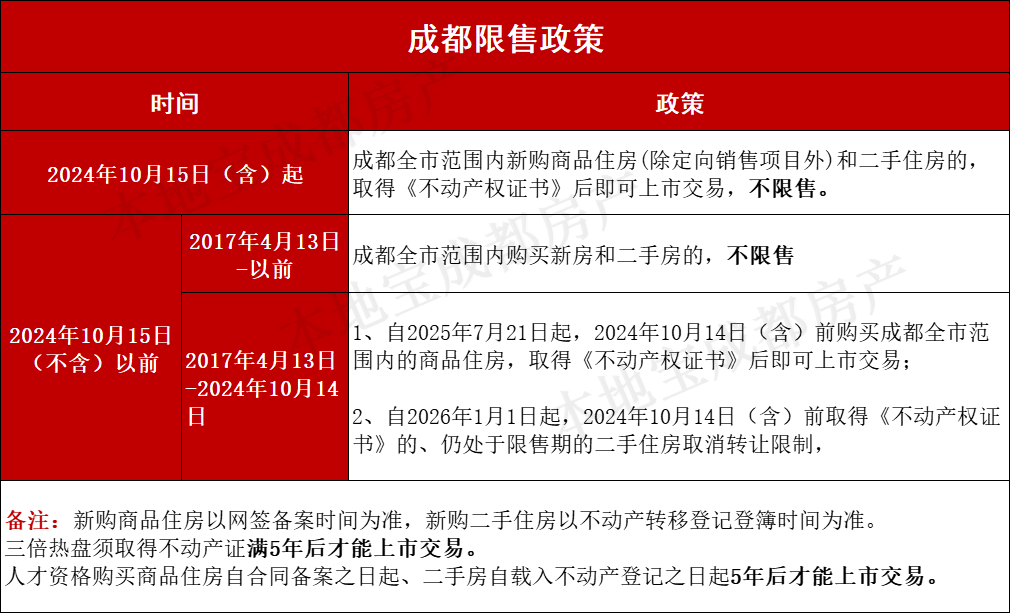
Group 1: Purchase Restrictions and Policies - Chengdu has fully lifted purchase restrictions as of April 29, 2024, with no limits on the number of properties that can be purchased and no review of buyer qualifications [1] - New housing and second-hand housing purchased in Chengdu will be allowed to be traded without restrictions starting from October 15, 2024, after obtaining the property ownership certificate [1] - Properties purchased before October 14, 2024, will have their trading restrictions lifted starting from January 1, 2026 [1] Group 2: Purchase Incentives - Current housing purchase subsidies are effective in districts such as Wuhou, Qingyang, Jinniu, Longquanyi, Xindu, Wenjiang, Eastern New District, and several others [2] - Expired housing purchase subsidy policies include areas like Chenghua, Jinjiang, Tianfu New District, and others [2] - Planned housing purchase subsidies are in place for counties such as Jintang, Jianyang, and Pengzhou, subject to actual implementation [2]

“保楼市”还是“保孩子”?高层动真格,开始向住房“出手”了
Sou Hu Cai Jing· 2025-10-28 14:19
Core Insights - The central argument highlights the disconnect between housing policies aimed at stimulating the real estate market and the underlying factors affecting birth rates, suggesting that merely making housing more accessible may not significantly influence young people's willingness to have children [1][3][8]. Group 1: Housing Market Dynamics - The balance of personal housing loans has reached 40.7 trillion yuan, accounting for 57.3% of total household debt, with the 31-35 age group representing over 60% of 172 million homebuyers [1]. - Recent policies have introduced a down payment of 15% and a mortgage interest rate of 3.5%, yet there is skepticism about whether these measures will effectively encourage young people to have children [3][4]. - In the second quarter, transactions for improved housing increased by 12%, but 72% of homebuyers aged 31-35 indicated a preference to upgrade their homes before considering having children [4]. Group 2: Financial Burdens and Fertility - The debt-to-income ratio for the 25-35 age group is alarmingly high at 138.6%, with monthly mortgage payments consuming 53.7% of their income, surpassing international warning levels [4]. - A report from the China Population and Development Research Center indicates that a 10% decrease in housing prices only raises the willingness to have children by 1.8%, while a similar reduction in education expenses increases this willingness by 4.2% [5]. - The hidden costs of childbirth, including career interruptions and lower salaries post-maternity leave, further deter young couples from starting families [5][6]. Group 3: Integrated Policy Approaches - A recent survey revealed that cities implementing combined housing and childcare subsidies saw an increase in the percentage of homebuyers planning to have children from 28% to 43%, compared to a mere 5% increase in cities offering only housing incentives [7]. - The data suggests that the core issue is not merely about rescuing the housing market but rather about integrating fertility support into housing policies [8]. - In cities where both mortgage incentives and fertility subsidies were introduced, the growth rate of commodity housing sales was 7.3 percentage points higher than in cities with only mortgage incentives [8].
赣州核心区还在 “撑”!刚需现在上车直接血赚?
Sou Hu Cai Jing· 2025-09-16 05:00
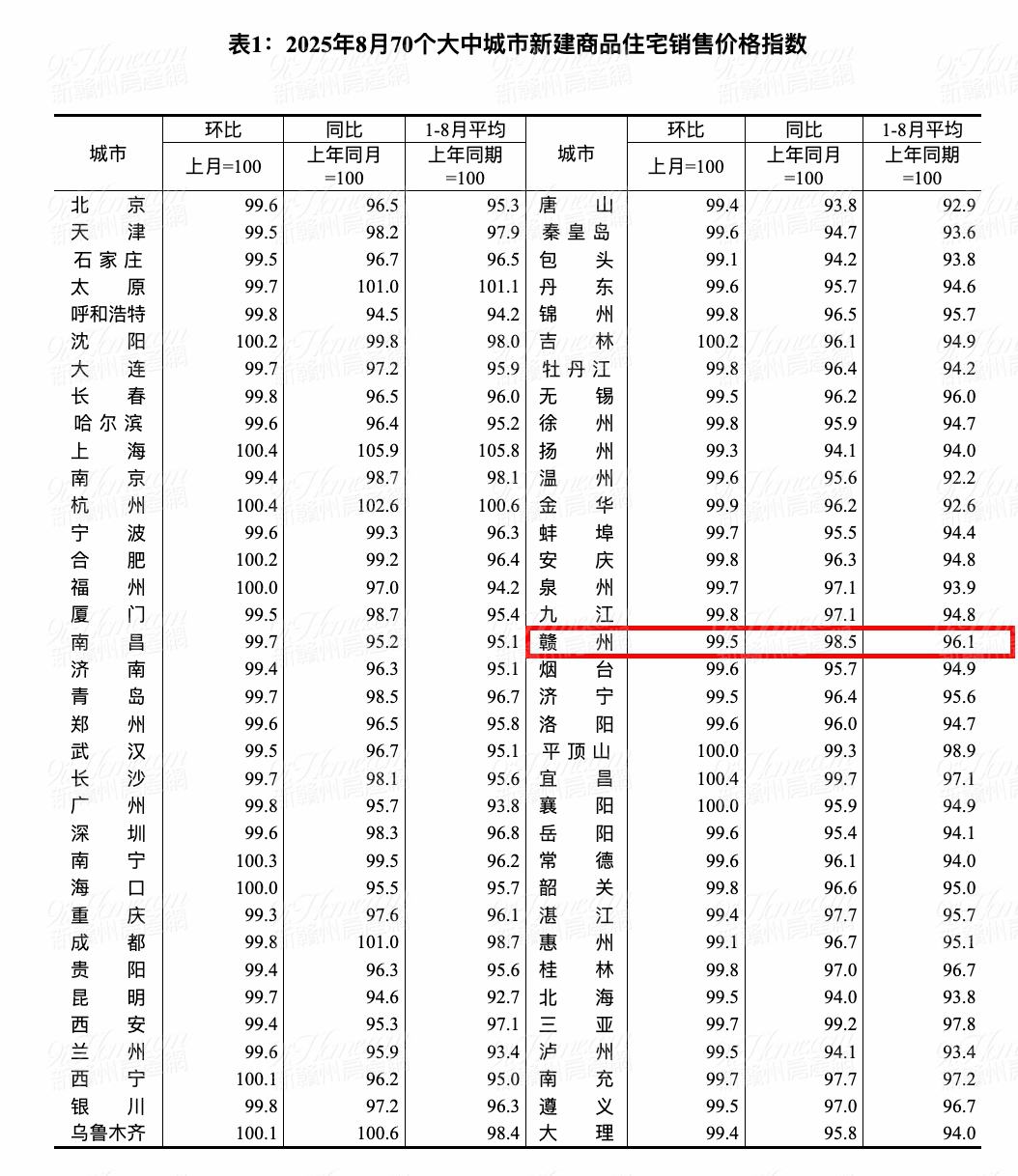
Core Insights - In August 2025, residential property prices in 70 major cities showed a month-on-month decline of 0.5% and a year-on-year decrease of 1.5%, indicating a continued narrowing of the overall decline compared to previous months [1] - New residential properties in core areas like Zhangjiang New District and Rongjiang New District maintained relatively stable prices, with some brand developments priced between 12,000 to 15,000 yuan per square meter, while older districts experienced slight price adjustments [1] - The second-hand housing market saw a month-on-month drop of 0.9% and a year-on-year decline of 8.8%, particularly notable in older districts where average prices fell to just over 7,000 yuan per square meter [3] Market Trends - The current housing policies in Ganzhou are favorable for first-time buyers, with the first mortgage rate reduced to 3.25% and a maximum of 800,000 yuan available through housing provident fund loans; tax subsidies and additional financial support for families with multiple children are also in place [5] - Talent policies provide significant subsidies for home purchases, ranging from 50,000 to 80,000 yuan for full-time master's and "Double First Class" undergraduate students, encouraging many young individuals to consider buying homes [5] - For potential buyers, new properties in core areas are recommended for their living environment and future value retention, while those on a budget may explore newer second-hand homes near core areas rather than focusing solely on older neighborhoods [6]