贵金属市场震荡

Search documents
防范市场风险,中国银行调整金银延期合约保证金比例
Mei Ri Jing Ji Xin Wen· 2026-02-05 12:01
Core Viewpoint - The recent adjustments in margin ratios and price fluctuation limits for gold and silver deferred contracts by Bank of China are aimed at protecting investor interests and managing market risks amid significant volatility in the precious metals market [1][2]. Group 1: Margin Adjustments - Starting from February 3, 2026, the margin ratio for silver deferred contracts at the Shanghai Gold Exchange (SGE) will be adjusted from 26% to 23%, while the margin ratio for Bank of China's silver deferred contracts will change from 66.04% to 66.01% [2]. - For gold deferred contracts, the margin ratio will increase from 16% to 17%, and Bank of China's margin ratio will rise from 42.24% to 44.88% [1][2]. - The fluctuation limit for gold contracts will be adjusted from 15% to 16%, and for silver contracts, it will decrease from 25% to 22% [2]. Group 2: Market Analysis - The precious metals market has experienced significant fluctuations, with gold prices opening at 1096 yuan per gram on February 4, 2026, and rising over 6% during the day, following a drop of more than 13% on February 2 [1][4]. - Analysts suggest that the recent price adjustments do not indicate a trend reversal, as the long-term bullish logic for gold and silver remains intact [4][6]. - The market is expected to experience more volatility in February, with predictions of price fluctuations rather than a definitive upward trend, advising investors to be cautious and avoid holding positions during the holiday [6].

金银再次大跳水,现货黄金失守5200美元,黄金股集体跌停,多家品牌金饰克价大幅回调
Mei Ri Jing Ji Xin Wen· 2026-01-30 03:01
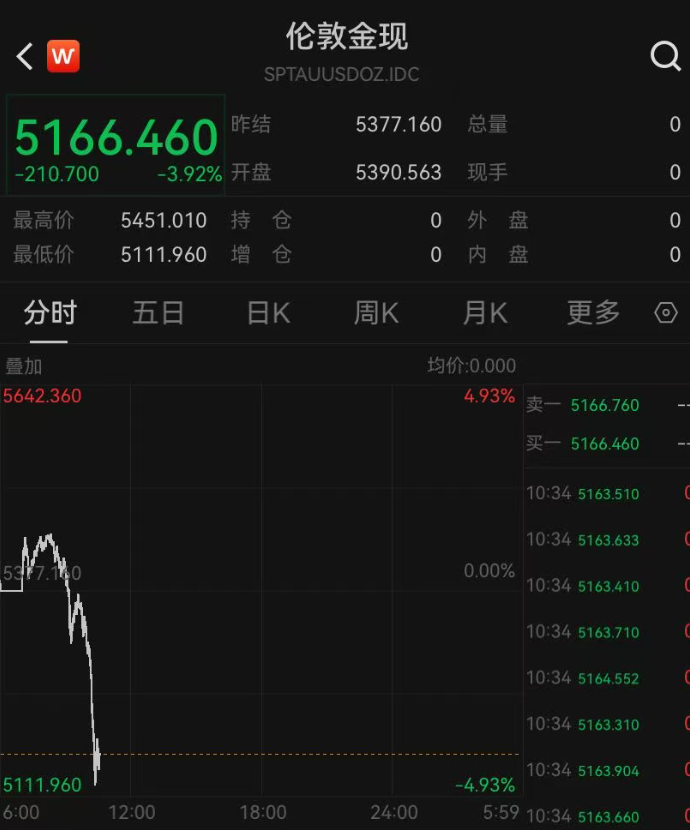
Group 1 - The precious metals market experienced significant volatility, with gold prices dropping nearly 5% on January 30, ultimately settling at a decline of 3.92%, falling below $5200 per ounce [1] - Silver prices also saw a sharp decline, initially dropping close to 7% before narrowing to a 4.94% decrease, reported at $110 per ounce [1] - The A-share precious metals sector opened significantly lower, with multiple stocks such as Xiaocheng Technology falling over 15%, and several others hitting the daily limit down [4][5] Group 2 - Specific stocks in the precious metals sector reported substantial declines, including Xiaocheng Technology at -15.74%, Sichuan Gold and Zhao Jin Gold both at -10%, and Hunan Silver at -9.98% [5][7] - The overall market for precious metals and related sectors saw widespread declines, with many stocks experiencing limit-down trading, indicating a bearish sentiment in the market [6][7] - Domestic gold jewelry prices also saw significant adjustments, with major brands like Chow Sang Sang and Chow Tai Fook announcing substantial price reductions for gold jewelry [7]


贵金属,大震荡!后市怎么走?
Xin Lang Cai Jing· 2025-12-29 04:48
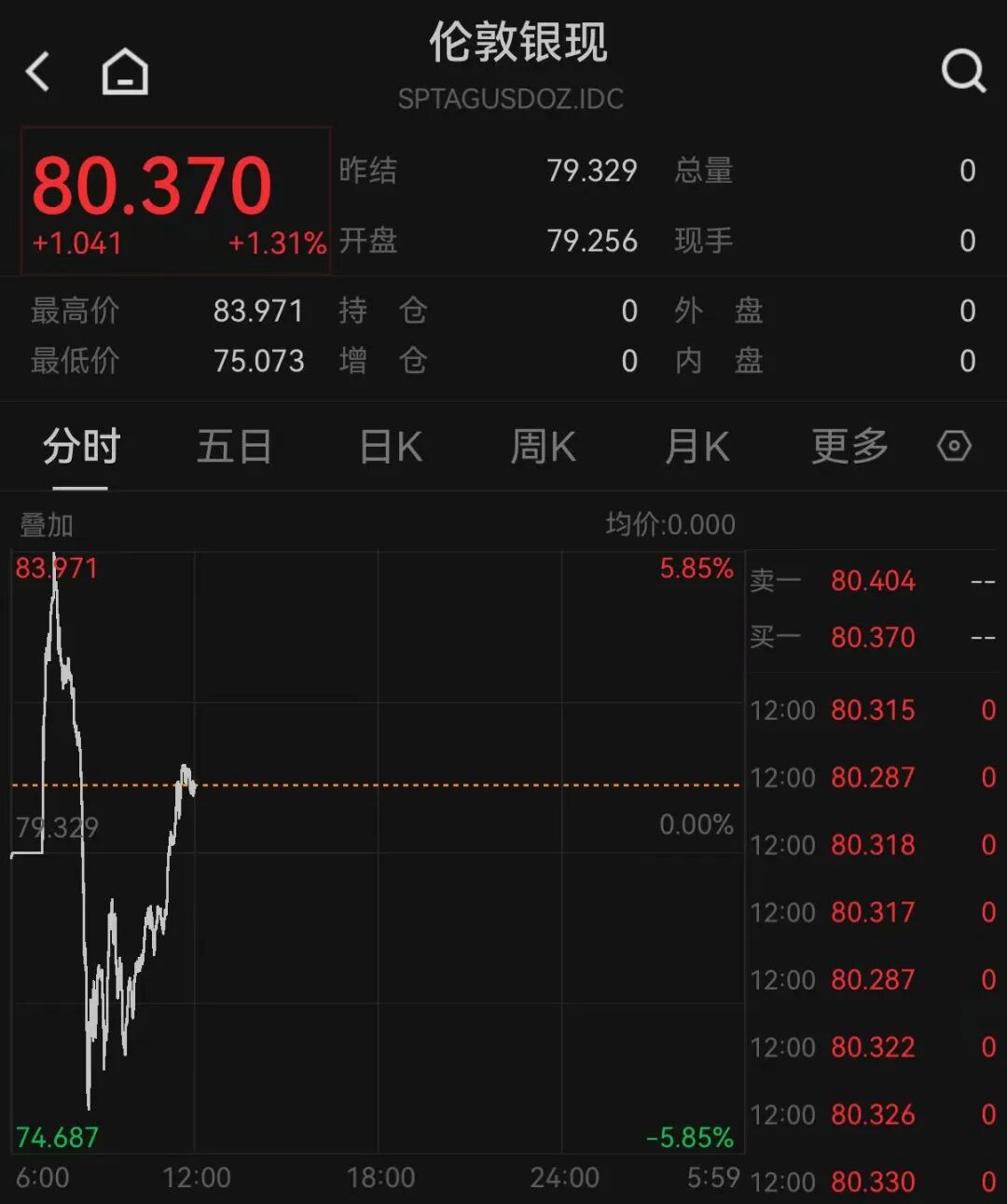
Market Volatility - The precious metals market experienced significant volatility, with silver initially rising over 5% to nearly $84 per ounce before dropping over 3%, and then recovering slightly to $80.37 per ounce, a 1.31% increase [1] - Gold reached a peak of $4550.52 per ounce before falling to a low of $4471.25 per ounce, marking a decline of nearly $80 per ounce, and was reported at $4516.06 per ounce, down 0.36% [3] - Platinum prices saw a sharp decline of nearly 8% during the trading session, but the drop was later mitigated, with the price reported at $2434.30 per ounce, down 0.09% [5] Market Drivers and Predictions - Analysts suggest that the recent surge in trading activity for precious metals is influenced by the upcoming New Year holiday and potential adjustments in the Bloomberg Commodity Index, which may lead to increased market volatility [6] - The silver market is experiencing speculative trading due to a perceived shortage, with increased delivery volumes in the futures market. However, the end of the delivery month and the holiday break may lead to profit-taking and increased price volatility [7] - Looking ahead to 2026, analysts remain optimistic about precious metals, citing factors such as the Federal Reserve's independence crisis, declining dollar credibility, and a potential silver supply crisis as key drivers for price increases [8] Supply and Demand Dynamics - The supply-demand imbalance for silver is intensifying, with global deliverable inventories at historical lows. The London Bullion Market Association (LBMA) inventory, excluding ETFs, offers little buffer [8] - Potential tariffs on silver imports by the U.S. could exacerbate resource competition and disrupt trade flows, worsening the current supply shortage [8] - Industrial demand from sectors such as photovoltaics, AI data centers, and electric vehicles is expected to provide rigid support for silver prices, while low mining output makes prices sensitive to demand shocks [8] Investment Strategies - Analysts recommend a cautious approach to trading, suggesting that investors consider reducing long positions in the short term due to potential profit-taking and market cooling [7] - The overall outlook for precious metals remains bullish, with expectations of price increases driven by macroeconomic factors and geopolitical risks. Strategies should focus on low-cost positioning while being mindful of market volatility [9]