贷款消费

Search documents
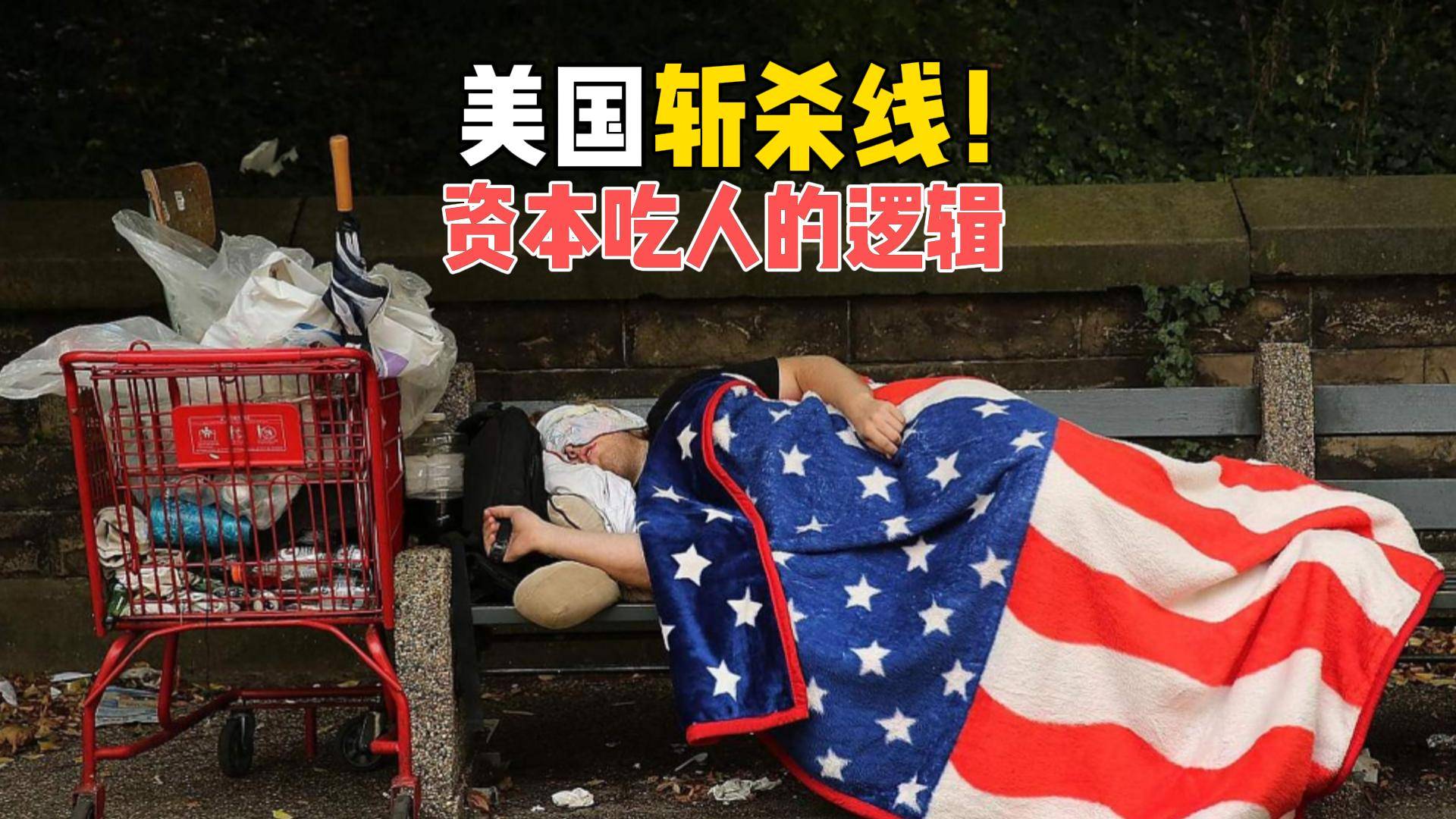
“斩杀线”刺痛全美国,消费大国的背后,是资本吃人的逻辑
Sou Hu Cai Jing· 2025-12-26 14:43
Core Viewpoint - The concept of "death line" has gained popularity in the U.S., highlighting the precarious financial situation of many Americans who, despite appearing affluent, are living on the edge of financial ruin due to unexpected expenses [2][4]. Group 1: Financial Vulnerability - Approximately 40% of Americans cannot afford an unexpected expense of $400, indicating a low threshold for financial stability [2]. - Many individuals who become homeless were once part of the middle class, living comfortable lives until faced with a financial emergency [2]. - The average lifespan of homeless individuals in the U.S. is only 3 to 4 years, underscoring the severity of the issue [2]. Group 2: Economic Structure - The U.S. economy is characterized by high spending and low savings, creating a cycle where individuals earn high incomes but still struggle financially [4][9]. - High fixed expenses, including taxes, student loans, and housing costs, significantly reduce disposable income for many Americans [6][8]. - For example, a typical high-income earner may see their income drastically reduced after accounting for taxes and necessary expenses, leaving them with minimal funds for savings or enjoyment [6]. Group 3: Consumer Behavior - The culture of low savings is exacerbated by high inflation, which discourages saving and encourages borrowing for consumption [10][12]. - Many Americans view debt as a rational choice, as saving money in a high-inflation environment leads to wealth depreciation [10]. - The high costs associated with asset ownership, such as property taxes and maintenance fees, further discourage saving and investing [12]. Group 4: Consequences of Economic Rules - A single job loss or health issue can trigger a downward spiral into homelessness, as individuals struggle to meet their financial obligations [14]. - The economic system is described as a "survival of the fittest" scenario, where individuals who fall behind are left to face dire consequences without support [15].

欧美经济大萧条史
Sou Hu Cai Jing· 2025-04-28 11:26
Group 1 - The article discusses the rise of consumer products in the 1920s in the United States, highlighting how items like washing machines and radios became standard for the middle class [1] - The U.S. government and banks encouraged consumerism and borrowing, leading to a culture of spending beyond one's means [3] - The disparity between productivity growth and consumer spending capacity prompted companies to advocate for loan-based consumption to avoid excess inventory [3] Group 2 - The stock market reached a historical peak on September 3, 1929, with the Dow Jones Industrial Average hitting 386 points, a sixfold increase since 1921 [7] - Following this peak, the market experienced a significant decline, with a 10% drop the day after the peak, initially perceived as a normal correction [7] - The infamous "Black Thursday" on October 24, 1929, marked the beginning of a severe stock market crash, leading to widespread panic selling [8][9] Group 3 - The economic downturn resulted in a four-year-long Great Depression, with 140,000 businesses and 10,000 banks failing by 1933 [10] - Unemployment soared to 13 million, drastically affecting the lives of many Americans, leading to extreme poverty and desperation [12] - Families resorted to extreme measures for survival, including rationing food and bartering, reflecting the dire economic conditions [14] Group 4 - The economic crisis in the U.S. quickly spread to Europe, with the UK experiencing over 32,000 business failures and 3 million unemployed by 1933 [14][16] - Initially, France believed it could avoid the crisis, achieving record exports in 1929, but soon faced severe economic decline starting in 1931 [16][17] - France's economic recovery lagged behind that of the U.S. and UK, with its crisis lasting until 1935, two years longer than the others [18]