资本围猎

Search documents
突发特讯!白银大跌之后又大涨:这不是行情波动,是资本的生死博弈,引全民高度关注
Sou Hu Cai Jing· 2025-12-31 02:50
Group 1 - The recent volatility in silver prices is driven by capital manipulation rather than market forces, indicating a significant shift in global monetary credit [1][3] - Major players like JPMorgan have engaged in strategic moves, such as transferring 169 million ounces of silver to non-deliverable warehouses, creating artificial liquidity constraints [3] - The price of silver surged by 160% in 2022, significantly outpacing gold's 67% increase, highlighting the influence of institutional actions rather than natural market dynamics [3] Group 2 - Silver's demand is primarily industrial, with 50%-60% coming from this sector, contrasting sharply with gold's 10%, which underpins its recent price strength [5] - The photovoltaic industry is a major driver of silver consumption, with projected sales revenue in China expected to reach 44.7 billion yuan in 2024, a 270% increase from 2020 [5] - Strategic management of silver resources is increasing, with China planning to classify silver as a strategic resource and India allowing it as collateral for loans, potentially widening the supply-demand gap [5] Group 3 - Divergent global monetary policies are making silver an attractive option for investors seeking safe-haven assets, especially as the Federal Reserve is expected to cut rates [7] - The gold-silver ratio has exceeded 100, indicating strong demand for silver as a leveraged alternative to gold, which is perceived as overvalued [7] - Silver's supply remains tight, with inventories reported at 874 million ounces, contributing to its appeal as a hedge against currency credit risks [7] Group 4 - Retail investors are cautioned against blindly following market trends, as recent regulatory measures indicate a tightening of speculative trading in silver futures [9] - The volatility of silver prices is significantly higher than that of gold, making predictions challenging and increasing the risk for retail investors [9] - Many calls to "buy the dip" in silver may be traps set by capital players, targeting inexperienced investors who follow market hype [9]


独角兽沉浮录:60亿元估值崩塌之后,沪江网校能否涅槃?
Hua Xia Shi Bao· 2025-12-16 10:28
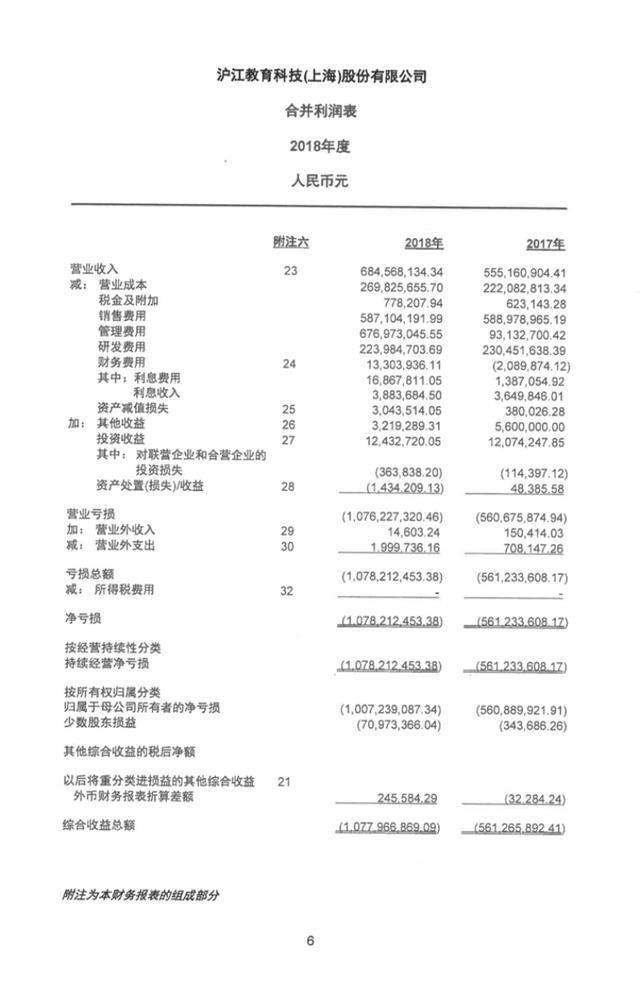
Core Viewpoint - The rise and fall of Hujiang Online School reflects the challenges faced by the online education industry, particularly the impact of high debt levels and reliance on financing, culminating in a significant legal battle over equity disputes that hindered its IPO ambitions [3][4][5]. Financial Performance - In 2015, Hujiang's D-round financing valuation reached 6 billion yuan, indicating strong investor confidence in the online education sector [4]. - Revenue figures from 2015 to 2018 showed growth: 185 million yuan in 2015, 340 million yuan in 2016, 555 million yuan in 2017, and 263 million yuan in the first five months of 2018 [4]. - Despite revenue growth, net losses increased significantly, with losses of 280 million yuan in 2015, 422 million yuan in 2016, 537 million yuan in 2017, and 460 million yuan in the first five months of 2018 [4]. Legal and Equity Disputes - A recent ruling by the Shanghai High Court invalidated a series of equity agreements involving Hujiang, citing "malicious collusion to harm third-party interests" [3]. - The court's decision marked the end of a long-standing equity dispute that involved coercive buybacks and manipulation by capital players [3][9]. - The involvement of capital players like Chi Chen, who leveraged familial connections to exert control over Hujiang, highlights the complexities of corporate governance in high-stakes environments [9][10]. Corporate Governance Issues - The governance structure of Hujiang was severely impacted by internal disputes among partners and shareholders, leading to inefficiencies and brand damage [7][8]. - Legal experts emphasize the importance of compliance and proper governance, especially during critical periods like IPO attempts, to prevent power abuses and ensure shareholder interests are protected [8]. Industry Insights - The online education sector has experienced rapid growth but is now facing a reckoning due to over-reliance on financing and inadequate profit models [15]. - The case of Hujiang serves as a cautionary tale for other companies in the industry, underscoring the need for sound governance and adherence to legal frameworks to navigate market challenges successfully [15].
“小马云”十年围猎史:当资本退潮,被吞噬的童年与破碎的乡村
Sou Hu Cai Jing· 2025-07-19 08:27
Core Viewpoint - The story of Fan Xiaoqin, a boy from a poor village who was turned into a commercial entity known as "Little Ma Yun," highlights the exploitation of vulnerable families in the flow economy, revealing the harsh realities behind the superficial success of internet fame [1][5][6]. Group 1: Capital Exploitation - Liu Changjiang's operation model exemplifies "flow industrialization," where capital preys on underprivileged families, leading to the commodification of individuals like Fan Xiaoqin [3][4]. - Despite promises of educational support, Fan Xiaoqin's actual schooling was nearly non-existent, as he was engaged in commercial activities instead of attending classes [4][5]. - The illusion of prosperity was created through superficial gestures, such as home renovations and small remittances, masking the family's ongoing poverty [4][5]. Group 2: Educational and Health Consequences - Fan Xiaoqin's education suffered significantly, as he was unable to write simple characters by the age of 12, reflecting a severe educational gap [4][6]. - Health issues arose, with reports indicating that he was diagnosed with a secondary intellectual disability and had stunted growth, raising concerns about potential exploitation through hormone treatments [4][6]. Group 3: Societal Reflection - The narrative of Fan Xiaoqin serves as a microcosm of the broader issue of rural marginalization in the flow economy, where many similar cases exist [6][7]. - The lack of understanding of long-term educational investment among families leads to their vulnerability to capital exploitation [7]. - The phenomenon of "curiosity charity" illustrates how public consumption of poverty can exacerbate the plight of individuals rather than improve their circumstances [7]. Group 4: Recommendations for Change - There is a need for long-term, stable educational support for rural children rather than short-term financial gains from internet fame [7]. - Developing rural industries and skill training programs could enhance families' self-sufficiency instead of pushing children into the spotlight [7]. - Legal frameworks must be established to protect child internet celebrities and prevent exploitation, ensuring that the flow economy aligns with humanitarian values [7].