资本市场中心论

Search documents
吴晓求:这一生大概只为中国资本市场而来|我们的四分之一世纪
经济观察报· 2025-12-29 08:00
Core Viewpoint - The article highlights the journey and insights of Wu Xiaoqiu, a prominent figure in China's capital market research, emphasizing the importance of a robust financial system for China's growth and the ongoing reforms needed to achieve this goal [4][30]. Group 1: Background and Early Career - Wu Xiaoqiu was one of the earliest scholars to study capital markets in China, transitioning from macroeconomics to focus on securities and capital market research after publishing influential textbooks [6][19]. - He founded the Financial and Securities Research Institute at Renmin University in 1996 and initiated the China Capital Market Forum in 1997 to discuss long-term issues affecting capital market development [6][19]. Group 2: Capital Market Development - The establishment of the Shanghai and Shenzhen Stock Exchanges in December 1990 marked the official birth of China's capital market [18]. - Wu Xiaoqiu proposed the "capital market center theory," arguing that the capital market is the core of the modern financial system, which sparked significant debate at the time [7][19]. Group 3: Key Reforms and Challenges - The stock market faced significant challenges in the early 2000s, including issues like insider trading and market manipulation, leading to the "stock market casino theory" proposed by economists [20][24]. - Wu Xiaoqiu emphasized the need for the split-share structure reform to address liquidity issues in the capital market, which he identified as a fundamental barrier to its development [21][22]. Group 4: Market Trends and Predictions - Following the completion of the split-share structure reform in 2005, the Chinese stock market experienced a bull market from 2006 to 2007, with the Shanghai Composite Index rising over 400% [24]. - Wu Xiaoqiu predicted that by 2020, the A-share market capitalization would reach 100 trillion RMB, positioning China as a major global financial center [24]. Group 5: Financial Crisis and Recovery - The global financial crisis in 2008 led to a bear market in China, prompting Wu Xiaoqiu to advocate for continuous reforms rather than short-term market interventions [25][26]. - He highlighted the importance of maintaining market transparency and fairness in rules to foster a healthy capital market environment [25][26]. Group 6: Future Aspirations - Wu Xiaoqiu expressed a desire for the Chinese capital market to become a global financial center by 2050, with the RMB recognized as a major international currency alongside the USD and EUR [30][16]. - He emphasized the need for ongoing reforms in the financial system, including legal frameworks to deter fraud and enhance market integrity [29][30].

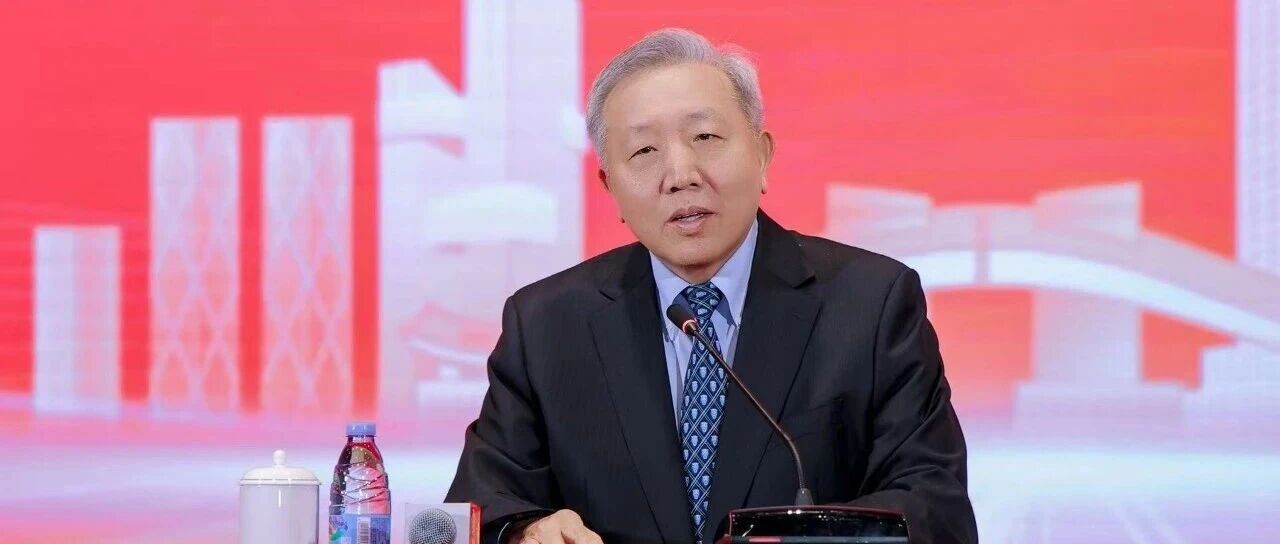
吴晓求:这一生大概只为中国资本市场而来|我们的四分之一世纪
Jing Ji Guan Cha Wang· 2025-12-27 01:26
Core Viewpoint - The article highlights the evolution and challenges of China's capital market through the insights of Wu Xiaoqiu, a prominent scholar and advocate for financial reform in China, emphasizing the need for continuous reform to achieve the goal of becoming a global financial center [4][20]. Group 1: Historical Context - The establishment of the Shanghai and Shenzhen Stock Exchanges in December 1990 marked the official birth of China's capital market [5]. - In the mid-1990s, there was skepticism in academia regarding the relevance of capital market research compared to macroeconomics, which led Wu Xiaoqiu to shift his focus from macroeconomic studies to securities investment [6][7]. Group 2: Key Contributions and Theories - Wu Xiaoqiu founded the Financial and Securities Research Institute at Renmin University in 1996 and initiated the China Capital Market Forum in 1997 to discuss long-term issues affecting capital market development [7]. - He proposed the "Capital Market Center Theory," arguing that the capital market is the core and foundation of the modern financial system, which was controversial at the time [8]. Group 3: Major Reforms and Developments - The stock market's value was equivalent to 50% of GDP by the end of 2000, with the Shanghai Composite Index rising significantly during that period [9]. - Wu Xiaoqiu identified the need for the split share structure reform, which addressed the liquidity barriers in China's capital market, leading to the publication of a foundational book on the subject in 2004 [12]. - The split share structure reform was initiated in 2005, marking a significant milestone in the development of China's capital market [14]. Group 4: Market Challenges and Responses - Following the completion of the split share reform, the Chinese stock market experienced a bull market from 2006 to 2007, with the Shanghai Composite Index increasing over 400% [15]. - The 2008 global financial crisis prompted Wu Xiaoqiu to advocate for reforms rather than short-term market interventions, emphasizing the importance of maintaining market transparency and fairness [16]. Group 5: Current Perspectives and Future Goals - Wu Xiaoqiu expressed concerns about the slow progress of reforms and the need for a dual-peak financial system, recognizing the significant role of commercial banks alongside the capital market [18]. - He highlighted the importance of continuous reforms in the legal and regulatory framework to combat issues like insider trading and fraud, which undermine market integrity [19]. - Wu Xiaoqiu's long-term vision includes the internationalization of the RMB and the establishment of China as a major global financial center by 2050, emphasizing the need for robust legal frameworks and market reforms [20].