
资本市场生态重构

Search documents
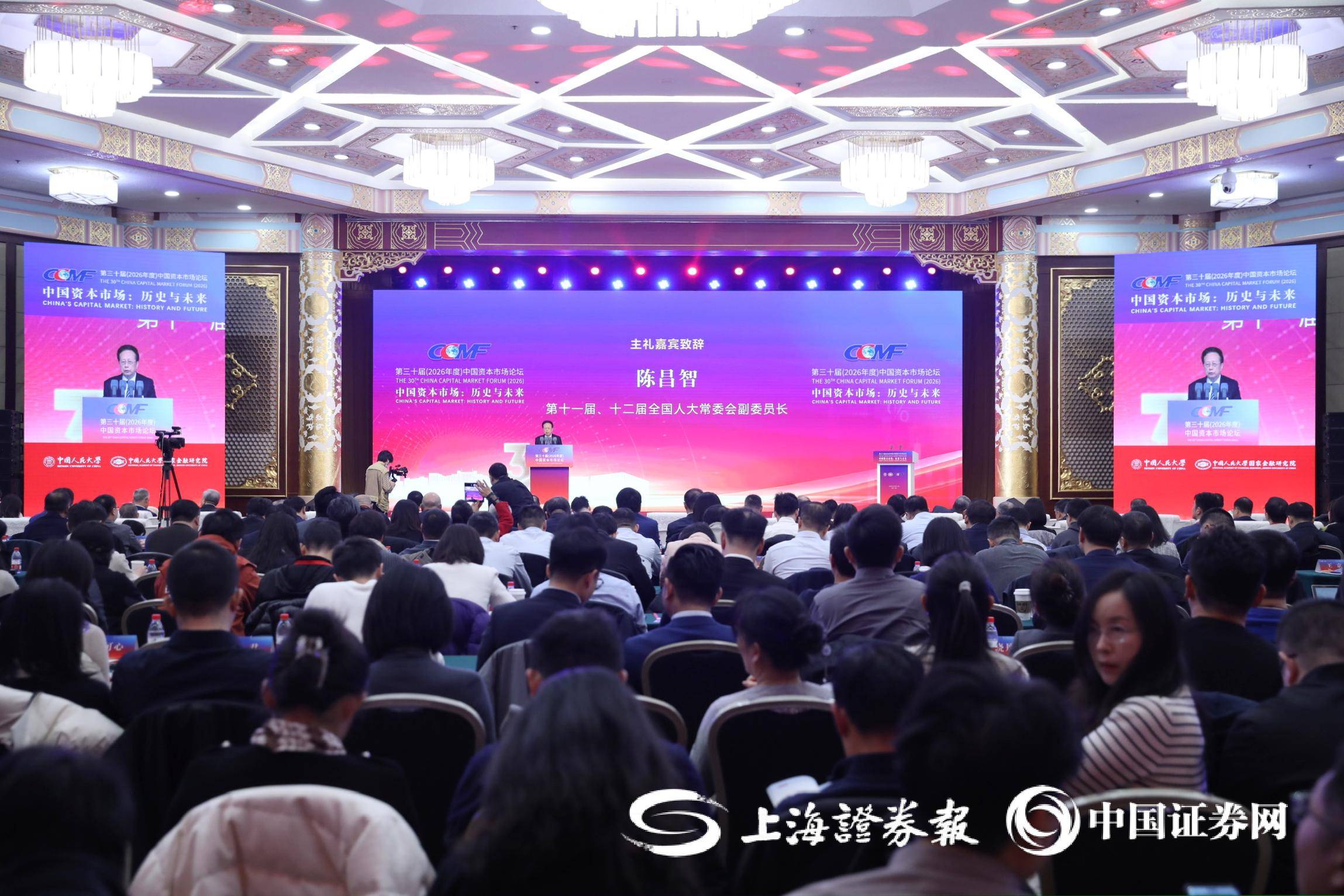
陈昌智:构建投融资协同、内外资兼容、各参与方良性互动的资本市场生态体系
Sou Hu Cai Jing· 2026-01-10 06:39
Core Viewpoint - The essence of promoting the reconstruction of the capital market ecosystem is to build a collaborative investment and financing system that is compatible with both domestic and foreign capital, allowing all participants to interact positively, thereby ensuring that capital returns to serve the real economy [2][3] Group 1: Capital Market Reform - Recent directives from the central government have clearly outlined the reform roadmap for the capital market in the coming phase [3] - On the financing side, there is a need to optimize the system arrangements for the Sci-Tech Innovation Board and the Growth Enterprise Market to enhance inclusivity for new industries, new business formats, and new technologies, facilitating financing channels for "hard tech" companies [3] - On the investment side, the goal is to expand the professional institutional investor base and improve mechanisms for long-term capital entering the market, allowing stock and fund investors to share in the benefits of real economic development [3] - On the regulatory side, there is an emphasis on strengthening technological empowerment, rigorously cracking down on illegal activities, and constructing a healthy market ecosystem [3]

首席看经济|章俊:新动能重塑产业格局,三大维度撬动消费意愿
Bei Ke Cai Jing· 2025-12-22 06:21
Group 1 - The core focus of the Central Economic Work Conference is to prioritize consumer-related themes for the upcoming year, emphasizing the need to stimulate residents' consumption willingness through various policy measures [3][10] - International organizations have raised their economic growth forecasts for China, reflecting recognition of the country's short-term resilience and long-term potential, driven by macro policy coordination, strong internal and external demand, and industrial upgrades [6][7][8] - The fiscal policy for 2025 is set to be more proactive, with a narrow deficit rate increasing to 4% and a broad deficit rate rising from 6.6% in 2024 to 8.5% in 2025, alongside monetary policy tools aimed at supporting key sectors [6][13] Group 2 - To enhance consumer willingness, policies should focus on optimizing income distribution, strengthening public service investment, and expanding consumption supply, including improving the quality of goods and services [10][11] - The integration of stock and incremental policies in the financial sector is crucial, with expectations of interest rate cuts and structural monetary policy tools to support economic growth [12][13] - The reform of the capital market is aimed at balancing financing and investment functions, enhancing the attractiveness of the market, and improving the quality of listed companies [15][16] Group 3 - The "Fifteenth Five-Year Plan" emphasizes the construction of a financial powerhouse, with a focus on high-quality financial support for the real economy and modernization [19] - Key tasks for financial system reform during the "Fifteenth Five-Year Plan" include improving the central bank system, enhancing the role of capital markets, and optimizing the financial institution system [19]

吴晓求:消费扩张需要深度重构三个核心函数
Xin Jing Bao· 2025-12-15 08:26
Core Insights - The "15th Five-Year Plan" aims for China's per capita GDP to reach the level of moderately developed countries by 2035, emphasizing the need for new economic growth drivers and ongoing financial reforms [1][14] - The transition from a "shortage economy" to a "surplus economy" necessitates a fundamental shift in governance logic, focusing on structural upgrades and technological advancements rather than mere scale expansion [4][18] Economic Characteristics - The "15th Five-Year" period will be characterized by significant historical changes, including a global technological revolution and a historic leap in China's economic structure [3][17] - The manufacturing sector's contribution to global value added is nearing 30%, maintaining the world's largest scale for 15 consecutive years, indicating strong supply-side capabilities [4][18] Consumption Dynamics - In a "surplus economy," consumption is viewed as a key force for maintaining economic balance, influenced by income, wealth, and social security [4][16] - Approximately 60% to 70% of household wealth is concentrated in real estate, leading to potential consumption contraction if property prices decline [5][19] Financial System Reform - The core task of financial reform during the "15th Five-Year" period is to adapt to the transition from a shortage to a surplus economy through innovation and openness [7][22] - There is a need for a robust, liquid, and high-credit-rated government bond market, which is essential for the internationalization of the RMB and the establishment of an international financial center [9][24] Capital Market Evolution - The capital market is expected to play a pivotal role in the economic ecosystem, transitioning from a financing market to an investment market that provides wealth management functions [10][25] - Enhancing the quality of listed companies is crucial, as they are the foundation of the capital market, and a strict delisting system is necessary to ensure market health [11][26] Regulatory Environment - A transparent regulatory framework is vital for rebuilding the capital market ecosystem, with a focus on increasing penalties for fraudulent activities to restore investor confidence [12][27] - The government should prioritize social security and public services over industrial investment funds to effectively release consumer purchasing power [6][21]

中长期资金入市积极 资本市场生态加速重构
Zheng Quan Shi Bao· 2025-10-23 17:13
Core Insights - The significant increase in equity investment returns has led to positive expectations for the third-quarter reports of listed insurance companies, with major players like New China Life, China Pacific Insurance, and China Life Insurance anticipating net profit growth of approximately 40% to 70% due to rising investment income from the capital market [1][2][3] Group 1: Market Dynamics - The inflow of medium to long-term funds is crucial for maintaining the long-term stability and health of the capital market, with a focus on creating a "long money, long investment" market ecosystem [2][3] - The recent third-quarter reports indicate a strong performance from insurance companies, driven by substantial investment gains from the capital market [2][3] - The influx of foreign capital into A-shares has been notable, with bank stocks and industry leaders being particularly favored by foreign investors [2] Group 2: Policy and Regulatory Environment - The regulatory push for medium to long-term funds to enter the market has been ongoing since the release of guidelines in September last year, which has increased the willingness of these funds to invest [3][4] - The introduction of monetary tools such as stock buybacks and securities lending has injected significant liquidity into the market, enhancing its stability [3][4] Group 3: Investment Ecosystem Development - The capital market is focused on improving the quality and investment value of listed companies, with policies encouraging dividends and share buybacks becoming standard practice [4] - The Shanghai Stock Exchange is actively expanding its ETF product offerings to cater to medium to long-term investors, enhancing the diversity of investment tools available [4][5] - Regulatory bodies are committed to maintaining market integrity and enforcing strict penalties for financial misconduct, which supports a stable investment environment [5] Group 4: Future Directions - There is a strong call for further reforms to optimize the capital market ecosystem and attract more medium to long-term funds, including enhancing fiscal and regulatory policies [7] - Suggestions include improving the regulatory environment for long-term investments and developing more products that meet investor needs, such as index funds and derivatives [7]
证监会严查*ST元成严重财务造假案件
Shang Hai Zheng Quan Bao· 2025-10-10 18:20
Core Viewpoint - The China Securities Regulatory Commission (CSRC) has intensified its crackdown on financial fraud among listed companies, leading to significant penalties and a restructuring of the capital market ecosystem [1] Summary by Relevant Sections Financial Fraud Cases - The CSRC has penalized several companies for financial misconduct, including: - Yuebo Power was fined a total of 30.8 million yuan for inflating revenue and profits through fictitious sales of new energy vehicle powertrains and false asset sales [1] - *ST Gaohong faced a fine of 160 million yuan for engaging in non-commercial "empty turnover" transactions, significantly inflating its revenue and profits, with a third party fined 7 million yuan [1] - *ST Dongtong was proposed to be fined 229 million yuan for four consecutive years of inflated revenue and profits, with 7 responsible individuals facing a total fine of 44 million yuan and the actual controller receiving a 10-year market ban [1] Regulatory Response - The series of severe penalties is viewed as a critical turning point for the restructuring of the capital market ecosystem, emphasizing the CSRC's commitment to combating financial fraud [1] - CSRC Chairman Wu Qing highlighted the need for increased precision and effectiveness in regulation, focusing on major violations and ensuring that the market is both dynamic and well-regulated to promote high-quality development [1]

A股上市公司半年度分红密集落地
Zheng Quan Ri Bao· 2025-09-18 16:42
Core Viewpoint - The A-share market is witnessing a significant increase in cash dividends from listed companies, reflecting a strong willingness to return value to investors, with a total cash dividend amounting to 644.6 billion yuan in 2025, surpassing the previous year's figures [1] Group 1: Dividend Distribution - A total of 18 A-shares are set to distribute dividends on September 19, with 17 companies proposing cash dividends and one company planning to implement a combination of cash dividends, stock bonuses, or stock splits [1] - The companies with the highest proposed dividends include Xiamen Gibit Network Technology Co., Ltd. (66 yuan per 10 shares), Shandong Xintong Electronics Co., Ltd. (6 yuan), and Kewei Medical Technology Co., Ltd. (6 yuan) [1] - The "three major oil companies" (China National Petroleum Corporation, Sinopec, and CNOOC) plan to distribute over 800 billion yuan in total dividends, with China National Petroleum Corporation proposing 402.65 billion yuan [2] Group 2: Role of State-Owned Enterprises - State-owned enterprises (SOEs) are becoming the main contributors to dividend distributions, with the six major state-owned banks planning to distribute nearly 204.7 billion yuan, accounting for about 32% of the total dividend amount [3] - The increase in dividends from SOEs is driven by three main factors: clear policy guidance from the State-owned Assets Supervision and Administration Commission (SASAC), improved profitability structures in key industries, and the aim to stabilize investor confidence through high dividends [3] Group 3: Market Trends - The trend of listed companies in the A-share market opting for multiple dividends within a year is becoming more common, indicating a shift from a focus on financing to a focus on returns [4] - The optimization of investor structure, regulatory guidance on dividend ratios, and improvements in corporate governance are contributing to this shift towards a more return-oriented market environment [4]