资本闭环

Search documents
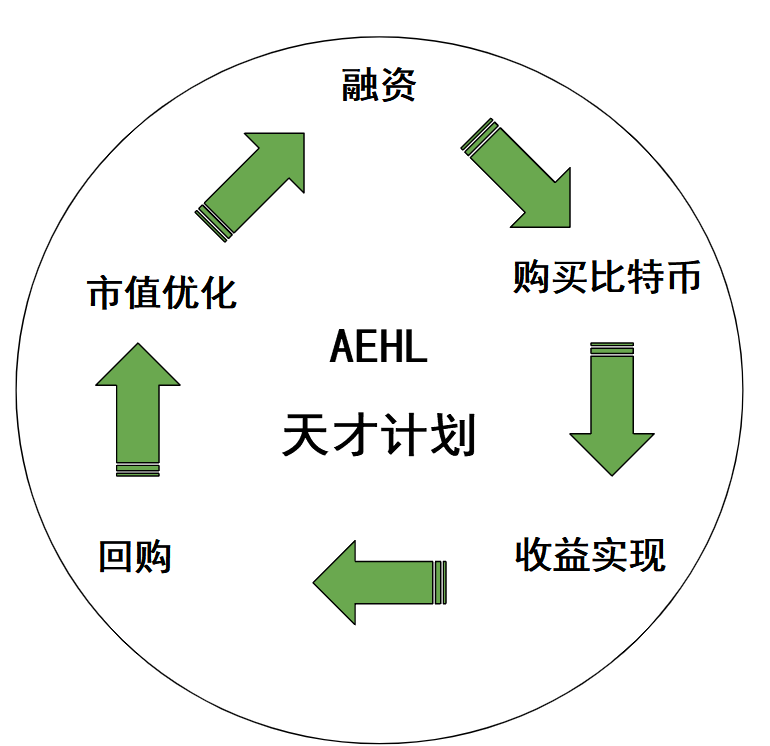
AEHL天才计划形成资本闭环:融资—买币—收益—回购—再融资
Sou Hu Cai Jing· 2026-02-26 14:52
公司强调,这并非单一交易行为,而是一种循环路径设计。波动提供卖出触发点,卖出形成利润,利润支持 回购,回购改善市值结构,进而增强再融资空间。 (免责声明:该文章系转载,仅代表作者个人观点,与本网(号)无关;仅供读者参考。文字和图片均由第 三方提供,一切法律责任由提供方负责。) AEHL管理层表示,公司更关注循环能力的建立,而非短期行情表现。随着机制落地,相关执行步骤已开始 推进。 ...

英伟达是怎么被“抬”上5万亿的?
虎嗅APP· 2025-10-30 00:15
Core Viewpoint - Nvidia has become the first company in history to surpass a market capitalization of $5 trillion, driven by strong demand for AI and its strategic investments in companies like OpenAI [2][4][6]. Group 1: Nvidia's Market Position and AI Demand - Nvidia's CEO Jensen Huang emphasized the robust demand for AI, projecting that the Blackwell and Rubin architecture chips could generate over $500 billion in revenue from 20 million GPUs by 2026, which is five times the revenue expected from the Hopper architecture chips between 2023 and 2025 [2][3]. - Huang refuted the AI bubble theory, asserting that Nvidia, as a key supplier of GPUs, holds significant pricing power, making its market value contingent on optimistic market sentiment regarding AI's future [3][4]. Group 2: Capital Circulation and Investment Dynamics - A capital loop has formed among major tech companies, where Nvidia invests in OpenAI, which in turn places substantial GPU orders with Nvidia, creating a cycle of revenue generation [8][9][12]. - OpenAI's need for extensive cloud infrastructure leads it to procure $300 billion in cloud services from Oracle, which subsequently requires more chips from Nvidia, further reinforcing the capital loop [10][11][12]. Group 3: Financial Strategies and Market Risks - The free cash flow of the "seven giants" has decreased by 62.45% from the end of 2024 to mid-2025, prompting companies to rely more on external financing rather than internal cash flow for AI investments [21][22]. - Meta has raised $27 billion through private debt issuance to fund data center construction, indicating a shift towards leveraging debt for growth in AI infrastructure [23][24]. Group 4: AI's Economic Impact and Future Outlook - OpenAI reported a revenue of approximately $4.3 billion in the first half of 2025 but incurred a loss of $13.5 billion, highlighting the challenges of profitability in the AI sector [27][28]. - The report from MIT indicates that 95% of investments in generative AI have not yielded returns, with 42% of projects being abandoned, suggesting a significant gap in commercial viability for AI applications [30][31]. Group 5: The Role of US Government and Market Dynamics - The US government views AI as a strategic priority, which may lead to continued relaxed regulations on capital inflows, potentially exacerbating leverage and valuation concerns in the market [25][26]. - The S&P 500 has risen by 17.16% this year, driven by optimism around AI investments and supportive macroeconomic conditions, including expectations of interest rate cuts [34][45].