AI霸权战略

Search documents
英伟达是怎么被“抬”上5万亿的?
投中网· 2025-10-30 07:22
Core Viewpoint - Nvidia has become the first company in history to surpass a market capitalization of $5 trillion, driven by strong demand for AI and its strategic investments in AI-related companies like OpenAI [5][6][7]. Group 1: Nvidia's Market Position and AI Demand - Nvidia's CEO Jensen Huang highlighted that the revenue from Blackwell and Rubin architecture chips could exceed $500 billion by 2026, which is five times the revenue expected from the Hopper architecture chips between 2023 and 2025 [5][6]. - Nvidia's market value is closely tied to market optimism regarding the future of AI in the U.S., as it holds significant pricing power over GPUs, the core resource for AI [6][7]. Group 2: Concerns Over AI Bubble - The announcement of Nvidia's $100 billion investment in OpenAI raised concerns about an AI bubble, as it involved a significant order of GPUs from Nvidia in return for the investment [8][9]. - IMF President Kristalina Georgieva and the UK's Financial Policy Committee expressed worries about overvaluation in the U.S. stock market, particularly among AI-related tech companies, which could lead to a market correction [9][10]. Group 3: Capital Circulation and Financing Strategies - A capital loop is formed where Nvidia invests in OpenAI, which in turn orders GPUs from Nvidia, while OpenAI also requires cloud services from Oracle, creating a cycle of revenue among these companies [11][12][13]. - Major tech companies are increasingly relying on external financing rather than just free cash flow, with significant declines in free cash flow reported among the "Big Seven" tech firms [18][20]. Group 4: Government Influence and Market Dynamics - The U.S. government views AI as a core strategic competition area, which may lead to continued loose regulations on capital inflow, exacerbating leverage and valuation issues [23][24]. - The U.S. stock market's performance is crucial for maintaining the financial system's stability, as it supports the dollar's dominance and the government's financial strategies [32][33]. Group 5: Profitability Challenges in AI Sector - OpenAI reported a revenue of approximately $4.3 billion in the first half of 2025 but incurred losses of $13.5 billion, primarily due to AI development costs [25][26]. - The commercialization of generative AI applications is lagging, with a report indicating that 95% of investments in this area have not yielded returns, highlighting the challenges in monetizing AI technologies [27][28]. Group 6: Future Implications and Risks - The ongoing AI narrative is critical for the U.S. stock market, as it is seen as a key driver for future growth and financial stability [49][50]. - The potential for an AI bubble to burst poses risks not only to the stock market but also to the broader financial system, reminiscent of the dot-com bubble [53][54].

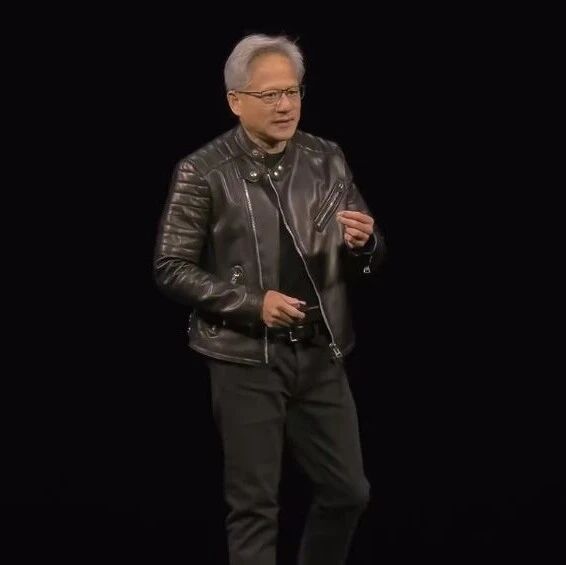
英伟达是怎么被“抬”上5万亿的?
虎嗅APP· 2025-10-30 00:15
Core Viewpoint - Nvidia has become the first company in history to surpass a market capitalization of $5 trillion, driven by strong demand for AI and its strategic investments in companies like OpenAI [2][4][6]. Group 1: Nvidia's Market Position and AI Demand - Nvidia's CEO Jensen Huang emphasized the robust demand for AI, projecting that the Blackwell and Rubin architecture chips could generate over $500 billion in revenue from 20 million GPUs by 2026, which is five times the revenue expected from the Hopper architecture chips between 2023 and 2025 [2][3]. - Huang refuted the AI bubble theory, asserting that Nvidia, as a key supplier of GPUs, holds significant pricing power, making its market value contingent on optimistic market sentiment regarding AI's future [3][4]. Group 2: Capital Circulation and Investment Dynamics - A capital loop has formed among major tech companies, where Nvidia invests in OpenAI, which in turn places substantial GPU orders with Nvidia, creating a cycle of revenue generation [8][9][12]. - OpenAI's need for extensive cloud infrastructure leads it to procure $300 billion in cloud services from Oracle, which subsequently requires more chips from Nvidia, further reinforcing the capital loop [10][11][12]. Group 3: Financial Strategies and Market Risks - The free cash flow of the "seven giants" has decreased by 62.45% from the end of 2024 to mid-2025, prompting companies to rely more on external financing rather than internal cash flow for AI investments [21][22]. - Meta has raised $27 billion through private debt issuance to fund data center construction, indicating a shift towards leveraging debt for growth in AI infrastructure [23][24]. Group 4: AI's Economic Impact and Future Outlook - OpenAI reported a revenue of approximately $4.3 billion in the first half of 2025 but incurred a loss of $13.5 billion, highlighting the challenges of profitability in the AI sector [27][28]. - The report from MIT indicates that 95% of investments in generative AI have not yielded returns, with 42% of projects being abandoned, suggesting a significant gap in commercial viability for AI applications [30][31]. Group 5: The Role of US Government and Market Dynamics - The US government views AI as a strategic priority, which may lead to continued relaxed regulations on capital inflows, potentially exacerbating leverage and valuation concerns in the market [25][26]. - The S&P 500 has risen by 17.16% this year, driven by optimism around AI investments and supportive macroeconomic conditions, including expectations of interest rate cuts [34][45].