资源+基建一体化

Search documents
刚果(金)4亿美元水电投资揭示“资源方主导”基建新趋势
Sou Hu Cai Jing· 2025-09-16 10:21
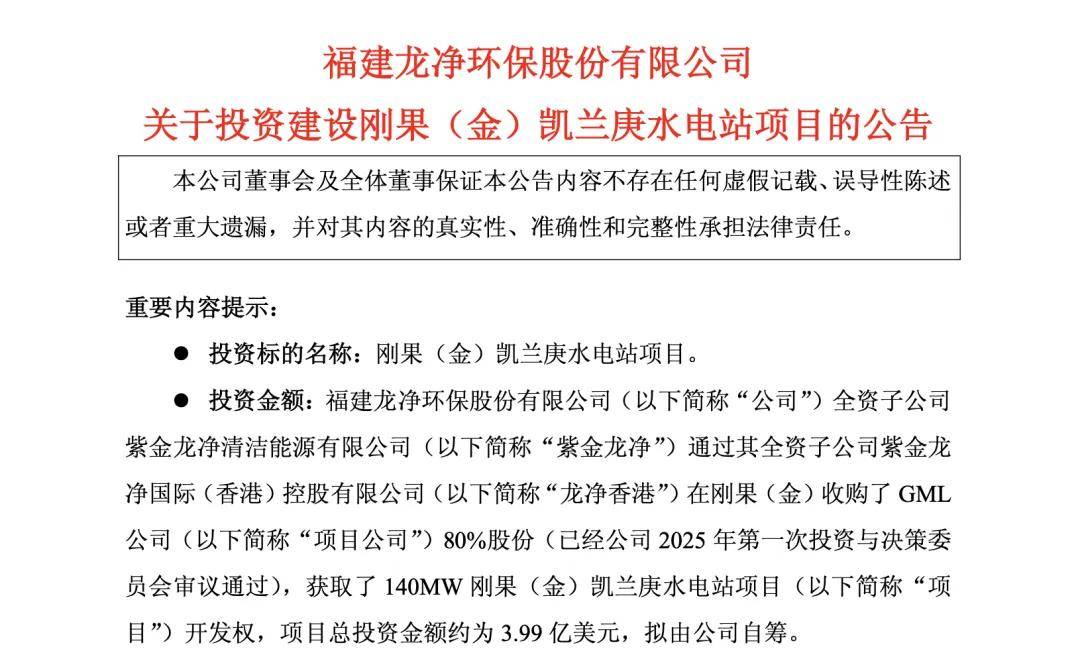
Core Insights - The article discusses a significant shift in ownership dynamics for infrastructure projects, highlighting a recent $399 million hydropower project in the Democratic Republic of Congo, which illustrates the trend of resource-driven infrastructure development [1][2]. Group 1: Project Overview - Longjin Environmental announced plans to invest approximately $399 million to construct a 140 MW hydropower station in the Democratic Republic of Congo [2]. - The project follows a Build-Operate-Transfer (BOT) model with a 30-year concession and a long-term Power Purchase Agreement (PPA) ensuring electricity consumption [5]. Group 2: Investment Logic - The investment is driven by the need to address a critical power bottleneck faced by the world-class copper mine in the region, where electricity supply issues are a major constraint on mining operations [6]. - The local electricity price is high at $0.21 per kWh, while the self-generated electricity from the new hydropower station is expected to cost approximately $0.16 per kWh, representing a nearly 25% reduction in costs [9]. Group 3: Industry Trends - There is a growing trend in the industry where large resource companies are transitioning from being solely resource extractors to integrated operators of "resource-energy-infrastructure" [13]. - Ownership of major infrastructure projects is shifting from government entities to large resource groups, indicating a need for solutions that address the core operational challenges of these companies [13]. - The focus of project risks is moving from market risks to operational risks, as the primary buyer is often the investing company's affiliate, thus ensuring demand and payment capability [14]. - Investment in clean energy is becoming standard practice, not just for current supply needs but also for future market access and financing advantages, aligning with global carbon neutrality goals [15].