资金行为分析

Search documents
18年经验:看懂这组数据少走十年弯路
Sou Hu Cai Jing· 2025-11-04 15:40
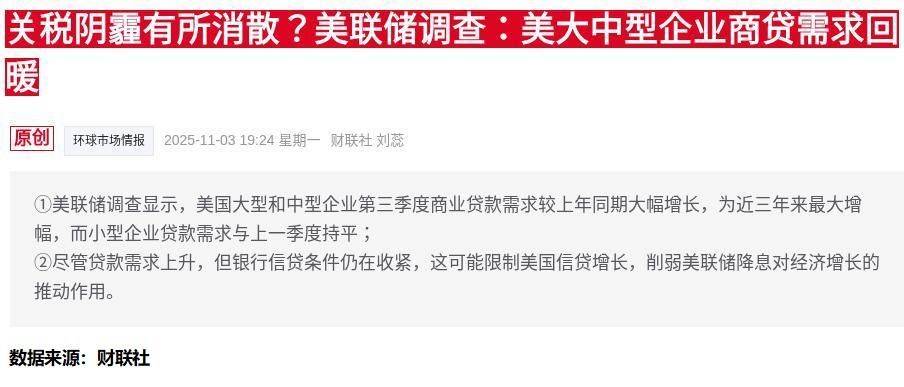
Core Insights - The recent Federal Reserve survey indicates a recovery in loan demand from U.S. businesses, yet bank credit remains tight, suggesting a complex economic landscape rather than a straightforward recovery [1] Group 1: Loan Demand Dynamics - Demand for loans from large and medium-sized enterprises has reached a three-year high, while small businesses show little change, reflecting a divergence similar to trends observed in the A-share market [2] - The report highlights that despite the recovery in loan demand, banks are maintaining a cautious stance, which may dampen the positive implications of the demand increase [2][4] Group 2: Market Behavior and Investment Strategies - The behavior of institutional investors remains active even during market downturns, indicating that underlying market dynamics may not align with surface-level indicators like loan demand [4][7] - The importance of data-driven analysis is emphasized, suggesting that market movements are influenced by a variety of factors rather than single narratives, reinforcing the need for a robust decision-making framework [7][8]

比特币巨鲸再出手,数字货币概念再来一波?
Sou Hu Cai Jing· 2025-08-05 12:49
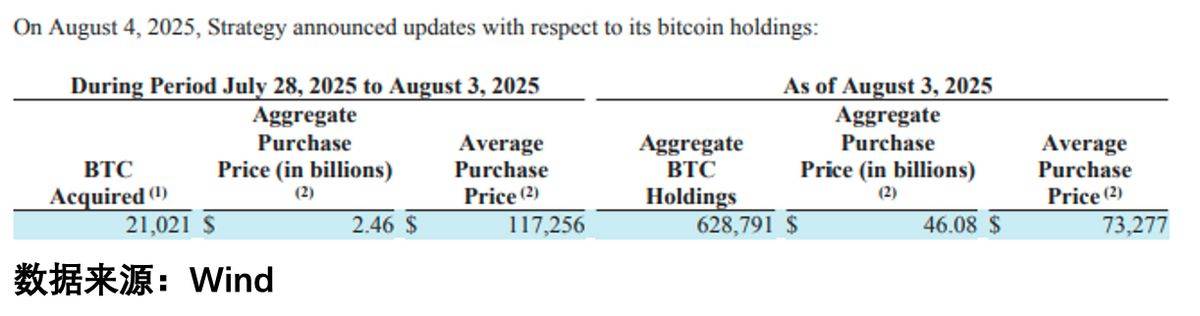
Core Insights - Billionaire Michael Saylor's company invested $2.46 billion in Bitcoin, averaging a purchase price of $117,256, which raises questions about market timing and investment strategies [1][2][3] Group 1: Market Timing and Investment Philosophy - The concept of "high" and "low" in the market is deemed a false narrative, as future price movements can redefine current valuations [3][11] - Saylor's investment approach challenges conventional wisdom, suggesting that true market opportunities arise when others perceive high risk [10][12] Group 2: Behavioral Data and Market Trends - Behavioral data is emphasized as a more reliable indicator than price fluctuations, with institutional investment patterns providing insights into market movements [4][6][9] - The analysis of institutional fund activity reveals that perceived high points may actually represent past opportunities, while current trends can indicate future movements [6][11] Group 3: Lessons for Investors - Ordinary investors are advised to focus on current market behaviors rather than attempting to predict future price movements, which often leads to poor decision-making [11][12] - The importance of utilizing data-driven strategies over emotional responses is highlighted, encouraging investors to adopt a more analytical mindset [12][14]