赚钱思维

Search documents
2026年:搞钱必看的10本入门书(建议收藏)
洞见· 2026-01-10 12:35
Core Insights - The article emphasizes that the traditional ways of making money are becoming less effective in the current complex economic environment, and future growth will require deeper understanding and systematic value creation [5][7]. Summary by Sections Book Recommendations - **Rich Dad Poor Dad**: This book reshapes the understanding of wealth, illustrating the difference between working for money and making money work for you. It highlights the "rat race trap" where many people remain stuck in a cycle of working for a paycheck without building assets [11][19]. - **Secrets of the Millionaire Mind**: The author explains that one's income is limited by their subconscious beliefs about money. Wealthy individuals have a "wealth blueprint" that empowers them to create opportunities, while others often see themselves as victims of circumstance [30][32]. - **Money Money Money**: The narrative suggests that making money can be enjoyable and likens it to a game. It encourages identifying and solving others' problems as a pathway to earning [37][46]. - **The Psychology of Money**: This book illustrates that emotional decision-making is detrimental to wealth accumulation. It emphasizes the importance of patience and rationality in investing, as demonstrated by an ordinary gas station worker who amassed significant wealth through consistent, long-term investments [51][61]. - **The Path to Financial Freedom**: The author discusses the need for a clear financial plan to achieve financial independence, emphasizing that financial freedom is about having enough assets to cover expenses [66][68]. - **The Naval Handbook**: This book stresses the importance of understanding the rules of the world to change one's destiny. Continuous learning and sharing insights are highlighted as key to becoming valuable in the marketplace [70][72]. - **Slowly Getting Rich**: The author argues that wealth accumulation is a gradual process rather than a quick fix. It encourages deep focus and patience in one's endeavors [76][80]. - **Poor Charlie's Almanack**: This book advocates for continuous learning and critical thinking in decision-making, emphasizing the importance of a diverse knowledge base to navigate financial choices effectively [88][90]. - **Does Looks Matter?**: The book discusses the correlation between appearance and income, suggesting that a good image can significantly impact earning potential [92][97]. - **The Latte Factor**: This book highlights the importance of recognizing and controlling small, unnecessary expenses that can accumulate over time, ultimately affecting financial health [106][112]. Conclusion - The article concludes that understanding and applying the insights from these ten books can broaden perspectives and enhance financial strategies, moving away from a poverty mindset towards a wealth-building approach [115][116].


赚不到钱,是因为班上多了
虎嗅APP· 2025-07-27 14:53
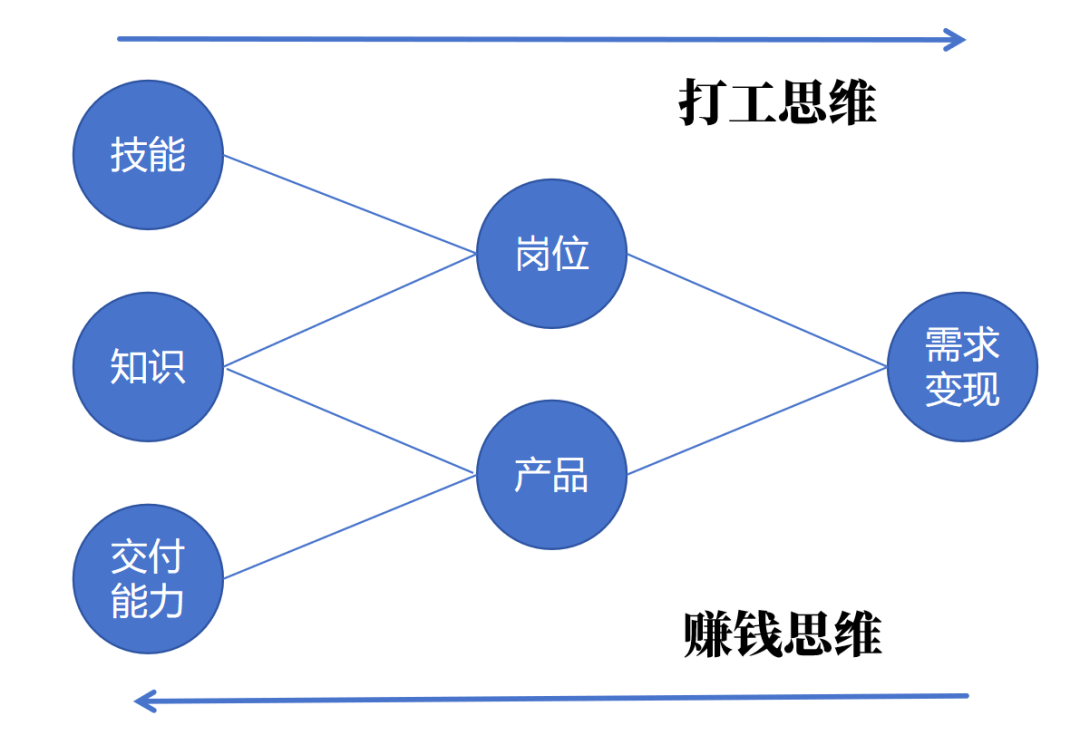
Core Viewpoint - The article emphasizes the distinction between "working mindset" and "earning mindset," suggesting that the latter is crucial for success in business and personal ventures [3][5][14]. Group 1: Working Mindset vs. Earning Mindset - The "working mindset" is characterized by the belief that having skills will naturally lead to job opportunities, focusing on refining one's abilities to sell time and expertise [4][11]. - In contrast, the "earning mindset" prioritizes understanding market needs and creating solutions, emphasizing the importance of identifying demand before developing skills or products [5][6]. - The article illustrates this difference through examples in various industries, highlighting how the approach to problem-solving can significantly impact success [8][12]. Group 2: Application in Personal and Professional Contexts - The article argues that even in traditional employment, individuals are constantly "selling" themselves, whether in project proposals or performance reviews, and must adopt an earning mindset to stand out [11][12]. - It warns that a prolonged adherence to the working mindset can lead to becoming merely a "high-level employee" rather than a "value creator," which is less effective in a dynamic business environment [14][15]. - The author encourages individuals to reassess their approach to work and life, applying the earning mindset to all aspects of their professional endeavors to enhance visibility and value [15][16].

赚不到钱,是因为班上多了
Hu Xiu· 2025-07-25 01:49
Core Viewpoint - The article discusses the distinction between "working mindset" and "earning mindset," emphasizing that the latter is crucial for entrepreneurial success and value creation [5][10][19]. Group 1: Working Mindset vs. Earning Mindset - The "working mindset" is characterized by individuals focusing on their skills and seeking positions that require those skills, aiming to sell their time and abilities [6][10]. - In contrast, the "earning mindset" prioritizes identifying market needs and creating solutions to meet those demands, focusing on building a sustainable value-creating system [7][8]. - The article illustrates that individuals with a "working mindset" may excel in completing tasks but may struggle to create value, while those with an "earning mindset" focus on market demands and value creation [11][20]. Group 2: Application in Various Contexts - The article highlights that the difference in mindsets can significantly impact success in fields like short video content creation, where understanding audience needs is more important than technical skills [12][13]. - Examples are provided to show how individuals with a "working mindset" often emphasize their skills, while those with an "earning mindset" focus on solving specific problems for their audience [14][15]. - The article stresses that even in traditional employment, individuals are constantly "selling" themselves and must adopt an "earning mindset" to effectively communicate their value to superiors and colleagues [18][19]. Group 3: Transitioning Mindsets - The article suggests that transitioning from a "working mindset" to an "earning mindset" requires a fundamental shift in thinking, focusing on market needs rather than personal skills [16][23]. - It warns that relying solely on past experiences and skills without considering user needs can lead to inefficiency in the business world [20][21]. - The article concludes that individuals aspiring to start personal ventures must adopt an "earning mindset" to navigate the entrepreneurial landscape effectively [22][24].