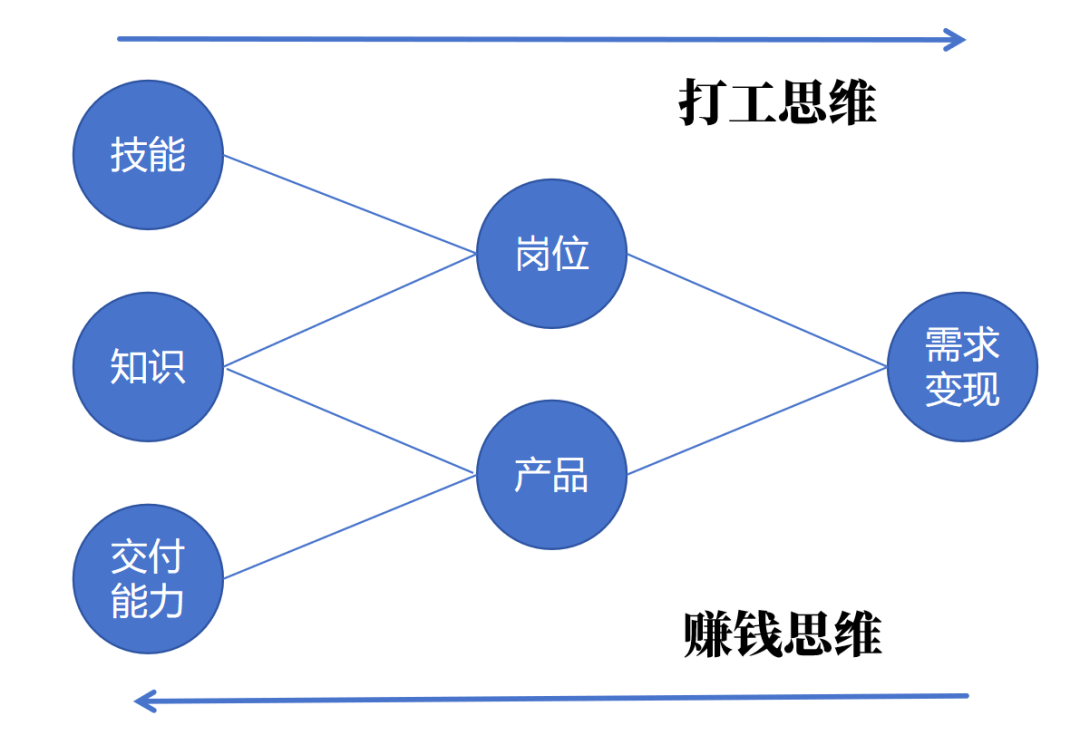
打工思维

Search documents
赴骁遥-精准获客丨喜欢是起点,需求是落点,价值是桥
Sou Hu Cai Jing· 2025-11-17 05:36
Core Insights - The importance of delivering value to others rather than merely pursuing personal interests is emphasized, highlighting that the market recognizes value over emotions [2][3] - The concept of "screening" is discussed, indicating that one's ability and uniqueness determine the power to choose clients and opportunities, with scarcity and substitutability being key factors [2][3] - A distinction is made between the mindset of employees and business owners, where the former focuses on personal satisfaction and treatment, while the latter prioritizes value creation and resource allocation [3][4] Group 1 - The notion that having the ability to produce consistent results grants one authority in decision-making, contrasting with those who lack measurable outcomes [3][4] - The idea that young individuals should consider whether their passions can sustain them financially in the near future, and the importance of having a transitional plan if not [4][5] - The approach of embedding personal preferences within the framework of meeting others' needs is advocated, rather than relying solely on personal interests [5] Group 2 - The emphasis on structural improvement over emotional fulfillment in work is highlighted, with a focus on how tasks can enhance systems for future efficiency [5] - The shift towards understanding the perspective of the "demand side" is encouraged, where the focus is on delivering results and certainty rather than the effort involved [5]


赚不到钱,是因为班上多了
虎嗅APP· 2025-07-27 14:53
Core Viewpoint - The article emphasizes the distinction between "working mindset" and "earning mindset," suggesting that the latter is crucial for success in business and personal ventures [3][5][14]. Group 1: Working Mindset vs. Earning Mindset - The "working mindset" is characterized by the belief that having skills will naturally lead to job opportunities, focusing on refining one's abilities to sell time and expertise [4][11]. - In contrast, the "earning mindset" prioritizes understanding market needs and creating solutions, emphasizing the importance of identifying demand before developing skills or products [5][6]. - The article illustrates this difference through examples in various industries, highlighting how the approach to problem-solving can significantly impact success [8][12]. Group 2: Application in Personal and Professional Contexts - The article argues that even in traditional employment, individuals are constantly "selling" themselves, whether in project proposals or performance reviews, and must adopt an earning mindset to stand out [11][12]. - It warns that a prolonged adherence to the working mindset can lead to becoming merely a "high-level employee" rather than a "value creator," which is less effective in a dynamic business environment [14][15]. - The author encourages individuals to reassess their approach to work and life, applying the earning mindset to all aspects of their professional endeavors to enhance visibility and value [15][16].

赚不到钱,是因为班上多了
Hu Xiu· 2025-07-25 01:49
Core Viewpoint - The article discusses the distinction between "working mindset" and "earning mindset," emphasizing that the latter is crucial for entrepreneurial success and value creation [5][10][19]. Group 1: Working Mindset vs. Earning Mindset - The "working mindset" is characterized by individuals focusing on their skills and seeking positions that require those skills, aiming to sell their time and abilities [6][10]. - In contrast, the "earning mindset" prioritizes identifying market needs and creating solutions to meet those demands, focusing on building a sustainable value-creating system [7][8]. - The article illustrates that individuals with a "working mindset" may excel in completing tasks but may struggle to create value, while those with an "earning mindset" focus on market demands and value creation [11][20]. Group 2: Application in Various Contexts - The article highlights that the difference in mindsets can significantly impact success in fields like short video content creation, where understanding audience needs is more important than technical skills [12][13]. - Examples are provided to show how individuals with a "working mindset" often emphasize their skills, while those with an "earning mindset" focus on solving specific problems for their audience [14][15]. - The article stresses that even in traditional employment, individuals are constantly "selling" themselves and must adopt an "earning mindset" to effectively communicate their value to superiors and colleagues [18][19]. Group 3: Transitioning Mindsets - The article suggests that transitioning from a "working mindset" to an "earning mindset" requires a fundamental shift in thinking, focusing on market needs rather than personal skills [16][23]. - It warns that relying solely on past experiences and skills without considering user needs can lead to inefficiency in the business world [20][21]. - The article concludes that individuals aspiring to start personal ventures must adopt an "earning mindset" to navigate the entrepreneurial landscape effectively [22][24].