
超快时尚

Search documents
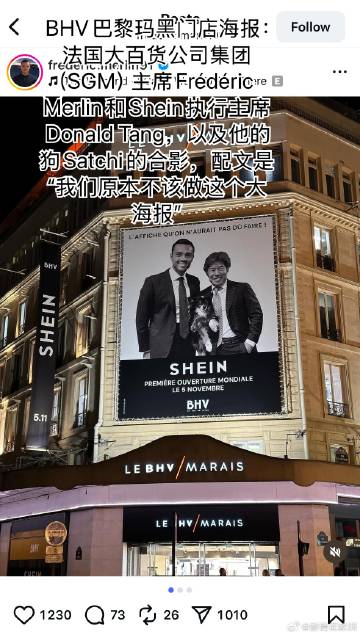
34岁法国大百货公司集团主席为了Shein硬刚老佛爷集团
Xin Lang Cai Jing· 2025-11-05 13:08
Core Viewpoint - The introduction of Shein into the French market has sparked significant controversy, particularly involving Frédéric Merlin, the 34-year-old chairman of the French department store group SGM, which owns BHV and previously operated several Galeries Lafayette stores. The conflict centers around Shein's entry into cities where Galeries Lafayette has a presence, leading to a public backlash from various stakeholders, including government officials and competing retailers [1][2]. Group 1: Company Actions and Reactions - SGM has decided to proceed with Shein's store openings despite opposition, emphasizing a commitment to ethical and transparent business practices. Merlin stated that the decision aligns with the direction of modern commerce and aims to ensure the continued prosperity of BHV [4][5]. - Galeries Lafayette announced the termination of its partnership with SGM, citing "strategic direction differences" as the reason for withdrawing from seven cities where Shein plans to open stores [2]. - The mayor of Dijon expressed regret over Shein's planned opening, calling for legislative action against the brand, indicating a broader concern among local officials regarding Shein's market entry [2]. Group 2: Market Position and Consumer Engagement - Merlin highlighted that the brands withdrawing from SGM only account for 0.2% of their revenue, suggesting that the company is not overly reliant on these partnerships [4]. - SGM plans to convert all sales from Shein's opening day into store-wide vouchers, aiming to engage with consumers and understand their preferences better. This initiative reflects a willingness to adapt based on consumer feedback [5]. - The company acknowledges the significant consumer base that supports Shein's products, with a notable percentage of the population in Grenoble being independent customers [5]. Group 3: Regulatory and Ethical Considerations - Merlin condemned recent controversies related to Shein, emphasizing the need for regulation in online markets and suggesting that physical retail could be a means to achieve better oversight [6]. - The company aims to maintain a focus on grounded business activities rather than media sensationalism, indicating a preference for substantive engagement over public relations [5].

Shein到底动了谁的蛋糕?
Xin Lang Cai Jing· 2025-11-05 09:28
Core Viewpoint - Shein, a representative of "ultra-fast fashion" e-commerce, has opened its first permanent store in Paris, France, but faces significant backlash and controversy from the local community and authorities [1][4][5]. Group 1: Shein's Market Entry - Shein has opened its first permanent store in the BHV department store in Paris, with plans to open six more locations across France [1][8]. - The store spans 1,200 square meters in a prime location, marking a significant shift from Shein's previous strategy of pop-up stores [7][9]. - The decision to enter BHV has sparked widespread media coverage and public outcry, with over 90,000 signatures collected against Shein's presence in the store [4][8]. Group 2: Public and Government Response - French authorities, including the Minister of Economy, have expressed strong opposition to Shein's entry, citing concerns over the sale of inappropriate products on their platform [5][11]. - The backlash includes accusations that Shein threatens local manufacturing and employment, as well as concerns about environmental impacts associated with "fast fashion" [12][15]. - The controversy has led to a broader discussion about the implications of Shein's business model on local fashion brands and the retail landscape in France [15][18]. Group 3: Shein's Business Strategy and Challenges - Shein's strategy includes promises of creating 200 direct and indirect jobs and revitalizing the local retail environment [8][12]. - The company has faced significant fines in France for various regulatory violations, totaling €191 million, which reflects ongoing scrutiny of its business practices [15]. - Despite the challenges, Shein's management remains optimistic about the brand's potential in the French market, emphasizing the importance of adapting to consumer preferences [18][19].

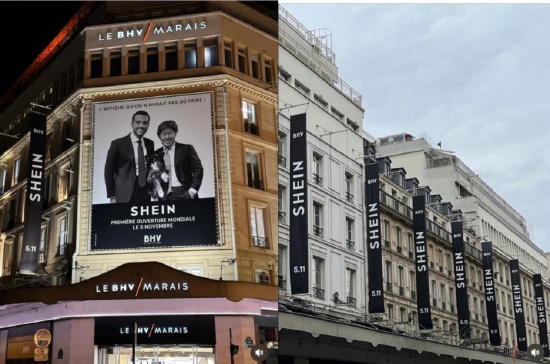
9万人联名反对……今天,Shein欧洲首店在抗议声中开业
Xin Lang Ke Ji· 2025-11-05 00:15
Core Viewpoint - Shein's entry into the European market, specifically through its first physical store in Paris at BHV, has sparked significant public backlash and protests, highlighting the tension between fast fashion and local values of sustainability and craftsmanship [2][5][10]. Group 1: Public Opposition - Over 90,000 signatures were collected against Shein's opening at BHV, with Paris's mayor and local unions publicly opposing the decision [2][5]. - The controversy is fueled by Shein's association with harmful products and environmental concerns, as highlighted by the French consumer regulatory agency's report on Shein's website [2][7]. - The backlash reflects broader sentiments against fast fashion, particularly in light of the decline of local manufacturing and the impact of online retail giants like Amazon [5][9]. Group 2: Environmental Concerns - Shein was recently fined for misleading advertising regarding sustainability claims, which were deemed unsubstantiated and overly ambitious [7][8]. - The French Nature Association criticized Shein's business model for its reliance on plastic fibers and high carbon emissions due to rapid production and shipping practices [7][8]. - Calls for stricter regulations on fast fashion have emerged, emphasizing the need to control both production and marketing to mitigate environmental damage [8][9]. Group 3: Industry Dynamics - Shein's rapid growth has disrupted traditional retail dynamics, with its model of "ultra-fast fashion" leading to concerns about job losses and the viability of local brands [9][16]. - The company has faced significant fines in France, totaling €400 million for misleading commercial practices and data violations, indicating regulatory scrutiny [8][9]. - Major retailers like Galeries Lafayette have publicly opposed Shein's presence, citing conflicts with their brand values and potential damage to their reputation [18]. Group 4: Shein's Strategic Response - In an attempt to mitigate backlash, Shein has announced investments in sustainability initiatives and second-hand platforms, signaling a shift towards a more responsible image [14][15]. - Despite these efforts, Shein's operational model, which emphasizes speed and low cost, continues to clash with the cultural values of French consumers [10][11]. - The upcoming opening of Shein's store is seen as a critical test of its ability to navigate the complex landscape of European retail and consumer expectations [19].
Europe textile sector seeks urgent action against ultra-fast fashion
Yahoo Finance· 2025-09-17 11:06
Core Viewpoint - European textile and clothing federations are advocating for stronger regulations and taxes on fast fashion to address environmental and economic challenges posed by ultra-fast fashion practices [1][2][7]. Group 1: Regulatory Measures - The federations are calling for a tax on small-parcel deliveries and the elimination of the €150 ($177.70) customs duty exemption [1]. - There is a demand for stronger regulations and sanctions as outlined in the Digital Services Act (DSA) and Digital Markets Act (DMA), including the appointment of legally authorized representatives by e-commerce companies [2]. - The federations emphasize the need for improved value-added tax (VAT) collection processes to manage the influx of goods into the EU market [2]. Group 2: Impact of Ultra-Fast Fashion - The alarming growth of ultra-fast fashion, primarily driven by large non-European online platforms, is highlighted, with an estimated 4.5 billion parcels delivered to the EU in 2024, representing 5% of total clothing sales and about 20% of online clothing sales [3]. - The trend is leading to increased textile waste due to the overproduction of short-lived items, putting significant strain on European small and medium-sized enterprises (SMEs) that must comply with strict social and environmental regulations [4]. - Local retailers are facing challenges that contribute to the decline of urban centers, exacerbated by the practices of ultra-fast fashion [4]. Group 3: Legal and Competitive Issues - Allegations of VAT fraud, counterfeiting, and unfair competition are raised, indicating violations of European regulations [5]. - The federations suggest engaging with Chinese authorities to regulate online platform practices, indicating a need for international cooperation [3]. Group 4: Collective Action - The declaration is supported by various organizations, including Euratex and national associations from multiple European countries, indicating a unified stance against the challenges posed by ultra-fast fashion [6]. - The federations assert that ultra-fast fashion should not become the norm and urge the EU to take immediate action to protect businesses, workers, and the environment [7].