跑赢通胀

Search documents
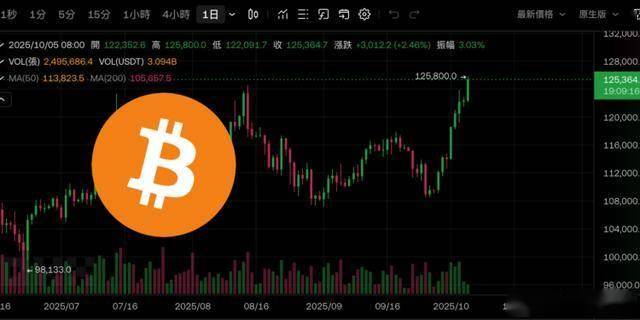
比特币破12.5万美元!不是泡沫,是全球信任重构的信号?
Sou Hu Cai Jing· 2025-10-06 14:08
Core Insights - Bitcoin reached a historical high of $125,689 on October 5, 2025, sparking mixed reactions in the market, with some viewing it as "digital gold" while others see it as another bubble [1] - The current surge is driven by institutional investments rather than retail speculation, with multiple Bitcoin spot ETFs experiencing consistent net inflows [3] - The macroeconomic environment, including potential government shutdowns and rising uncertainty around the US dollar, is prompting investors to seek alternatives like Bitcoin for hedging [3] Institutional Investment Trends - Unlike the retail-driven market of 2021, the current Bitcoin rally is characterized by significant institutional buying, indicating a shift in asset allocation strategies [3] - Major financial institutions are incorporating Bitcoin into their asset allocation models, reflecting a structural change in how Bitcoin is perceived as an alternative asset [5] Regulatory and Technological Landscape - China's stance on cryptocurrencies is clear: it avoids speculative trading but focuses on underlying technology, such as the digital yuan, which is being gradually rolled out [5] - The trust mechanism in traditional finance is under scrutiny due to high debt levels and persistent inflation, leading to increased interest in decentralized alternatives like Bitcoin [5][7] Market Dynamics and Future Outlook - The driving force behind Bitcoin's adoption is often practical rather than ideological, with investors focused on its ability to hedge against risks and outperform inflation [7] - The existence of Bitcoin has altered the default settings of the financial system, providing a psychological reference point for market participants [7] - The potential for Bitcoin to reach $125,000 is seen as a midpoint rather than a final destination, with ongoing developments in institutional adoption and regulatory frameworks likely to influence its trajectory [9]

学会了这招,管他市场涨跌,再也不用操心了...
雪球· 2025-07-31 13:00
Core Viewpoint - The article emphasizes the importance of having a clear investment goal rather than merely focusing on making money, suggesting that a well-defined objective serves as a guiding compass for investment decisions [2][3][24]. Group 1: Investment Challenges - Many investors operate without a clear destination, leading to a lack of direction and ineffective decision-making [3][4]. - The absence of quantifiable goals results in emotional and chaotic investment actions, driven by market noise and personal feelings [4][5]. - This chaotic approach leads to fragmented actions, where decisions are made based on short-term market movements rather than a coherent strategy [5][6]. Group 2: Effective Investment Strategies - The "Dividend Income" strategy exemplifies a clear and practical investment goal, focusing on building a portfolio that generates stable cash flow to cover living expenses [8][9]. - This strategy shifts the focus from abstract asset appreciation to concrete annual cash flow, providing a clear target for investors [9][10]. Group 3: Value Averaging Strategy - The "Value Averaging" strategy is introduced as a more universal and powerful navigation system for investors seeking long-term asset growth [11]. - Unlike traditional fixed-amount investments, this strategy aims for a predetermined growth path, adjusting contributions based on market performance [11][12]. - The mechanism of this strategy encourages buying more during market downturns and selling during upswings, effectively implementing a "buy low, sell high" approach [13][14][15]. Group 4: Systematic Approach - The value averaging strategy incorporates a "review-calibration" loop, allowing investors to assess their performance against set goals without emotional interference [16][21]. - This systematic approach focuses on managing behavior in the market rather than predicting market movements, protecting investors from emotional decision-making [22][23].