
轨道交通网络完善

Search documents
北京新开3条(段)地铁线,城市轨道交通运营总里程超900公里
Zhong Guo Xin Wen Wang· 2025-12-29 00:42
Core Viewpoint - The opening of three new subway lines in Beijing enhances the city's public transportation network, improving connectivity and commuting efficiency for residents in various districts [1][2][3]. Group 1: New Subway Lines - The new lines include the middle section of Line 17 (8.2 km), Line 18 (19.8 km), and the southern extension of Line 6 (2.0 km), adding approximately 30 kilometers to the subway network [1][3]. - Line 17 connects major residential and business areas, reducing travel time from the southern end to the northern end to 66 minutes, effectively alleviating traffic pressure on existing lines [2][3]. - Line 18 serves as a crucial east-west corridor in northern Beijing, linking key areas and easing traffic congestion in the "Huitian" region [3]. Group 2: Operational Details - The operational hours for the new lines are set, with first and last trains scheduled for various stations, ensuring accessibility for commuters [4]. - The integration of bus services with the new subway lines has been optimized, with adjustments made to existing routes and the introduction of new ones to facilitate seamless transfers [5][6]. Group 3: Infrastructure and Facilities - Parking facilities have been developed around the new stations, including motor vehicle and non-motor vehicle parking spaces, to support commuter needs [7]. - The new lines feature enhanced passenger amenities, such as mother-baby rooms, accessible restrooms, and real-time information displays, improving the overall travel experience [8].
北京新开3条(段)地铁线 城市轨道交通运营总里程超900公里
Zhong Guo Xin Wen Wang· 2025-12-27 02:59
Core Viewpoint - The opening of three new subway lines in Beijing enhances the city's public transportation network, improving connectivity and commuting efficiency for residents in various districts [1][3][7]. Group 1: New Subway Lines - The new lines include the middle section of Line 17 (8.2 km), Line 18 (19.8 km), and the southern extension of Line 6 (2.0 km), adding approximately 30 kilometers to the operational subway network [1][3][7]. - Line 17 connects major residential and business areas, allowing for a full journey from Jiahuai Lake to Future Science City North in just 66 minutes, effectively alleviating traffic pressure on existing lines [3][4]. - Line 18 serves as a crucial east-west corridor in northern Beijing, linking Haidian and Changping districts, with 11 stations including four transfer stations [4][5]. Group 2: Transportation Integration - The new subway lines are complemented by adjustments to the bus network, with two bus routes modified and one new route introduced to facilitate seamless transfers between bus and subway services [8]. - A total of 121 bus routes now connect to the new subway lines, enhancing overall travel efficiency [8]. Group 3: Parking and Facilities - New parking facilities have been established near subway stations, including a 1.4 million square meter parking lot at the southern extension of Line 6, accommodating 364 vehicles and 2,600 bicycles [9]. - The new lines feature amenities such as mother-baby rooms, accessible restrooms, and AED equipment, ensuring a user-friendly experience for all passengers [9][10]. Group 4: Passenger Experience Enhancements - The new trains are equipped with carbon fiber electric heating seats and ergonomic designs to improve passenger comfort [10]. - Real-time information displays at stations provide updates on train arrivals and crowd levels, aiding passengers in planning their journeys [10].

轨道交通运营里程将突破900公里
Bei Jing Ri Bao Ke Hu Duan· 2025-12-22 01:09
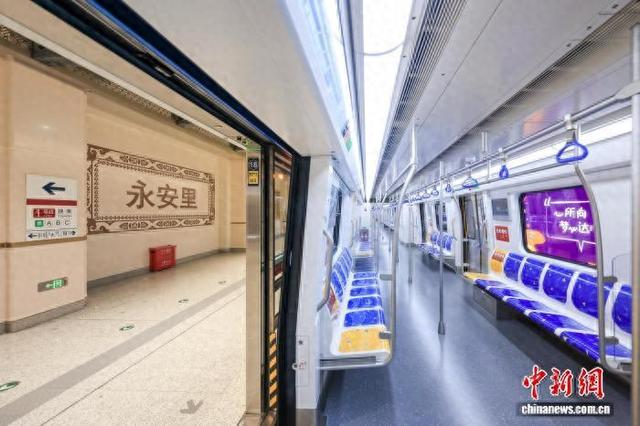
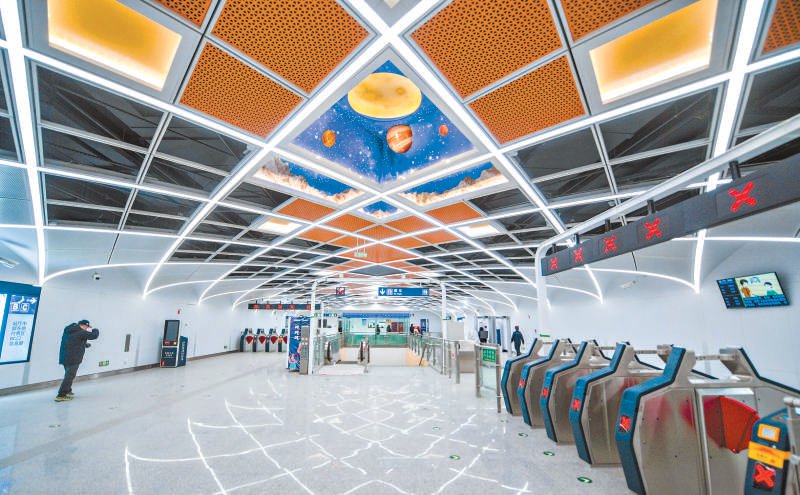
Core Viewpoint - The upcoming opening of three new subway lines in Beijing, including the middle section of Line 17, Line 18, and the southern extension of Line 6, will enhance the city's rail transit network, increasing the total operational mileage to 909 kilometers, marking a significant advancement in the capital's transportation capacity [7]. Group 1: Line Details - The total length of the new lines is approximately 30.1 kilometers, with the middle section of Line 17 spanning 8.2 kilometers and featuring four stations, including East Dajiao Station, which allows transfers to Line 6, and Yong'anli Station, which connects to Line 1 [9]. - Line 18, covering about 19.8 kilometers, serves as a major east-west route for the northern districts, featuring 11 stations, four of which are transfer stations, significantly easing commuting pressure for residents in large residential areas like Tiantongyuan and Huoying [10]. - The southern extension of Line 6 extends approximately 2.1 kilometers to Luyang Station, enhancing connectivity between the urban sub-center and the central city, which is crucial for improving green travel options [10]. Group 2: Design and Aesthetics - The design of the new lines incorporates unique artistic elements, such as the "Phoenix" theme at East Dajiao Station, which blends traditional culture with modern artistic expression, showcasing Beijing's international image [11]. - Line 18 features a "light and shadow tunnel" design theme, emphasizing a minimalist approach that balances economy, functionality, and aesthetics, creating a bright and welcoming atmosphere for passengers [11]. - Luyang Station on Line 6 employs a "bare concrete" design, which not only reduces construction costs but also enhances environmental performance, showcasing a modern aesthetic [12]. Group 3: Construction Innovations - The construction of these lines overcame significant challenges, including complex geological conditions and the integration with existing lines, demonstrating innovative engineering techniques and construction models [13]. - The middle section of Line 17 required intricate design to efficiently integrate multiple lines at East Dajiao Station while minimizing impacts on the surrounding environment [14]. - Line 18 is recognized as a smart construction demonstration line, utilizing advanced technologies such as flexible direct current traction power supply systems, which improve energy efficiency by 5%-10% compared to traditional systems [14]. Group 4: Impact on Urban Development - The opening of these new lines is expected to enhance service quality, operational efficiency, and urban integration, facilitating smoother urban connectivity and stimulating regional development [15]. - The new subway lines will provide safer, more convenient, and environmentally friendly travel options for residents, supporting the high-quality development of the capital and contributing to the creation of a harmonious and livable city [15].
探访即将开通的三条地铁新线,北京轨道交通马上突破900公里
Bei Jing Ri Bao Ke Hu Duan· 2025-12-21 10:28
Core Viewpoint - The upcoming opening of three new subway lines in Beijing will enhance the city's transportation network, increasing the total operational mileage to 909 kilometers, marking a significant improvement in the scale and service capacity of the capital's transit system [1][12]. Group 1: New Subway Lines Overview - The new lines include the 17th line middle section (10.1 kilometers), the 18th line (19.8 kilometers), and the southern extension of the 6th line (2.1 kilometers), totaling approximately 30.1 kilometers [2][3]. - The 17th line will connect key areas such as Future Science City, CBD, and Yizhuang New City, significantly reducing travel time from the southern end to the northern end to 66 minutes [2]. - The 18th line will serve the northern districts, providing a rapid transit option for residents in large residential areas like Tiantongyuan and Huilongguan, with a travel time of just over 30 minutes from east to west [3]. Group 2: Design and Aesthetic Features - The 17th line middle section features a "Science and Innovation Future" theme, incorporating regional cultural elements, with notable artworks from master Han Meilin at East Dajiao Station [7]. - The 18th line adopts a "Light and Shadow Tunnel" design theme, focusing on a minimalist aesthetic that enhances the passenger experience while ensuring functionality [9]. - The 6th line's southern extension utilizes a "bare concrete" design, promoting environmental efficiency and cost-effectiveness while maintaining a modern aesthetic [9]. Group 3: Construction Challenges and Innovations - The construction of these lines faced significant challenges, including complex geological conditions and the need for integration with existing infrastructure [10][11]. - The 18th line is recognized as a smart construction demonstration line, employing advanced technologies such as flexible direct current traction power supply systems, which improve energy efficiency by 5% to 10% compared to traditional systems [11]. - The 6th line's extension was completed without disrupting the operation of existing lines, showcasing high technical standards in urban transit construction [11]. Group 4: Impact on Urban Development - The opening of these new lines is expected to enhance service quality, operational efficiency, and urban integration, providing safer, more convenient, and environmentally friendly travel options for residents [12]. - The new subway lines will facilitate urban connectivity and stimulate regional development, supporting the high-quality growth of the capital and contributing to its goal of becoming an internationally renowned, harmonious, and livable city [12].

地铁11号线盾构机从汤山站出发,向汉阳高铁站掘进
Chang Jiang Ri Bao· 2025-11-25 12:48
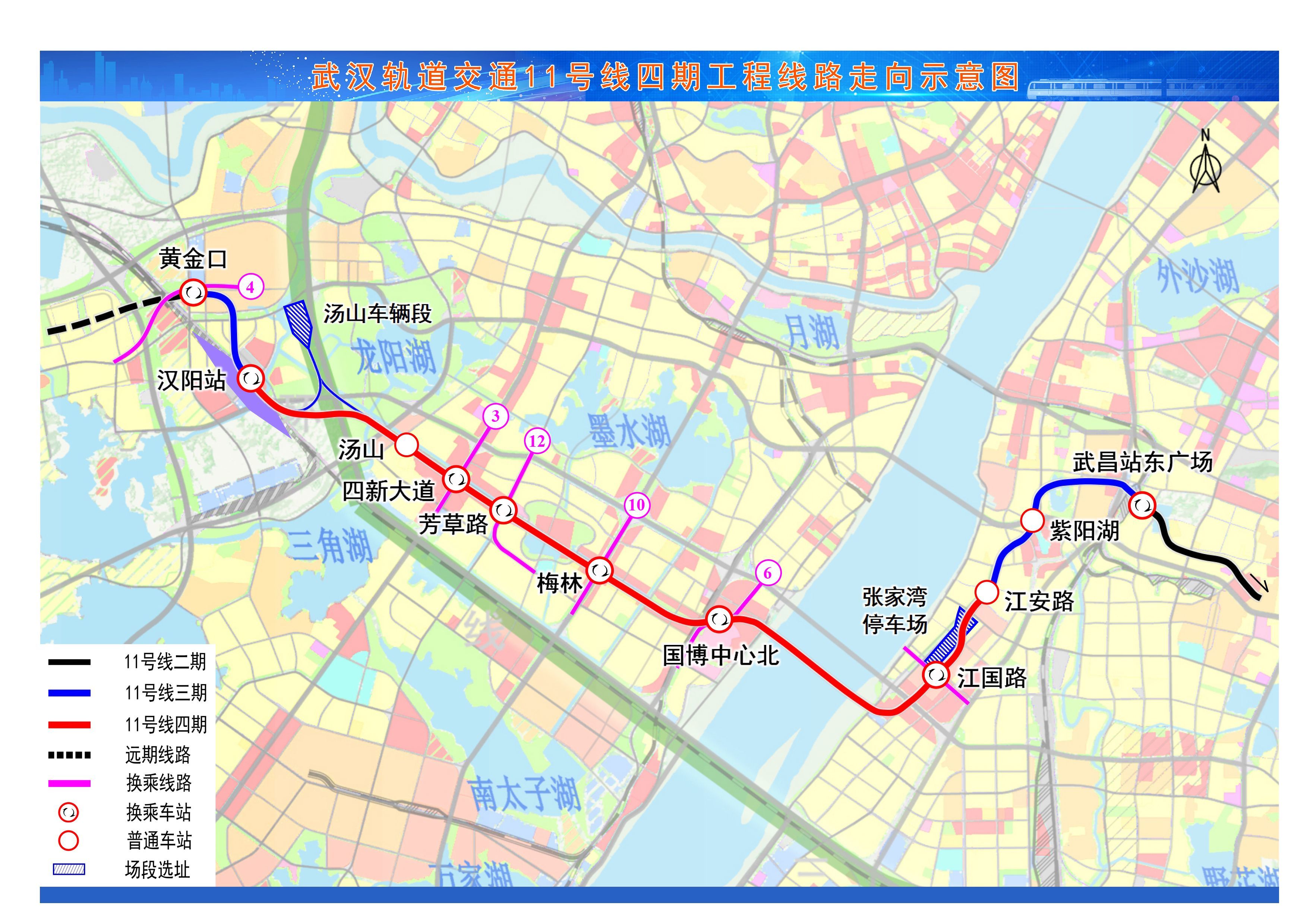
Core Viewpoint - The Wuhan Metro Line 11 Phase IV project has made significant progress with the commencement of tunnel construction between Tangshan Station and the entry-exit line, utilizing advanced tunneling technology to address various engineering challenges [1][5]. Group 1: Project Overview - The total length of the Line 11 Phase IV project is 16.2 kilometers, featuring six stations: Tangshan Station, Sixin Avenue Station, Fangcao Road Station, Meilin Station, North National Expo Center Station, and Jiangguo Road Station [13]. - The construction of the right line tunnel spans 1,735 meters and faces three major technical challenges: shallow burial, steep slopes, and sharp bends [5]. Group 2: Engineering Challenges and Solutions - The minimum burial depth of the tunnel is only 4.4 meters, significantly less than the diameter of the tunneling machine, necessitating multiple protective measures, including a 0.7-meter thick anti-floating reinforced concrete slab on the surface and 40 anti-pull piles on both sides of the tunnel [5]. - The maximum slope of the section reaches 32‰, and the minimum turning radius is 300 meters, which poses high operational demands on the tunneling machine [5]. Group 3: Construction Progress - Another tunneling machine from Tangshan Station has safely advanced 400 meters towards Sixin Avenue Station, navigating through 12 different geological layers, which complicates tunnel axis control [7]. - The left line tunneling machine is expected to complete assembly next week, allowing for simultaneous tunneling of both left and right lines [5][13]. Group 4: Workforce and Expertise - A total of three tunneling machines will be deployed from Tangshan Station, supported by a team of 120 personnel with an average experience of five years, including a core group of "post-80s" assembly workers and "post-90s" operators [9].
地铁17号线首台盾构始发
Shen Zhen Shang Bao· 2025-07-28 23:00
Core Viewpoint - The construction of the Shenzhen Metro Line 17 Phase I is expected to alleviate traffic pressure in densely populated areas such as Danjiao Head and Shimeiling, while enhancing the overall rail network in Longgang South and other regions [1][2] Group 1: Project Overview - The Line 17 Phase I project starts from Qiaoshe Station and ends at Shanglilang Station, covering approximately 18 kilometers with a total of 18 underground stations [1] - The first shield machine for the Danjiao Head to Shimeiling section has commenced, with the right line of this section measuring about 1,350 meters [1] Group 2: Construction Challenges and Innovations - The geological conditions for the construction are complex, requiring the shield machine to navigate through various rock formations and existing underground utilities, presenting significant construction difficulties and safety risks [1][2] - The construction team has optimized the construction plan by innovatively using a steel casing closed starting technology to reduce initiation risks, and has customized a composite earth pressure balance shield machine to handle the challenging geological conditions [2] Group 3: Impact and Significance - The completion of Line 17 will enhance rail coverage in key areas such as Luohu Center, Buji, and Nanwan, supporting the development of important regions like the Shenkang Qingshui River [2] - The project is expected to improve the functionality of the rail transit network, alleviate traffic pressure, and contribute to urban renewal along the line [2]