
地铁17号线

Search documents
地铁15号线与17号线开通换乘!跨区通勤能有多快?
Bei Jing Ri Bao Ke Hu Duan· 2026-02-10 01:21
Core Insights - The opening of the transfer station at Wangjing West significantly enhances commuting efficiency for residents in Shunyi District, allowing for quicker access to key areas such as Future Science City and various commercial districts [1][9]. Group 1: Commuting Efficiency - The travel time from Shunyi District to Future Science City is now reduced to 56 minutes, compared to the previous duration of approximately 1 hour and 20 minutes [9][10]. - The new transfer system allows residents to switch from Line 15 to Line 17 directly, cutting down the commute by about 25 minutes [10]. - The introduction of a large-capacity express train service on Line 17 further accelerates travel times, making the overall journey more efficient [5][10]. Group 2: Accessibility and Convenience - The transfer station at Wangjing West provides direct access to major commercial areas, including Gongren Tiyuchang and Yizhuang New City, enhancing leisure travel options for residents [12][13]. - The newly constructed 300-meter transfer passage is designed with clear directional signage, improving the overall user experience during peak commuting hours [4][15]. - Safety and comfort have been prioritized with the closure of the outdoor transfer bridge, now replaced by an indoor passage, ensuring a more secure and pleasant transfer experience [15]. Group 3: Operational Improvements - Over 100 new directional signs have been installed in key areas to facilitate passenger navigation, alongside staff presence to assist with transfers [15]. - Emergency drills have been conducted to ensure operational safety and efficiency during high passenger volumes and potential equipment failures [15].

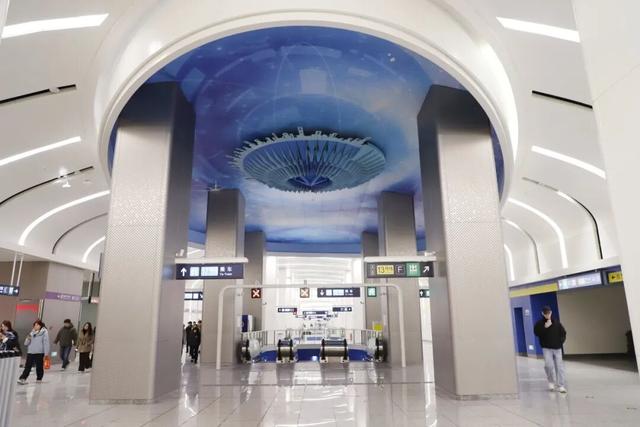
17号线望京西站为啥还不开通?
Bei Jing Wan Bao· 2026-01-14 07:03
Group 1 - The core issue is the delay in the opening of the Wangjing West Station of the subway line 17, which is causing inconvenience for commuters who need to transfer to reach the Future Science City [3][4] - The Wangjing West Station has two entrances, but one is not operational due to the slow progress of the associated transportation hub construction, which is affecting the station's opening conditions [3][4] - The transportation hub was completed on June 30 of the previous year, but it has not opened due to issues with fire safety inspections related to the existing transfer passages for lines 13 and 15 [4][5] Group 2 - The construction of the underground transfer hall at Wangjing West Station is progressing slowly, which is intended to replace the existing transfer passage that has been criticized for its long walking time [4][5] - The complexity of the surrounding environment, including proximity to existing operational lines and high-pressure gas facilities, is contributing to the construction difficulties [5] - Relevant departments are actively coordinating to expedite the opening of the transportation hub and the associated subway station facilities [5]
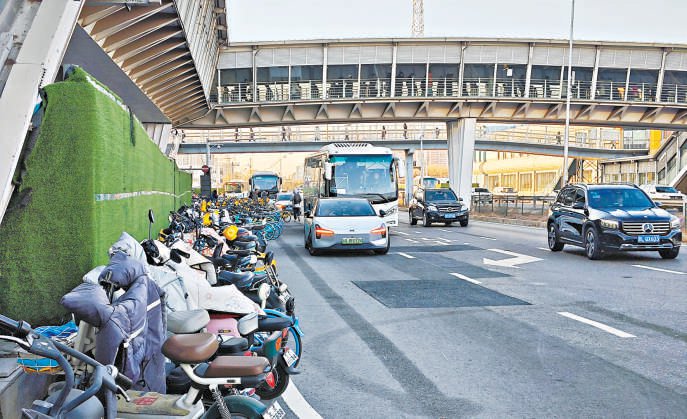
17号线中段今起开通,全线贯通仅需66分钟
Xin Jing Bao· 2025-12-27 05:49
Core Viewpoint - The opening of the middle section of Beijing's Metro Line 17 on December 27 marks the full connectivity of the line, significantly improving transit efficiency and alleviating passenger flow on Lines 5 and 10 [1][4]. Group 1: Line Connectivity and Impact - The newly opened middle section of Line 17 spans 8.2 kilometers and includes four stations, two of which are transfer stations, enhancing connectivity between key residential and business areas such as Yizhuang, CBD, and Future Science City [3][4]. - The entire journey from the southern terminus at Jiahui Lake to the northern terminus at Future Science City North now takes only 66 minutes, facilitating faster commutes and supporting economic development in surrounding areas [4][5]. Group 2: Station Features and Accessibility - The stations on the new section are equipped with family-friendly facilities, including mother-baby rooms, accessible restrooms, and AED emergency equipment, ensuring a comprehensive service for all passengers [8][10]. - Special design features at stations like Dongdajiang include large signage for better visibility, dual-sided elevators for wheelchair access, and multilingual translation devices to assist foreign passengers [10][12]. Group 3: Operational Adjustments - The initial operation of Line 17 will follow a weekend schedule with a minimum interval of 8 minutes between trains, and adjustments have been made to the first and last train times to accommodate passenger needs [5]. - Parking facilities for both motor and non-motor vehicles have been established around key stations to facilitate easier access for commuters [5].
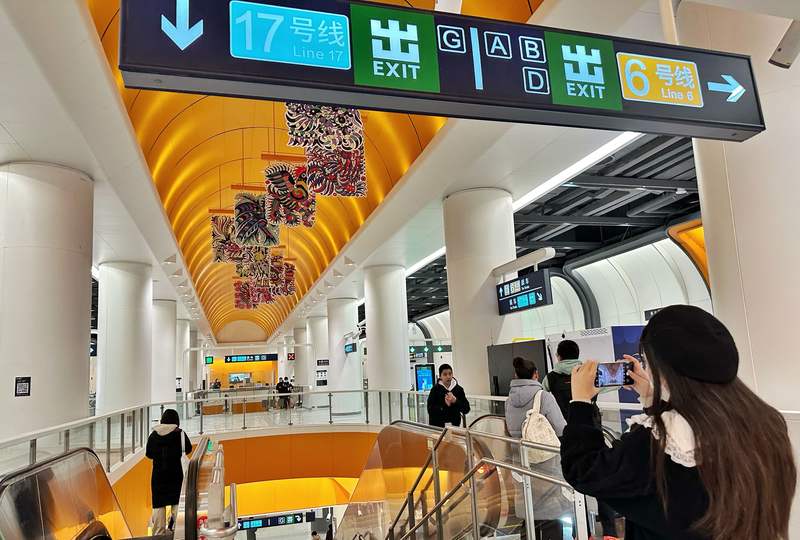
3条新线今天开通!北京轨道交通驶入900公里大关
Bei Jing Ri Bao Ke Hu Duan· 2025-12-27 00:54
Core Points - The opening of three new urban rail transit lines in Beijing marks a significant expansion of the city's transportation network, increasing the total operational mileage to 909 kilometers, enhancing service capacity and overall traffic capacity [1][2][5] Group 1: New Line Openings - The new lines include the middle section of Line 17 (Worker's Stadium to Shilihe), Line 18 (Malienwa to Tiantongyuan East), and the southern extension of Line 6 (Lucheng to Luyang), adding approximately 30 kilometers of operational track [1][2] - Line 17, a major north-south corridor, connects various residential and business districts, with the newly opened section spanning 8.2 kilometers and featuring four stations, including two transfer stations [2][5] - Line 18, serving as an east-west backbone for northern urban areas, covers about 19.8 kilometers with 11 stations, including four transfer stations, facilitating rapid commuting between key districts [7] Group 2: Transportation Efficiency - The full operation of Line 17 will reduce congestion on Lines 5 and 10, providing a faster commuting option for residents, with a total travel time of 66 minutes from south to north [5] - The new lines are expected to improve commuting efficiency and enhance connectivity between major residential areas and business hubs, thereby alleviating traffic congestion in the city [1][5] Group 3: Design and Amenities - The new stations are designed with a focus on aesthetics and functionality, featuring unique themes and cultural elements that reflect local heritage [15][17] - All new lines are equipped with modern amenities, including mother-baby rooms, accessible facilities, and emergency equipment, ensuring a user-friendly experience for all passengers [21][24] - The introduction of carbon fiber heated seats and ergonomic designs aims to enhance passenger comfort while promoting energy efficiency [26] Group 4: Integration with Public Transport - To facilitate seamless transfers between the new subway lines and bus services, adjustments to existing bus routes and the introduction of new lines have been implemented, enhancing overall travel efficiency [26] - The total number of bus routes serving the new lines has reached 121, with a focus on ensuring that bus stops are within 50 meters of subway stations for easy access [26] Group 5: Parking Facilities - New parking facilities have been constructed around the subway stations to accommodate both motor vehicles and non-motorized vehicles, providing ample parking spaces for commuters [28]
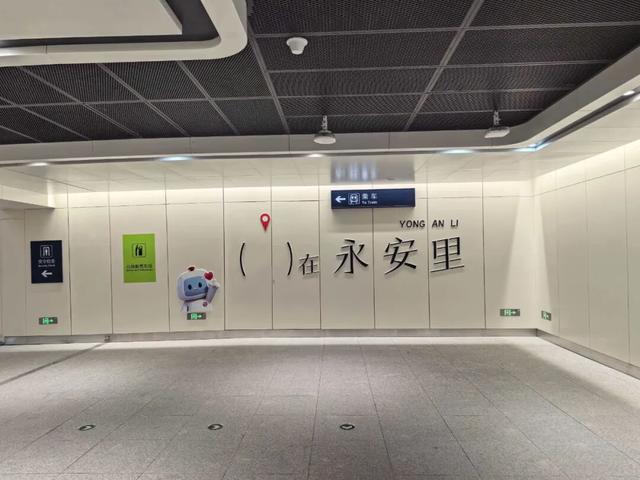
北京城市轨道交通又开新线
Bei Jing Ri Bao Ke Hu Duan· 2025-12-26 04:08
Core Viewpoint - Beijing's urban rail transit system will expand with the opening of three new subway lines by December 27, 2025, adding approximately 30 kilometers to the network, bringing the total operational mileage to 909 kilometers, enhancing the city's transportation capacity and connectivity [1] Group 1: New Subway Lines - The new lines include the middle section of Line 17 (Worker's Stadium to Shilihe), Line 18 (Malianwa to Tiantongyuan East), and the southern extension of Line 6 (Lucheng to Luyang) [1] - Line 17 will connect major residential and business areas, reducing travel time from the southern end to the northern end to 66 minutes, alleviating pressure on existing lines [1] - Line 18 will serve as a key east-west corridor in northern Beijing, linking Haidian and Changping districts, and easing traffic in the "Huitian area" [1] - The southern extension of Line 6 will enhance connectivity between Tongzhou District and the city center, supporting urban development and promoting green travel [1] Group 2: Operational Details - The first train for Line 17 will depart at 5:08 AM, with the last train at 10:30 PM; Line 18 will have its first train at 5:29 AM and last at 10:39 PM; Line 6 will start at 5:29 AM and end at 11:25 PM [1] - The new lines will be supported by adjustments to the bus network, including the modification of two existing routes and the introduction of one new route to facilitate seamless transfers [1] Group 3: Infrastructure and Facilities - Parking facilities will be developed around the new stations, including a 14,000 square meter parking lot at Luyang Station with 364 car spaces and 2,600 bicycle spaces [1] - The new lines will feature amenities such as mother-baby rooms, accessible restrooms, and AED devices, enhancing passenger experience and safety [1] - Stations will be equipped with large signage for better visibility, multi-language translation devices, and ergonomic seating to improve comfort and accessibility for all passengers [1]
北京地铁运营线路年底将增至30条,3条新线更多运营细节披露
Xin Jing Bao· 2025-12-24 08:11
Core Insights - Beijing's new subway lines, including the middle section of Line 17, Line 18, and the southern extension of Line 6, have completed their construction tasks and are ready for initial operation [1][2] Group 1: New Subway Lines - The total operational mileage of Beijing's urban rail transit is expected to increase by 30 kilometers by the end of the year, reaching 909 kilometers with 30 operational lines [1] - The opening of the new lines will enhance connectivity in key areas such as Zhongguancun Software Park, the CBD, and the Panjiayuan residential area, improving the overall structure of the rail network [2] Group 2: Line 17 Details - Line 17, a major north-south transit line, will connect various residential areas and is expected to reduce travel time from Jiayue Lake to Future Science City North to just 66 minutes [3] - The middle section of Line 17, spanning 8.2 kilometers with 4 stations, will facilitate better passenger flow and alleviate traffic pressure in surrounding areas [3] - Key features at stations include multilingual translation machines and accessibility enhancements for passengers with disabilities [4] Group 3: Line 18 Details - Line 18, spanning approximately 19.8 kilometers with 11 stations, is projected to handle an average of 228,300 passengers daily on weekdays after its opening [5] - The line will serve major residential areas and is expected to significantly ease commuting pressure from the "Hui Tian" area to the city center [5] Group 4: Line 6 Extension - The southern extension of Line 6 to Luyang Station is about 2.1 kilometers long, with a train frequency of 6 minutes, and is crucial for enhancing connectivity between the urban center and the sub-center [7] - Post-opening, the average daily passenger flow on Line 6 is expected to increase from 934,000 to 946,000 [7]
地铁17号线中段年底开通,最高时速可达100公里/小时
Bei Jing Ri Bao Ke Hu Duan· 2025-12-18 10:52
Core Viewpoint - The Beijing-Hong Kong Metro Line 17 is set to open its central section by the end of 2025, providing a more efficient and convenient travel experience for passengers, with a total travel time of 66 minutes from the southernmost station to the northernmost station [1][3]. Group 1: Operational Efficiency - The Line 17 adopts a "fast train" model with a maximum speed of 100 km/h, significantly reducing commuting time [3]. - The line will connect key functional areas such as Tiantongyuan, Taiyanggong, and Beijing Economic-Technological Development Area, enhancing accessibility to established districts like CBD and embassy areas [3]. - The line will facilitate transfers with nine other lines, helping to alleviate passenger flow pressure on the northern section of Line 5 and the eastern section of Line 10 [3]. Group 2: Passenger Services - The stations will feature multilingual translation machines, particularly at Yong'anli Station, to assist foreign passengers [5]. - Enhanced facilities include warm seat cushions at waiting areas, mother-baby rooms, and family-friendly accessible restrooms, ensuring a comfortable experience for families and individuals with disabilities [8][10]. - AED devices will be installed at all new stations, providing additional safety for passengers [10]. Group 3: Signage and Information - Clear and continuous visual guides will be implemented at stations, particularly at the uniquely structured Panjiayuan West Station, to assist passengers in navigating the station [12][14]. - Large-sized signage at station entrances will help passengers identify entry points from a distance, aiding in route planning [17][20]. - LCD dynamic electronic maps will be available on trains, providing real-time information about the train's location and nearby facilities [21]. Group 4: Service Quality - A specialized service team, "Warm Journey Service Society," will be established to ensure high-quality service standards across the new stations [21]. - Ongoing training and emergency drills are being conducted to prepare staff for various operational scenarios, ensuring passenger safety and efficient service [23].

地铁17号线首台盾构始发
Shen Zhen Shang Bao· 2025-07-28 23:00
Core Viewpoint - The construction of the Shenzhen Metro Line 17 Phase I is expected to alleviate traffic pressure in densely populated areas such as Danjiao Head and Shimeiling, while enhancing the overall rail network in Longgang South and other regions [1][2] Group 1: Project Overview - The Line 17 Phase I project starts from Qiaoshe Station and ends at Shanglilang Station, covering approximately 18 kilometers with a total of 18 underground stations [1] - The first shield machine for the Danjiao Head to Shimeiling section has commenced, with the right line of this section measuring about 1,350 meters [1] Group 2: Construction Challenges and Innovations - The geological conditions for the construction are complex, requiring the shield machine to navigate through various rock formations and existing underground utilities, presenting significant construction difficulties and safety risks [1][2] - The construction team has optimized the construction plan by innovatively using a steel casing closed starting technology to reduce initiation risks, and has customized a composite earth pressure balance shield machine to handle the challenging geological conditions [2] Group 3: Impact and Significance - The completion of Line 17 will enhance rail coverage in key areas such as Luohu Center, Buji, and Nanwan, supporting the development of important regions like the Shenkang Qingshui River [2] - The project is expected to improve the functionality of the rail transit network, alleviate traffic pressure, and contribute to urban renewal along the line [2]