
公交

Search documents
量化大势研判202603:3月核心推荐预期成长风格
Guolian Minsheng Securities· 2026-03-04 07:27
Quantitative Models and Construction Methods - **Model Name**: Quantitative Market Trend Judgment Framework **Model Construction Idea**: The model aims to identify the dominant market style by comparing asset characteristics and prioritizing superior assets based on their intrinsic attributes. It incorporates a bottom-up quantitative approach to analyze the lifecycle of industries and their corresponding asset styles[6][10][17] **Model Construction Process**: 1. Define five asset style stages: external growth, quality growth, quality dividend, value dividend, and bankruptcy value[6] 2. Use a priority framework of $g > ROE > D$ to evaluate assets based on growth expectations, profitability, and dividend yield[6][7] 3. Compare mainstream assets (expected growth, actual growth, and profitability) and secondary assets (quality dividend, value dividend, and bankruptcy value) based on their crowding levels and fundamental factors[10][17] 4. Allocate industries using equal weights within each strategy, selecting five industries per strategy per period[17] **Model Evaluation**: The framework has demonstrated strong explanatory power for A-share market style rotations since 2009, achieving an annualized return of 27.81%[17] Quantitative Factors and Construction Methods - **Factor Name**: Expected Growth ($gf$) **Factor Construction Idea**: Measures the expected growth rate of industries based on analysts' forecasts, regardless of the lifecycle stage[7] **Factor Construction Process**: 1. Calculate the expected net profit growth rate ($g_{f,ttm}$) for each industry 2. Rank industries based on $g_{f,ttm}$ and select the top-performing ones[7][23] **Factor Evaluation**: The factor has shown consistent performance in identifying high-growth industries, with significant excess returns since 2019[37] - **Factor Name**: Actual Growth ($g$) **Factor Construction Idea**: Focuses on industries with the highest performance momentum ($\Delta g$), particularly during transition and growth phases[7] **Factor Construction Process**: 1. Calculate the actual net profit growth rate ($g_{ttm}$) for each industry 2. Identify industries with the highest $\Delta g$ values[7][27] **Factor Evaluation**: The factor has delivered strong excess returns in growth-dominated environments[38] - **Factor Name**: Profitability (ROE) **Factor Construction Idea**: Targets industries with high ROE and low valuation under the PB-ROE framework, focusing on mature phases[7] **Factor Construction Process**: 1. Calculate the PB-ROE residuals for each industry 2. Rank industries based on residuals and select the top-performing ones[7][41] **Factor Evaluation**: The factor performed well from 2016 to 2020 but weakened from 2021 to mid-2024[41] - **Factor Name**: Quality Dividend (DP+ROE) **Factor Construction Idea**: Combines dividend yield (DP) and ROE to identify high-quality industries, focusing on mature phases[7] **Factor Construction Process**: 1. Calculate DP and ROE for each industry 2. Combine the two metrics into a composite score and rank industries[7][44] **Factor Evaluation**: The factor has shown significant excess returns in 2016, 2017, and 2023[44] - **Factor Name**: Value Dividend (DP+BP) **Factor Construction Idea**: Combines dividend yield (DP) and book-to-price ratio (BP) to identify undervalued industries, focusing on mature phases[7] **Factor Construction Process**: 1. Calculate DP and BP for each industry 2. Combine the two metrics into a composite score and rank industries[7][47] **Factor Evaluation**: The factor has delivered strong excess returns in 2009, 2017, and 2021-2023[47] - **Factor Name**: Bankruptcy Value (PB+SIZE) **Factor Construction Idea**: Targets industries with low PB and small size, focusing on stagnation and recession phases[7] **Factor Construction Process**: 1. Calculate PB and SIZE for each industry 2. Combine the two metrics into a composite score and rank industries[7][50] **Factor Evaluation**: The factor has shown significant excess returns in 2015-2016 and 2021-2023[50] Model Backtesting Results - **Quantitative Market Trend Judgment Framework**: - Annualized return: 27.81% since 2009 - Significant excess returns in 2017, 2020, 2021, and 2022[17][20] Factor Backtesting Results - **Expected Growth ($gf$)**: - Recent performance: Top industries include automotive sales, lithium battery equipment, and tungsten, with mixed returns over the past three months (e.g., -4.47% for automotive sales, +0.25% for lithium battery equipment)[37] - **Actual Growth ($g$)**: - Recent performance: Top industries include photovoltaic equipment and insurance, with mixed returns over the past three months (e.g., -8.92% for photovoltaic equipment, -6.04% for insurance)[39] - **Profitability (ROE)**: - Recent performance: Top industries include agriculture and garden engineering, with mixed returns over the past three months (e.g., -4.19% for agriculture, -2.07% for garden engineering)[41] - **Quality Dividend (DP+ROE)**: - Recent performance: Top industries include forestry and lithium battery equipment, with mixed returns over the past three months (e.g., +1.21% for forestry, +0.25% for lithium battery equipment)[44] - **Value Dividend (DP+BP)**: - Recent performance: Top industries include security and buses, with mixed returns over the past three months (e.g., +6.09% for security, +12.65% for buses)[47] - **Bankruptcy Value (PB+SIZE)**: - Recent performance: Top industries include automotive sales and textile products, with mixed returns over the past three months (e.g., -4.47% for automotive sales, +4.09% for textile products)[50]
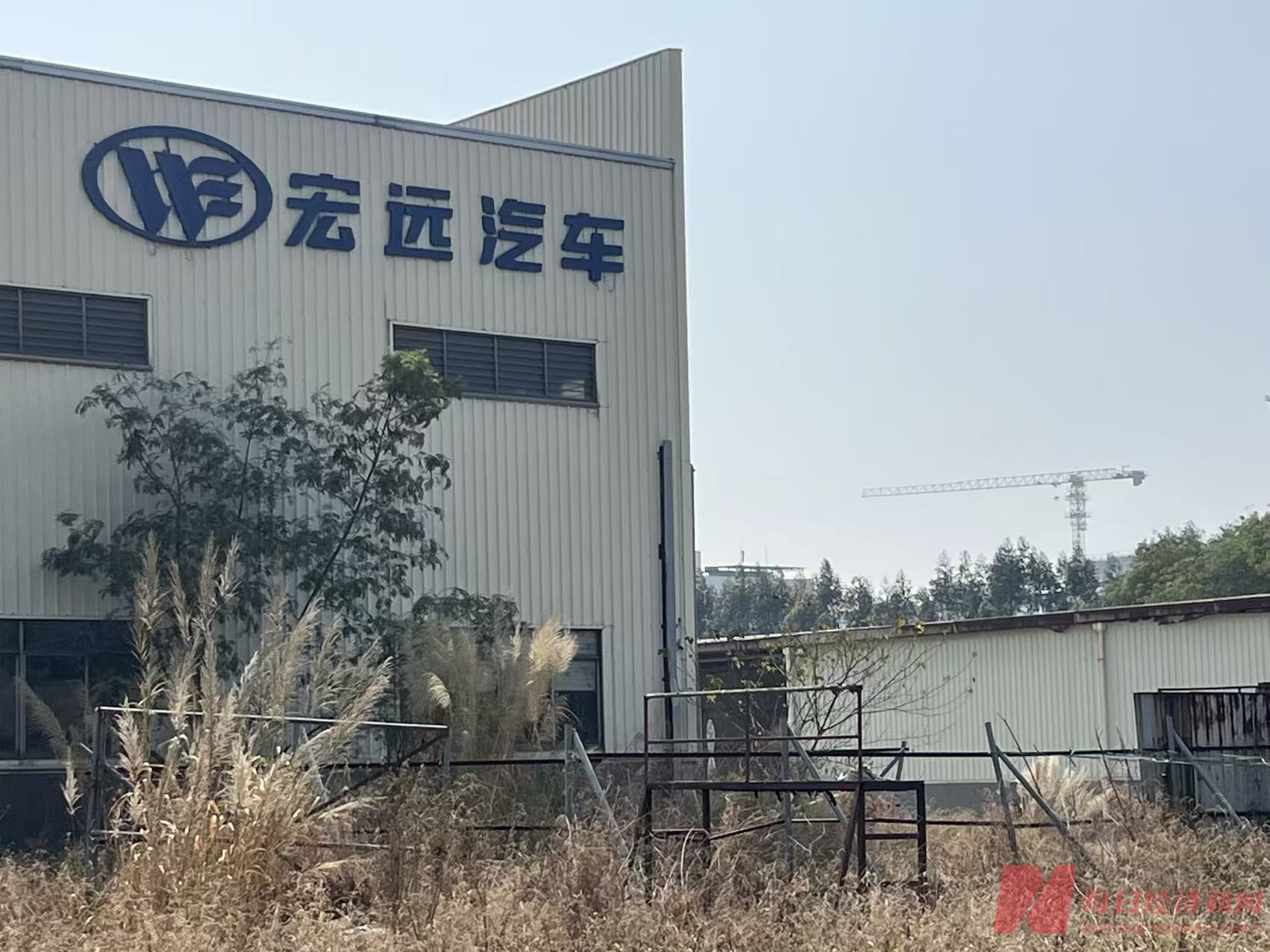
几百辆纯电公交因电池故障大面积停运,记者实探:企业已停产两年,司机称显示能跑近400公里实际只跑160,跑两趟就得补电
Mei Ri Jing Ji Xin Wen· 2026-02-26 17:16
Core Viewpoint - The lawsuit involving Dongguan's three major bus companies and local manufacturer Dongguan Zhongqi Hongyuan Automobile Co., Ltd. has revealed significant issues with the electric buses supplied, leading to a total claim amounting to 550 million yuan due to battery failures and operational disruptions [1][4]. Group 1: Lawsuit Details - Dongguan's three major bus companies filed lawsuits against Zhongqi Hongyuan, claiming that the electric buses purchased between 2018 and 2019 experienced severe battery failures during the warranty period, resulting in widespread operational halts [4][5]. - The court ruled in February that Zhongqi Hongyuan must compensate the bus companies a total of approximately 64.44 million yuan, which is only 11.6% of the total claims [5][6]. - The compensation breakdown includes 19.04 million yuan to Dongguan Bus, 32.83 million yuan to Dongguan City Bus, and 12.61 million yuan to Binhaiwan Bus [5]. Group 2: Operational Impact - The electric buses have been reported to have significant battery performance issues, with drivers stating that the actual range is drastically lower than advertised, leading to frequent recharging and operational inefficiencies [6][8]. - As of early 2024, Zhongqi Hongyuan has been in a state of temporary shutdown due to insufficient orders, with the latest extension of the shutdown period announced until May 31, 2026 [11][12]. - The rapid transition to electric buses in Dongguan, aimed at achieving 100% electrification by the end of 2019, has now resulted in a significant number of these vehicles becoming non-operational due to battery issues [12][13]. Group 3: Industry Context - Dongguan's public transportation system has seen a drastic decline in passenger volume, with a drop of over 60% from 3.8 billion passenger trips in 2017 to approximately 1.5 billion in 2024 [16]. - The electric bus procurement was part of a broader initiative to modernize public transport in Dongguan, which has now faced challenges due to the quality issues of the supplied vehicles [12][16].


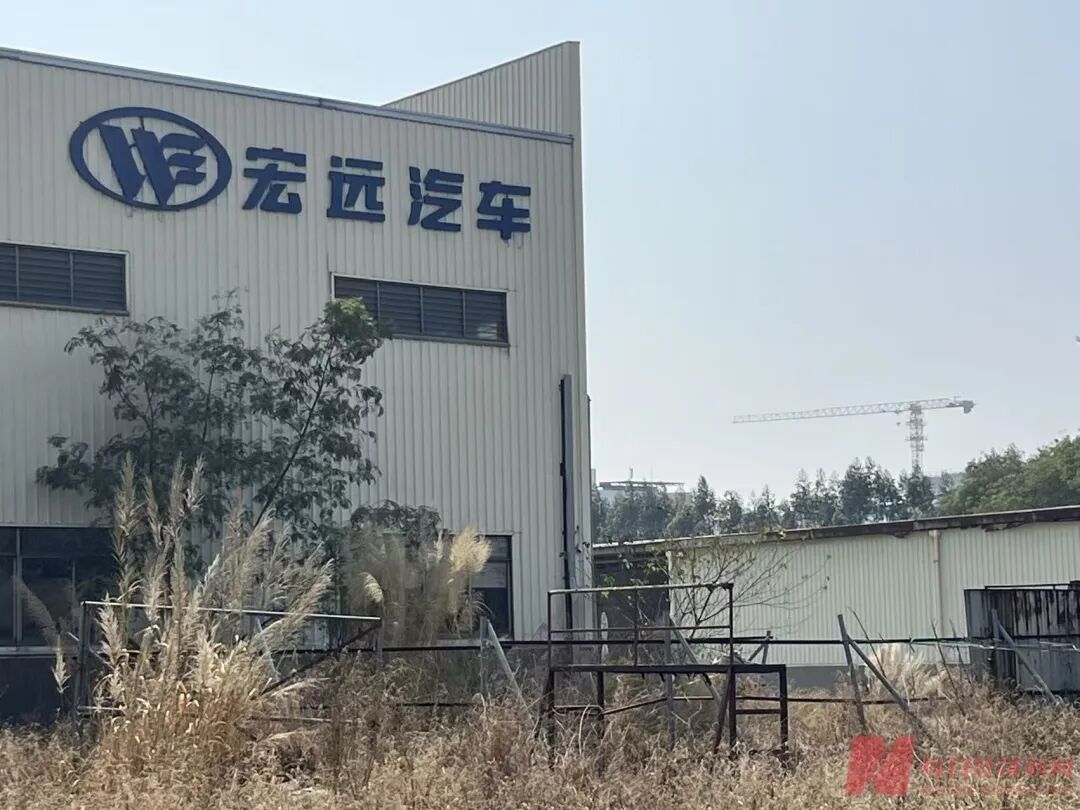
5.5亿元索赔“砍”至6400万元 实地探访东莞大面积停运纯电公交:生产企业已停产两年 司机称显示能跑近400公里实际只跑160公里
Mei Ri Jing Ji Xin Wen· 2026-02-26 14:35
Core Viewpoint - The lawsuit involving Dongguan's three major bus companies and local manufacturer Dongguan Zhongqi Hongyuan Automobile Co., Ltd. has revealed significant issues with the electric buses supplied, leading to a total claim amounting to 550 million yuan due to battery failures and operational disruptions [1][4]. Group 1: Lawsuit Details - The lawsuit was initiated by Dongguan Bus Co., Dongguan City Chengba Transportation Co., and Dongguan Binhaiwan Public Transport Co. against Zhongqi Hongyuan, claiming that the electric buses purchased between 2018 and 2019 experienced severe battery failures during the warranty period, resulting in widespread operational halts [4][10]. - The total compensation sought by the three companies exceeds 550 million yuan, with Dongguan Bus claiming approximately 205 million yuan, Dongguan Chengba claiming about 226 million yuan, and Binhaiwan Public Transport claiming around 123 million yuan [4][5]. - In February, the court ruled that Zhongqi Hongyuan must compensate a total of approximately 64.44 million yuan, which is only 11.6% of the total claims made by the bus companies [5][10]. Group 2: Operational Impact - The electric buses provided by Zhongqi Hongyuan have been reported to have significant battery degradation, with drivers stating that the buses often require recharging after just two trips, leading to many vehicles being idle [2][6]. - As of February 2024, Zhongqi Hongyuan has been in a state of temporary shutdown due to insufficient orders, with the latest announcement extending the shutdown until May 31, 2026 [10][14]. - The rapid transition to 100% electric buses in Dongguan, achieved within two years, has now resulted in operational challenges, with a significant number of the 1,196 buses sold experiencing battery issues, leading to 938 of them being out of service [10][14]. Group 3: Industry Context - Dongguan's push for public transport electrification began in 2018, aiming to achieve 100% electric bus operation by the end of 2019, significantly ahead of the provincial targets [10][11]. - The transition involved a large-scale procurement of electric buses, with Zhongqi Hongyuan playing a crucial role by supplying over 1,000 units during the electrification drive [11][14]. - Despite the initial success in electrifying the bus fleet, the subsequent decline in passenger numbers has been stark, with public transport ridership dropping over 60% from 2017 to 2024 [14].
围绕“再造一个新佛山”切实为群众办好事、办实事
Xin Lang Cai Jing· 2026-02-24 22:23
Core Viewpoint - The article emphasizes the efforts of the Foshan Development and Reform Bureau in Guangdong Province to implement pricing reforms and create a favorable business environment, focusing on cost reduction and enhancing public services. Group 1: Pricing Management - The establishment of a comprehensive government pricing evaluation mechanism to regularly assess pricing projects and develop annual work plans based on evaluations and actual conditions [1] - A collaborative pricing work mechanism involving multiple departments to ensure efficient and smooth pricing operations [1] Group 2: Cost Reduction Initiatives - Since 2016, Foshan has implemented a "clear, reduce, and subsidize" mechanism, resulting in an annual reduction of approximately 2.07 billion yuan in burdens for enterprises, earning the title of "Foshan Model" for cost reduction [2] - Continuous optimization of pricing mechanisms for urban gas enterprises, leading to cost savings and efficiency improvements [2] - Additional reduction of user costs by approximately 640 million yuan since 2022, building on previous cost reduction efforts [2] Group 3: Focus on Key Areas for Price Reform - Streamlining pricing mechanisms for public services, including unified pricing for public transportation and waste management, to promote sustainable industry development [3] - Implementation of pricing management for private compulsory education institutions to alleviate financial burdens on families [3] - Adjustments to parking fees for non-profit medical institutions to improve service quality while reducing costs for patients [3] Group 4: Social Welfare and Support - Introduction of a menu-based pricing system for property management to protect homeowners' rights [4] - Regulation of electric bicycle charging fees and establishment of a selection system for charging facilities to ensure fair pricing [4] - Distribution of temporary price subsidies totaling approximately 55.49 million yuan since 2021, benefiting over 1.06 million low-income residents [4]
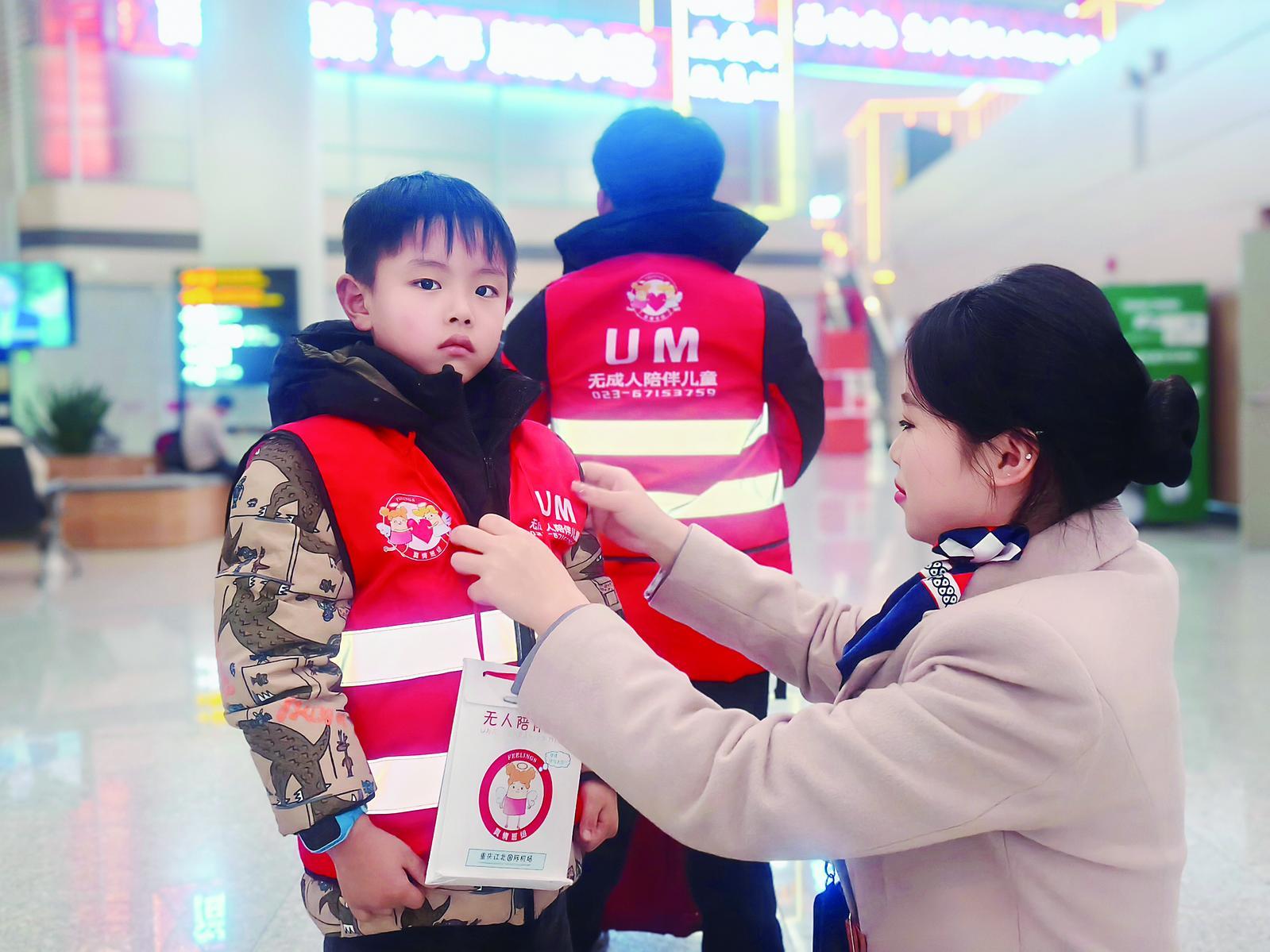
春节假期,重庆交通出行服务指南请收好
Xin Lang Cai Jing· 2026-02-12 18:30
Group 1: Airport Operations - Chongqing Jiangbei International Airport has increased flight capacity in response to rising travel demand, with daily flight departures exceeding 1000 for the first ten days of the Spring Festival travel period, reaching a record high of 1086 on February 7 [2] - During the first ten days of the Spring Festival, the airport handled a total of 10,451 flight departures and welcomed 1.5528 million passengers, representing year-on-year growth of 4.02% and 4.25% respectively [2] - The average passenger load factor for the airport during this period was 86.11%, ranking third among the top ten airports in China, exceeding the national average by 2.52 percentage points [2] Group 2: Train Services - Chongqing Railway Station is experiencing a peak in passenger flow, with an expected 300,000 travelers on February 11 and a cumulative total of 2.423 million passengers sent since the start of the travel period, marking a year-on-year increase of 5.8% [5] - To accommodate the demand, the station has added 91 pairs of trains and will operate 38 additional night high-speed trains from February 12 to 15, enhancing service to various regions [5] - The railway department is also implementing a "one-day-one-map" strategy to optimize train capacity for popular destinations [6] Group 3: Public Transport - The 441 bus route in Chongqing has adjusted its schedule to ensure timely service for passengers connecting to the earliest train arrivals, with the first bus departing at 6:00 AM [7] - The bus service has maintained a strong record of punctuality during the Spring Festival, with drivers committed to ensuring passengers reach their destinations on time [8] - The bus drivers have a collective understanding to operate until the last train arrives, demonstrating a commitment to passenger service during the holiday season [8] Group 4: Travel Trends - Domestic flight routes to major cities and popular winter destinations are in high demand, with international routes to cities like Madrid and Paris also seeing increased interest [4] - Predictions for the 2026 Spring Festival indicate that the airport will handle over 40,000 flight departures and more than 6.25 million passengers, with peak daily passenger throughput expected to exceed 160,000 [4]
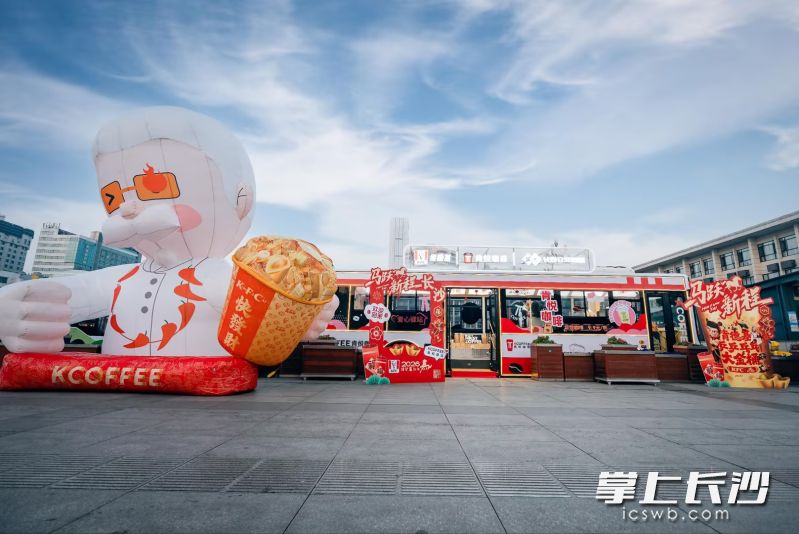
公交餐车亮相长沙火车站,温暖回家路
Chang Sha Wan Bao· 2026-02-09 13:02
Group 1 - The core idea of the article is the innovative collaboration between Changsha Public Transport Group and KFC, which has transformed idle bus assets into a mobile dining service at the Changsha railway station, enhancing the travel experience during the Spring Festival [1][3][8] - The mobile dining service, designed as a KFC-branded bus, offers a unique space for dining, resting, and social media engagement, becoming a popular spot for travelers during the Spring Festival travel rush [1][3] - The bus features a red and white color scheme with festive decorations, creating a warm and inviting atmosphere for passengers, while maintaining the recognizable appearance of public transport [3][6] Group 2 - The Changsha Public Transport Group utilized its expertise in vehicle modification and station operation to create a dual-function service that meets the increased demand for dining and resting areas during the Spring Festival [6][8] - KFC has aligned its standardized food service with the needs of travelers, ensuring that all menu items are consistent in quality and price with its regular outlets, while also providing a quick service window to cater to the fast-paced environment of the transport hub [6][8] - This collaboration exemplifies the resource complementarity effect, expanding public transport services from mere commuting to broader community services, while also enhancing KFC's brand presence in key transportation areas [8]
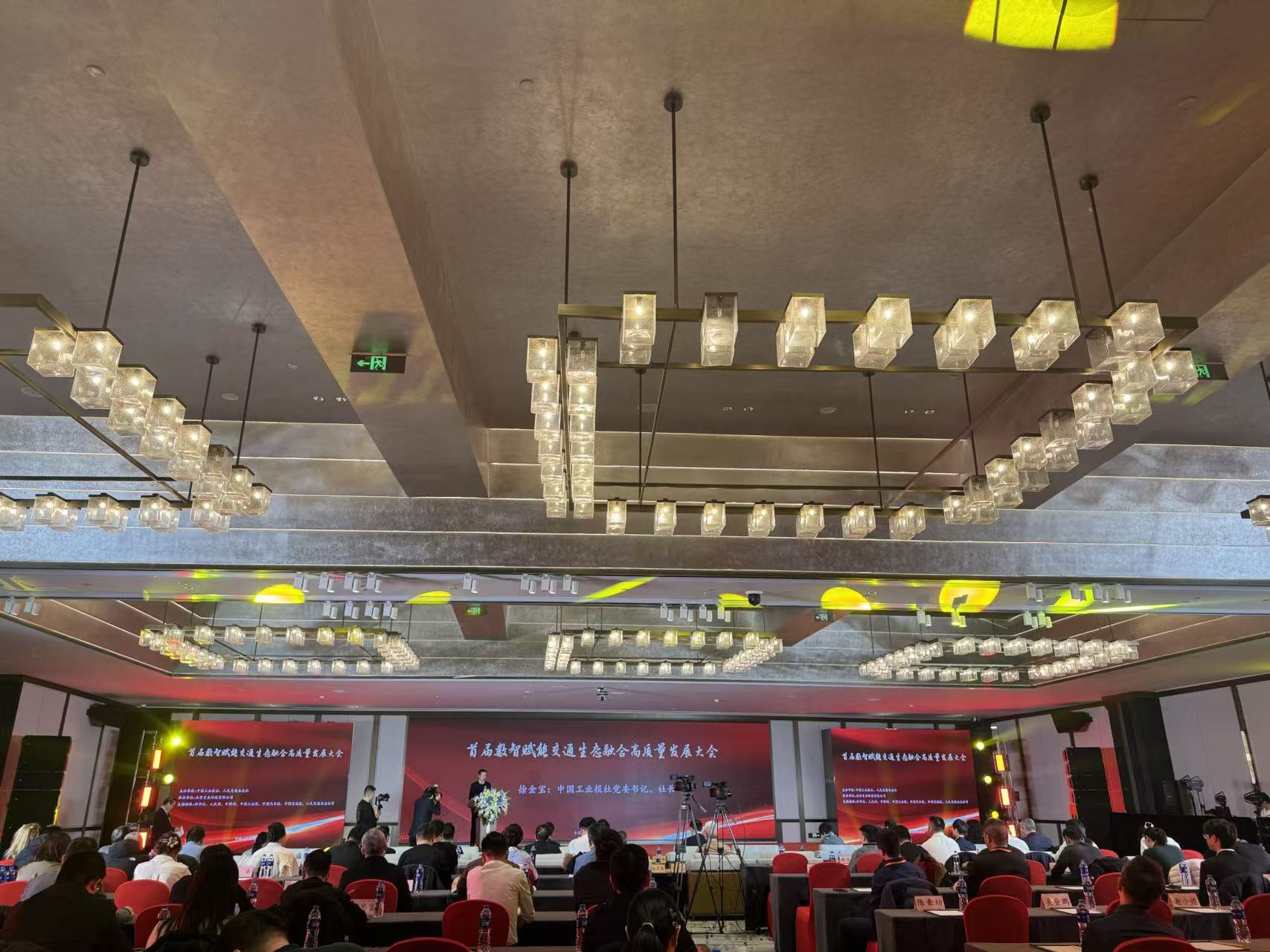
首届数智赋能交通生态融合高质量发展大会举行
Zhong Guo Qi Che Bao Wang· 2026-02-06 01:33
Core Viewpoint - The Chinese government emphasizes the importance of transportation as a foundation for national strength and modernization, aiming to accelerate the development of a comprehensive modern transportation system through the implementation of public data resource utilization [1][3]. Group 1: Policy and Implementation - The Ministry of Transport has issued the "Implementation Opinions" to enhance the development and utilization of public data resources in transportation, aiming to break down institutional and technical barriers [1][3]. - The first "Smart Empowerment Transportation Ecological Integration High-Quality Development Conference" was held to explore innovative paths for high-quality data resource systems and to release the value of data elements [3][4]. Group 2: Industry Transformation and Challenges - The transportation industry is undergoing a significant digital transformation, with over 7 million connected vehicles and the establishment of the world's largest expressway and high-speed rail networks [5]. - Challenges such as data silos, insufficient core technology innovation, outdated regulations, and a shortage of interdisciplinary talent remain prominent in the industry [5][6]. Group 3: Strategic Recommendations - Key recommendations for advancing high-quality development in transportation include strengthening technological innovation, enhancing open cooperation, focusing on quality and efficiency, and improving institutional mechanisms [6][12]. Group 4: Integration and Collaboration - The integration of various transportation modes and collaboration with industries such as energy, information, and finance are essential for achieving high-quality development [6][8]. - The conference highlighted the need for a unified smart platform to enhance service delivery and facilitate data sharing among stakeholders [15]. Group 5: Case Studies and Innovations - Public transportation companies are adopting innovative strategies, such as the "public welfare + marketization" approach in Guiyang, which has led to significant cost reductions and service enhancements [16]. - Shenzhen Bus Group is transforming into a smart transportation service provider by expanding its service offerings and implementing a digital framework to improve operational efficiency [17]. Group 6: Future Directions - The conference underscored the importance of technology-driven ecological integration and the need for a collaborative approach to foster innovation and enhance service quality in the transportation sector [18].
量化大势研判202602:市场△gf继续保持扩张
Guolian Minsheng Securities· 2026-02-04 05:29
- The report introduces a quantitative model framework for market trend analysis, focusing on five asset style stages: external growth, quality growth, quality dividend, value dividend, and bankruptcy value. The model evaluates assets based on their intrinsic attributes and prioritizes them using the sequence of g > ROE > D, analyzing whether there are "good assets" and whether they are "expensive" [5][8][9] - The model incorporates key factors such as expected growth (gf), actual growth (g), profitability (ROE), high dividend (D), and bankruptcy value (B/P). Each factor is associated with specific market phases, e.g., expected growth is relevant across all phases, while profitability is emphasized during maturity phases [9][12] - The quantitative model has demonstrated strong historical performance, achieving an annualized return of 27.67% since 2009. It has shown consistent excess returns in most years, particularly post-2017, with limited effectiveness in years like 2011, 2012, and 2016 [19][22] - The model's backtesting results for specific years include notable excess returns, such as 51% in 2009, 36% in 2013, and 62% in 2022. However, it also recorded underperformance in years like 2011 (-11%) and 2014 (-4%) [22] - The report details six specific strategies derived from the model, each focusing on different factors: - **Expected Growth Strategy**: Selects industries with the highest analyst-forecasted growth rates. Recent recommendations include sectors like automotive sales, lithium equipment, and tungsten [38][39] - **Actual Growth Strategy**: Focuses on industries with the highest unexpected growth (△g). Current recommendations include photovoltaic equipment, insurance, and coal chemical sectors [40][41] - **Profitability Strategy**: Targets high-ROE industries with low valuations under the PB-ROE framework. Recommended sectors include copper, liquor, and non-dairy beverages [43][44] - **Quality Dividend Strategy**: Utilizes a DP+ROE scoring system to identify industries. Current recommendations include forestry, lithium equipment, and fiberglass [46][47] - **Value Dividend Strategy**: Employs a DP+BP scoring system. Recommended sectors include security, daily chemicals, and buses [49][50] - **Bankruptcy Value Strategy**: Focuses on industries with the lowest PB+SIZE scores. Current recommendations include automotive sales, ceramics, and cotton textiles [53][54]





交汇枢纽 通达四方
Sou Hu Cai Jing· 2026-02-02 23:14
Core Insights - The article highlights the significant growth and achievements of the Huai'an Transportation Investment Development Group during the 14th Five-Year Plan period, emphasizing its focus on high-quality development and integration of party leadership with corporate governance [3][4][11] Group 1: Financial Performance and Growth - The asset scale of the Huai'an Transportation Investment Development Group increased from approximately 51 billion to over 60 billion, reflecting an 18% growth rate, with an average annual revenue growth rate exceeding 10% [3] - The group has invested 5.592 billion in 75 projects during the 14th Five-Year Plan, leading to substantial increases in key economic indicators [8] - The public transportation group achieved over 88 million in revenue last year, with a year-on-year increase of approximately 11.23% in market-oriented income [10] Group 2: Operational Achievements - Huai'an Port has been recognized as a major inland port, with container throughput capacity projected to reach 1 million TEUs and cargo volume of 50 million tons upon completion of ongoing projects [6][7] - The public transportation group operates 1,089 buses and 26 trams, with an annual passenger volume exceeding 93 million, marking a nearly 10% year-on-year increase [7] - The data group has successfully launched over 20 data products, including the Huai'an Bus Data Set, marking a significant step in transforming public data into assets [9] Group 3: Strategic Initiatives and Reforms - The group has implemented various reform initiatives, including the "1030" and "1+7+N" actions, aimed at enhancing operational efficiency and governance structures [11] - A comprehensive risk management framework has been established, focusing on debt, operations, safety, and integrity, with over 95% of identified issues rectified [12] - The group has achieved a significant reduction in financing costs, with new financing rates dropping from 4.38% in 2022 to 3.41% currently [12]
“小蓝鲸·菜篮子专线”在宁运营
Jiang Nan Shi Bao· 2026-01-27 21:52
Core Viewpoint - The launch of the "Little Blue Whale Vegetable Basket Special Line" in Nanjing represents an innovative integration of public transportation and agricultural consumption, enhancing community service and promoting consumption upgrades [1][2]. Group 1: Service Innovation - The 55 route is the first bus line in the country to provide daily vegetable price information, creating a convenient link between the community and the Qilin Tianwang Agricultural Market [1][2]. - The bus features three smart screens displaying daily vegetable prices, information about driver party members, and market layout, facilitating informed purchasing decisions for passengers [1][2]. - The bus is equipped with a "warm corner" for passengers to store their purchases, and the market has a "convenience service corner" for resting and weighing goods, offering a one-stop service [1]. Group 2: Consumer Engagement - The special line has introduced a promotional activity where passengers can receive discounts at designated market stalls by using a daily exclusive code, creating a positive cycle of public transport driving consumer benefits [2]. - The line serves an average of over 8,000 passengers daily, effectively meeting the shopping needs of residents in multiple mature communities [2]. Group 3: Economic Impact - The special line activates community consumption micro-cycles, aligning with grassroots efforts to promote consumption upgrades and stimulate domestic demand [3]. - It connects various metro lines, facilitating quick access to agricultural markets and enhancing the overall shopping experience for residents [2]. Group 4: Service Quality and Governance - The operation of the special line reflects a successful exploration of integrating party leadership with public service, with party member drivers providing high-quality service [2]. - The initiative breaks down barriers between public transport and agricultural markets, offering new ideas for high-quality urban public service development [3].