轻工业数字化转型

Search documents
我国轻工制造业不断显现内生动力
Xiao Fei Ri Bao Wang· 2026-01-06 00:42
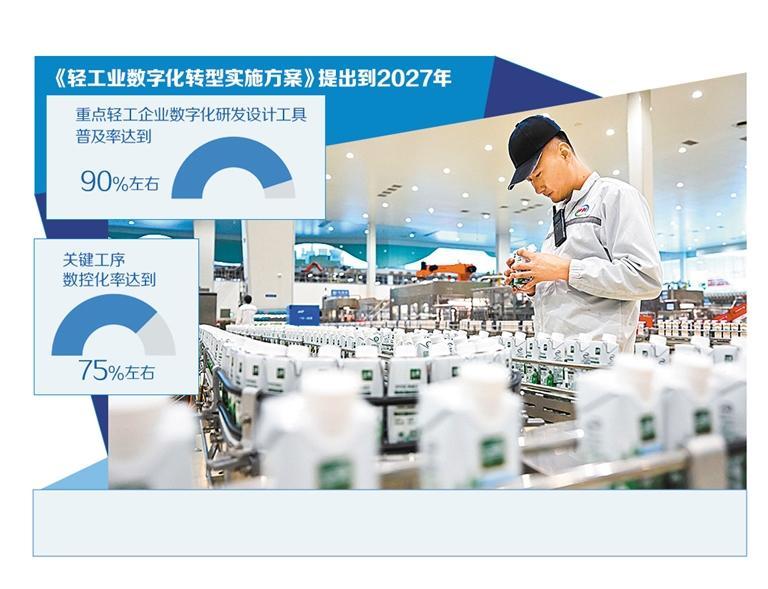
Core Insights - The light industry in China has achieved notable structural adjustments in 2025, with growth driven more by internal upgrades than external stimuli [1] - The overall economic performance of the light industry remains stable, with revenue and profit growth of 1.9% and 1.6% respectively in the first ten months of 2025 [1] - The focus of competition in light industry products is shifting from quantity to consumer experience and value [1] Demand Side Changes - The changes in demand are reflected more in the consumption structure rather than total consumption [1] - Specific sectors such as baked goods, daily chemical products, and home goods have shown more stable performance, indicating a shift towards emotional and daily consumption [1] Export Dynamics - The export growth of light industry products has shown significant differentiation, with traditional markets like Europe and the US slowing down while emerging markets such as ASEAN, the Middle East, and Latin America maintain rapid growth [2] - The reliance on low-price orders is decreasing, with an increase in brand-oriented, customized, and small-batch export models [2] Digital Transformation - The digital transformation of the light manufacturing industry has entered a practical phase, with a focus on specific sectors such as home appliances and furniture [2] - Policies aim for a 75% CNC rate in key processes of major light industry enterprises by 2027 [2] Green Transition - The green transition is becoming a prerequisite rather than an added benefit, with environmental standards increasingly included in procurement and cooperation agreements [3] - Companies are experiencing short-term cost increases but are gaining competitiveness in mid-to-high-end markets [3] Regional Policies - New regional policies and institutional environments are providing support for the light manufacturing industry, with free trade zones and cross-border e-commerce platforms enhancing attractiveness [4] - The light manufacturing industry is focusing on structural optimization rather than high-speed expansion, emphasizing long-term returns and comprehensive capabilities [4] Industry Outlook - The light industry is gradually moving away from the "low added value" label towards a more resilient and sustainable direction [4] - The key takeaway for the light industry in 2025 is that stability, quality, and patience are becoming new industry consensus as speed is no longer the sole objective [4]
场景牵引轻工业数字化转型
Jing Ji Ri Bao· 2025-04-13 21:53
Core Viewpoint - The implementation plan for the digital transformation of the light industry aims to enhance digital capabilities, with specific targets set for 2027, including a 90% penetration rate of digital R&D design tools and a 75% CNC rate for key processes [2][7]. Group 1: Digital Transformation Goals - By 2027, the plan targets a 90% adoption rate of digital R&D design tools and a 75% CNC rate for key processes in major light industry enterprises [2]. - The initiative aims to cultivate around 60 benchmark enterprises and develop approximately 50 national and industry standards [2][4]. - The plan emphasizes the importance of digital technology innovation and talent development to support the transformation [2][4]. Group 2: Role of Artificial Intelligence - Artificial intelligence (AI) is identified as a key driver for the digital transformation of the light industry, enhancing product design capabilities and supply chain management [3][4]. - Companies like Yili Group are collaborating with Lenovo to implement AI-driven solutions, achieving a 100% accuracy rate in data transmission [3]. - The integration of AI is expected to lead to new interaction models, higher automation levels, and improved decision-making capabilities [3][4]. Group 3: Implementation Strategies - The plan focuses on cultivating digital transformation scenarios, with an emphasis on collaborative design, intelligent production, and preventive maintenance [4][5]. - It encourages the development of data models and application testing in key sectors such as home appliances and furniture [4][5]. - A list of typical scenarios for digital transformation is provided, including digital R&D design and flexible manufacturing [5]. Group 4: Industry Trends and Innovations - The light industry is experiencing a shift towards service-oriented manufacturing, driven by consumer demand for customization and scenario-based solutions [7]. - New market segments such as pre-prepared foods and smart home products are emerging, necessitating advancements in flexible design and traceability [7]. - The plan aims for widespread digital transformation by 2030, with a focus on creating a digital ecosystem characterized by intelligence, connectivity, and sustainability [7][8]. Group 5: Quality and Safety Enhancements - The China Light Industry Federation is promoting quality management through digital technologies, aiming to enhance product quality and market trust [8]. - The plan includes initiatives for lifecycle traceability and the promotion of benchmark cases for digital transformation [8][9]. - Emphasis is placed on integrating advanced technology and ensuring product safety throughout the supply chain [9].