
轻薄手机

Search documents
轻薄之“身”,荣耀“亲近”年轻人
Shen Zhen Shang Bao· 2026-01-22 22:44
Core Viewpoint - The smartphone industry is facing increasing external pressures, leading to price hikes across various models, including the newly launched Honor Magic8 Pro Air, which targets the young consumer demographic [1][2]. Group 1: Product Launches and Features - Honor has introduced the Magic8 Pro Air, weighing 155 grams and measuring 6.1mm thick, making it the lightest flagship smartphone of the year [1]. - The Magic8 Pro Air features a MediaTek Dimensity 9500 processor and a rear camera setup that includes a 64MP periscope lens, while competing models like Huawei's Mate70 Air and Apple's iPhone Air have different specifications [3]. - Honor also launched a limited edition "Honor 500 Pro MOLLY 20th Anniversary" phone in collaboration with the trendy brand Pop Mart, aiming to resonate emotionally with younger consumers [1][5]. Group 2: Market Trends and Pricing - The smartphone market is experiencing a price increase due to rising storage chip costs, with DDR5 memory prices up over 300% since September 2025 [2]. - Honor's new models, including the Magic8 Pro Air, have starting prices above 4000 yuan, with the Magic8 Pro Air priced at 4999 yuan (12GB+256GB) [3]. - Despite the price hikes, Honor's strategy appears to be focused on appealing to younger consumers and creating a broader ecosystem beyond just smartphones [5][6]. Group 3: Industry Performance and Competition - The Chinese smartphone market saw a 1.6% year-on-year decline in shipments in Q4 2025, with Honor holding a 13.4% market share, ranking sixth [4]. - Apple's iPhone Air has struggled in the market, with initial activation numbers significantly lower than previous models, indicating a cooling demand for lightweight smartphones [5]. - The overall smartphone industry is entering a phase of low growth, with companies like Honor adapting their strategies to seek structural growth opportunities within a stagnant market [6].

iPhone Air,要凉?
3 6 Ke· 2025-12-08 23:27
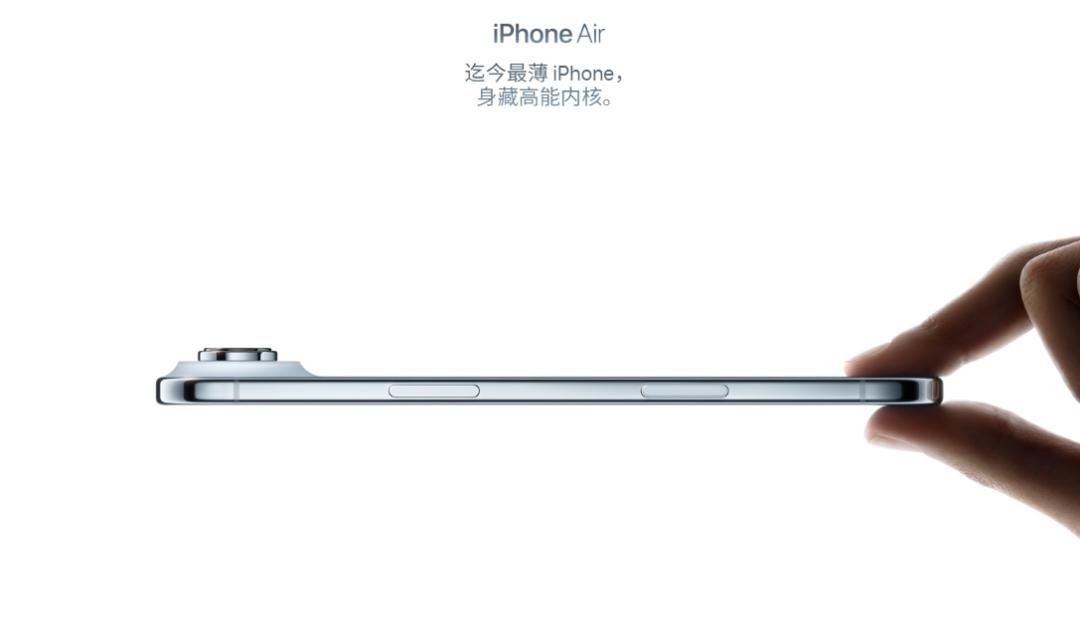
Core Viewpoint - The iPhone Air, despite being marketed as the "thinnest iPhone" at 5.6mm thick and weighing 165g, has underperformed in the market since its launch on October 22, 2025, leading to the dismantling of several production lines by Apple suppliers [1][3]. Market Performance - The iPhone Air has not met sales expectations, with reports indicating that Apple suppliers have removed multiple production lines dedicated to this model [3][8]. - In contrast, the iPhone 17 series has performed exceptionally well, dominating sales rankings during the recent "Double 11" shopping festival, while the iPhone Air was notably absent from the top lists [3][6]. Consumer Preferences - The iPhone Air caters to a niche market that values lightweight design, but this demographic is not representative of the broader consumer base, which prioritizes features such as performance and battery life over thinness [3][6]. - The device's specifications, including a 3149mAh battery and single-camera setup, have been perceived as compromises, leading consumers to view the iPhone Air as a "downgraded" option compared to other flagship models [4][6]. Pricing and Competition - Priced at 7999 yuan, the iPhone Air is more expensive than many Android flagship models, yet offers less storage capacity than the iPhone 17, which is available at the same price point [7][8]. - The high-end smartphone segment has seen significant growth, with models priced above 6000 yuan accounting for 50% of sales, indicating that consumers are willing to pay for premium features rather than just a lightweight design [7][8]. Industry Response - The lack of consumer interest in lightweight models has prompted both Apple and Android manufacturers to reconsider their strategies, with reports of Android brands like Xiaomi, OPPO, and vivo canceling their lightweight projects [8][9]. - Analysts suggest that while there is a demand for thinner devices, it is not a primary concern compared to performance and battery life, leading to a reevaluation of the lightweight smartphone market [8][9]. Future Outlook - The iPhone Air may not be positioned for annual updates, indicating that Apple might not prioritize this model for mass production, but rather use it as a testbed for future innovations, such as foldable devices [9][10]. - The overall trend in the smartphone industry suggests that while lightweight designs are appealing, the focus will likely shift back to performance and advanced features, including AI capabilities, in future product developments [17][18].

别乱叫Air!联想moto内涵友商,「落后者」定义标准遭群嘲 | BUG
Xin Lang Ke Ji· 2025-11-13 02:40
Core Viewpoint - Lenovo Moto is aggressively positioning itself in the lightweight smartphone market, challenging competitors like Huawei and Apple with its "Air" standards, which emphasize thickness under 6mm and weight under 160g, although this strategy may not lead to significant market share growth [1][3][7]. Group 1: Market Positioning and Competition - Lenovo Moto has recently launched the Moto X70 Air, which is 5.99mm thick and weighs 159g, priced starting at 2399 yuan, aiming to capture the lightweight smartphone segment [2]. - Huawei has also entered the lightweight market with the Mate 70 Air, which has a thickness of 6.6mm and weighs 208g, priced from 4199 yuan [2]. - Lenovo Moto's marketing strategy includes a direct challenge to competitors by stating that "not all Airs are true Airs," which has sparked controversy and mixed reactions from consumers [3][4]. Group 2: Market Share and Future Outlook - As of Q1 2023, Lenovo Moto holds nearly 5% of the global smartphone market, ranking ninth, and is far from its goal of being among the top three globally [1][9]. - Experts suggest that the lightweight smartphone segment is unlikely to become mainstream, as consumer preferences are shifting towards a balance of performance, battery life, and camera quality, rather than just thinness [7][10]. - Lenovo's CEO has expressed intentions to increase investment in the smartphone business to regain a stronger market presence within three years, although challenges remain significant [9][10]. Group 3: Consumer Sentiment and Brand Challenges - Consumer feedback indicates skepticism towards Lenovo Moto's claims, with many pointing out that the brand's market presence is weak compared to competitors like Huawei and Xiaomi [6][11]. - Complaints about product quality and after-sales service have been noted, with specific instances of malfunctioning devices reported by users [11]. - Analysts emphasize that while lightweight design can create buzz, it cannot compensate for the fundamental issues of brand recognition and product reliability that Lenovo Moto faces in the competitive landscape [10][11].


别乱叫Air! 联想moto内涵友商,“落后者”定义标准遭群嘲 | BUG
Xin Lang Ke Ji· 2025-11-13 00:43
Core Viewpoint - Lenovo Moto is aggressively positioning itself in the smartphone market by criticizing competitors' "Air" products, particularly targeting Huawei and Apple, while struggling to achieve significant market share and brand recognition [2][4][16]. Group 1: Market Positioning and Competition - Lenovo Moto has introduced a standard for "Air" phones, claiming that true "Air" devices must be less than 6mm thick and weigh under 160g, which is seen as a direct critique of Huawei's Mate 70 Air and Apple's iPhone Air [2][6][10]. - In Q1 of this year, Lenovo Moto held nearly 5% of the global smartphone market, ranking ninth, and remains far from its goal of being among the top three globally [16][14]. - The introduction of the Moto X70 Air, with a thickness of 5.99mm and weight of 159g, is part of Lenovo's strategy to capture consumer interest in lightweight devices [5][6]. Group 2: Consumer Reception and Expert Opinions - Experts suggest that while the lightweight design may appeal to some consumers, it is unlikely to become mainstream due to the need for a balance between performance, battery life, and user experience [11][13]. - The focus on lightweight phones is seen as a marketing strategy rather than a substantial shift in consumer demand, with predictions that such devices will remain a niche market [11][13]. Group 3: Brand Challenges and Future Outlook - Motorola's brand presence in China has diminished since its acquisition by Lenovo in 2014, with previous attempts to launch various phone brands failing to gain traction [14][16]. - Lenovo aims to increase investment in its smartphone business to regain a competitive position within three years, although challenges remain due to strong competition from established domestic brands [14][16]. - The company faces significant hurdles in improving its market presence, including enhancing product innovation, brand recognition, and effective marketing strategies [16][20].

手机走向“瘦身”:华为入局苹果受挫,轻薄机困于小众
Xin Jing Bao· 2025-11-11 11:01
Core Viewpoint - Huawei has launched the Mate 70 Air, a lightweight smartphone with a thickness of 6.6mm and a starting price of 4199 yuan, entering the ultra-thin smartphone market alongside competitors like Apple and Samsung [1][2]. Group 1: Product Features and Market Position - The Mate 70 Air features a 6500mAh battery and retains a physical SIM card slot, unlike the iPhone Air which only supports eSIM [1][4]. - The smartphone is positioned in the mid-range market, priced between 4000 to 5000 yuan, which is a highly competitive segment in China [7]. - The device includes a 50MP triple-camera system and a 7-inch display, aiming to provide a balance between lightweight design and user experience [4][7]. Group 2: Market Trends and Competitor Analysis - The trend of ultra-thin smartphones has been growing, with major brands like Samsung and Apple releasing models with thicknesses below 6mm [3]. - Despite initial sales success, the iPhone Air has shown disappointing performance, activating only 50,000 units in its first week in China, which represents just 3% of the total iPhone 17 series sales [5][6]. - Analysts suggest that the demand for ultra-thin smartphones may be limited due to compromises in performance, battery life, and user experience [4][7]. Group 3: Challenges and Consumer Sentiment - The ultra-thin smartphone segment faces challenges in balancing aesthetics with practical functionality, as consumers prioritize battery life and performance [7]. - The complexity of eSIM activation in China has also been highlighted as a barrier to the adoption of models like the iPhone Air [7]. - Industry experts believe that the future of ultra-thin smartphones will depend on manufacturers finding a balance between design and practical value for consumers [7].