轻量化代理模式

Search documents
广汽集团扩张600家品牌店背后的风险博弈
Zhong Guo Jing Ying Bao· 2025-12-05 20:29
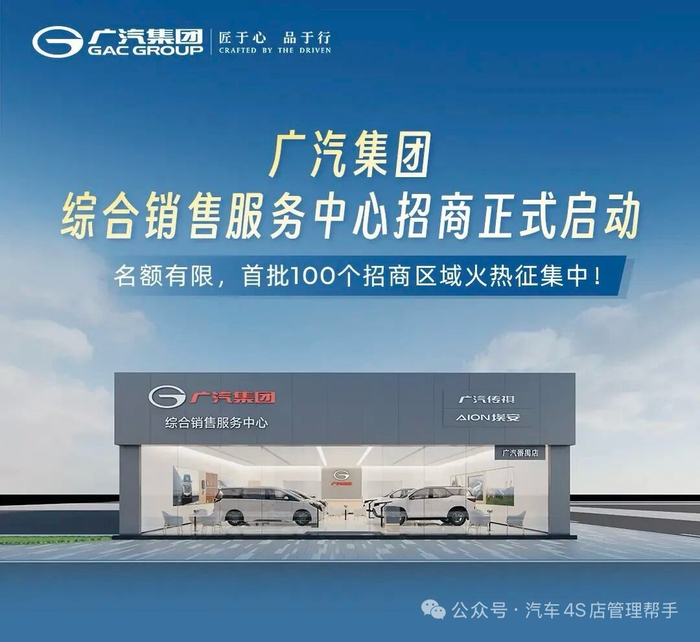
Core Viewpoint - GAC Group is actively seeking to expand its brand presence by establishing 600 brand collection stores in lower-tier cities by mid-2026, with over 1,000 investors showing interest in the investment opportunity of 1 million yuan for brand agency rights [2][6]. Group 1: Investment Opportunity - The investment threshold for becoming a GAC brand agent is set at 1 million yuan, significantly lower than the traditional 4S store model which often requires around 10 million yuan [3]. - Investors are required to prepare a venue of 200-300 square meters and provide a deposit of 3 million yuan, while GAC will assist with standardized renovations [3][4]. - Despite the low entry cost, operational expenses such as rent and labor will be borne by the dealers, raising concerns about profitability in a challenging market [2][5]. Group 2: Market Challenges - A survey by the China Automobile Dealers Association indicates that 84.4% of car dealers are experiencing price inversions, with 60.4% facing price inversions exceeding 15% [2]. - The automotive market is undergoing a transformation from traditional 4S store models to a more diversified system including agency and direct sales, leading to a competitive environment between dealers and manufacturers [2][8]. - The overall market demand in first and second-tier cities is saturated, pushing manufacturers to focus on lower-tier markets for growth [8]. Group 3: Strategic Expansion - GAC's plan to open 600 brand collection stores reflects its strategy to build a skilled sales team and target county-level markets, which account for 38.35% of China's economic output [6][7]. - Other brands like BYD and Xpeng are also targeting county markets, indicating a broader industry trend towards down-market expansion [6][7]. - The establishment of charging infrastructure in rural areas is expected to support this market shift, with government initiatives promoting the development of charging stations [7]. Group 4: Risks and Concerns - The lightweight agency model may lead to challenges in after-sales service quality, as smaller dealers may lack the resources to provide adequate support [9]. - The rapid expansion of GAC's network could complicate channel management and increase operational risks for both manufacturers and dealers [9]. - Industry experts warn that the profitability of dealers is increasingly dependent on the manufacturers' product strength and pricing strategies, making the investment landscape more uncertain [9].