达达主义

Search documents
【法国探店】如果在巴黎只能去一家咖啡店,那我一定建议是这家,穿越百年的饮食与文化!
东京烘焙职业人· 2025-10-18 08:33
Core Insights - Café de Flore is not just a café but a cultural landmark in Paris, embodying a rich history of literary and philosophical discussions that have taken place within its walls [5][11][18]. Historical Significance - Established in the 1880s, Café de Flore has been a cornerstone of Parisian café culture, attracting notable figures from the literary and artistic communities [6][8]. - The term "surrealism" was coined at this café during discussions among prominent writers and artists in 1917 [9]. - During World War II, it served as a hub for existentialist thinkers like Jean-Paul Sartre and Simone de Beauvoir, solidifying its role as a cultural epicenter [11]. Contemporary Relevance - The "Prix de Flore" literary award, established in 1994, continues to celebrate new literary talents, linking the café's historical significance to contemporary culture [14]. - Today, Café de Flore remains a popular destination for tourists and locals alike, operating without reservations and open from 7:30 AM to late at night [16][18]. Atmosphere and Experience - The café's interior features iconic red leather sofas and mirrors, creating a timeless ambiance that invites patrons to linger [21][30]. - The outdoor terrace is a symbolic space where patrons can engage with the vibrant street life of Paris, blurring the lines between observer and participant [25][26]. Culinary Offerings - The menu is characterized by classic French pastries and simple meals, emphasizing quality over trendiness, with items like croissants and quiches being staples [30][39]. - The hot chocolate is particularly noted for its richness and is often recommended as a must-try item [47]. Cultural Impact - Café de Flore has transcended its role as a café to become a cultural "coordinate" on the literary and artistic map of France and the world [18][54].


日本前卫艺术先驱群展上海:当具体派相遇古树古宅
Xin Lang Cai Jing· 2025-05-14 04:59
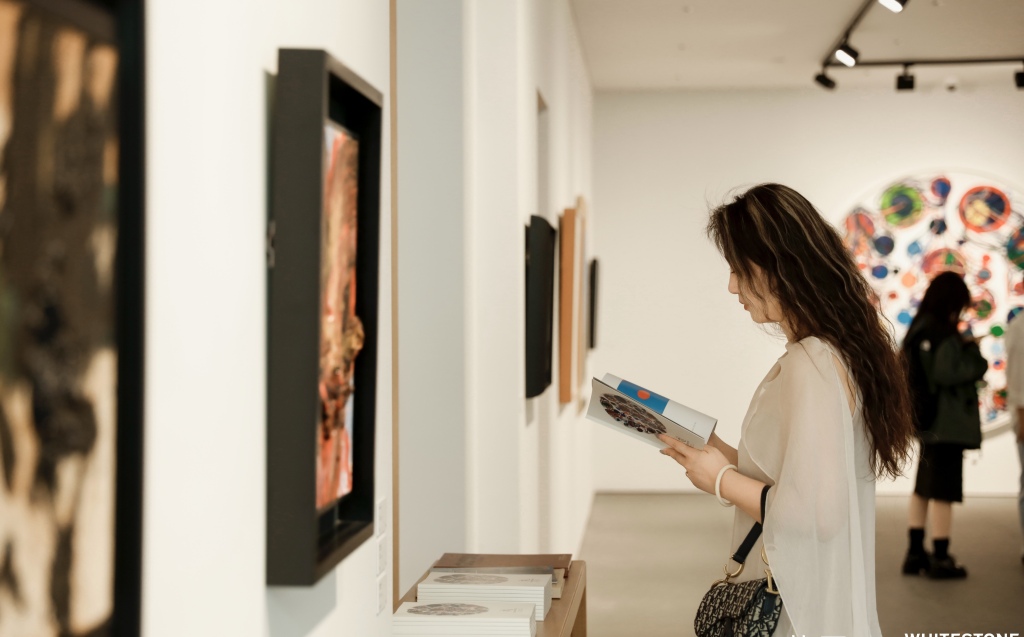
Core Viewpoint - The exhibition "Beyond: Infinite Possibilities of Avant-Garde Art" showcases 18 Japanese avant-garde artists, marking the opening of the 2025 Yangyun Art Season, emphasizing the dialogue between contemporary art and Eastern aesthetics [1][3]. Group 1: Exhibition Overview - The exhibition features key figures from the Japanese Concrete Art movement, aiming to bridge Eastern and Western avant-garde art [1][3]. - The Concrete Art movement, established in Japan, sought to transcend the boundaries of abstract art, influencing contemporary art significantly despite the dissolution of the Concrete Art Association in 1972 [3]. Group 2: Artistic Themes and Influences - Japanese artists have creatively transformed Western artistic ideas while reflecting on their local culture and history, exploring more experimental and free forms of creation [5]. - The Mono-ha movement, represented by Lee Ufan, emphasizes the relationship between materials and their environment, merging Western philosophical thoughts with traditional Japanese views on nature [7]. - The first generation of non-form artists, influenced by abstract expressionism and post-abstract expressionism, focuses on the exploration of abstract forms and spatial relationships [7][8]. Group 3: Upcoming Exhibitions and Themes - The "Cloud Hidden: Contemporary Awakening of Family Beauty" exhibition, curated by Su Mang, serves as the prologue to the 2025 Yangyun Art Season, exploring Eastern aesthetics through various artistic expressions [12][13]. - The "Slower" segment features the solo exhibition of Canadian ink artist Xia Huiwen, emphasizing a "slow philosophy" through contemporary ink art [17]. - The "Step Forward: Inner Reflection and Journey of Landscape" exhibition will showcase new works by Liu Jiutong, aiming to create a dialogue between traditional and modern art [19].