过度乐观

Search documents
战略决策中的扭曲和欺骗
3 6 Ke· 2026-01-08 05:09
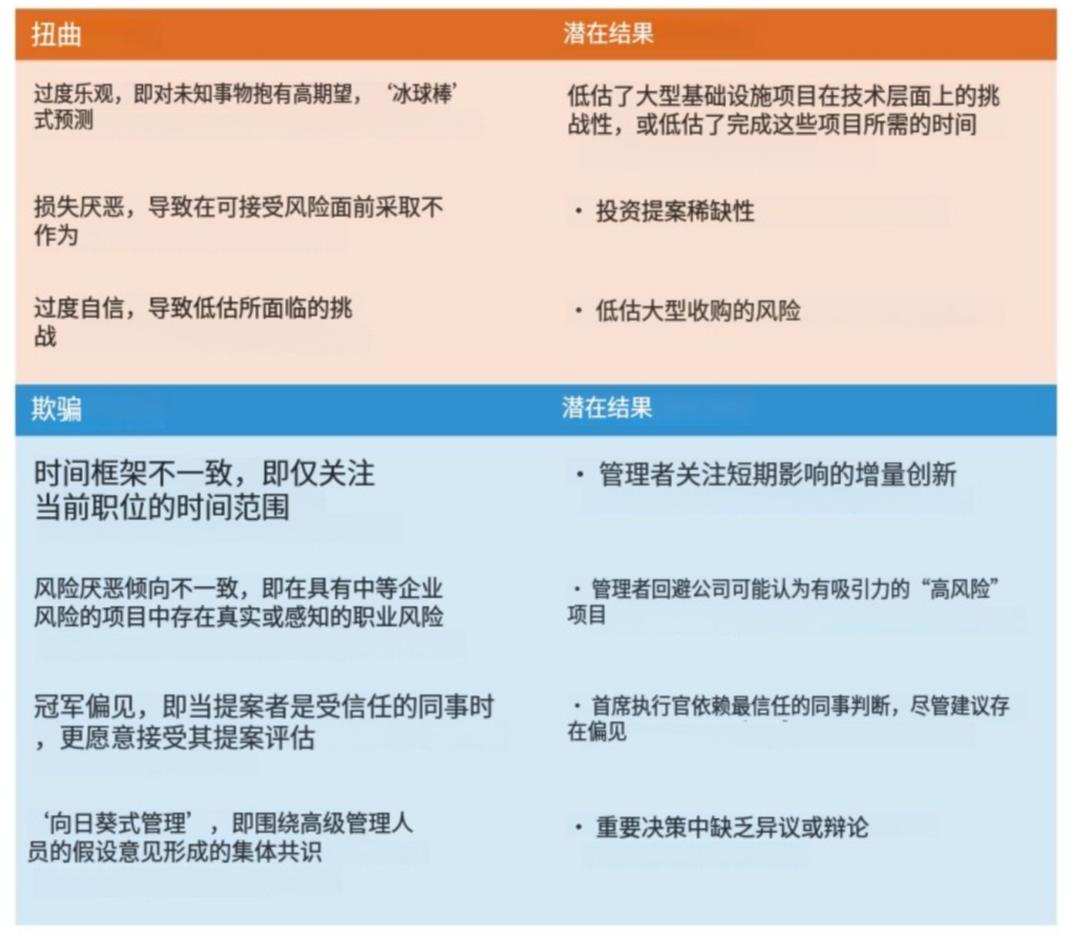
Group 1 - The core argument of the articles revolves around the impact of cognitive biases and human behavior on strategic decision-making within companies, particularly in high-stakes situations like mergers and acquisitions [1][2][5] - Companies often face challenges in making objective strategic decisions due to the influence of biases such as over-optimism and loss aversion, which can lead to significant misjudgments [5][6][11] - The "agency problem" arises when the interests of employees diverge from those of the company, potentially leading to deceptive practices that distort information and decision-making processes [7][9] Group 2 - Over-optimism and loss aversion are highlighted as the most misleading cognitive biases affecting strategic decisions, often resulting in unrealistic forecasts and underestimating future challenges [5][6] - The articles suggest that organizations can mitigate these biases by fostering a culture of constructive debate and implementing decision-making safeguards that encourage diverse perspectives [16][21][23] - Effective decision-making can be enhanced by recognizing the biases that may influence current decisions and by establishing frameworks that promote rational discussions and critical evaluations of proposals [10][22][23]