过期药品处理

Search documents
姚晨发文:过年被妈妈“连骂3天”,我也算尽孝了……医生提醒
Xin Lang Cai Jing· 2026-02-22 06:38
Core Viewpoint - The discussion highlights the risks associated with using expired medications, emphasizing that both Western and traditional Chinese medicines can pose health hazards when past their expiration dates [1][3][4]. Group 1: Risks of Expired Medications - Expired medications can lose their efficacy and may even lead to adverse health effects, particularly for chronic disease patients [1][2]. - Certain medications, like antibiotics, may become ineffective or harmful after expiration, potentially worsening health conditions [1][2]. - The chemical breakdown of some drugs can produce harmful substances, such as aspirin degrading into salicylic acid, which can irritate the gastrointestinal tract [2]. Group 2: Risks of Expired Traditional Chinese Medicine (TCM) - Expired TCM can also pose health risks, as the complex components may generate unknown harmful substances [3]. - The notion that some TCMs improve with age is misleading; most do not benefit from long-term storage and can lose potency or become unsafe [3][4]. - The Chinese regulatory body has mandated that TCM products must display expiration dates starting from August 2025 to ensure safety and efficacy [3]. Group 3: Proper Disposal and Management of Medications - It is recommended to categorize expired medications for disposal, with specific guidelines for solid, liquid, and injectable forms [5][6]. - Regular cleaning of medicine cabinets every 3-6 months is advised to remove expired products and maintain an updated inventory [7]. - Proper storage conditions for medications are crucial, requiring a dry and light-protected environment [8].
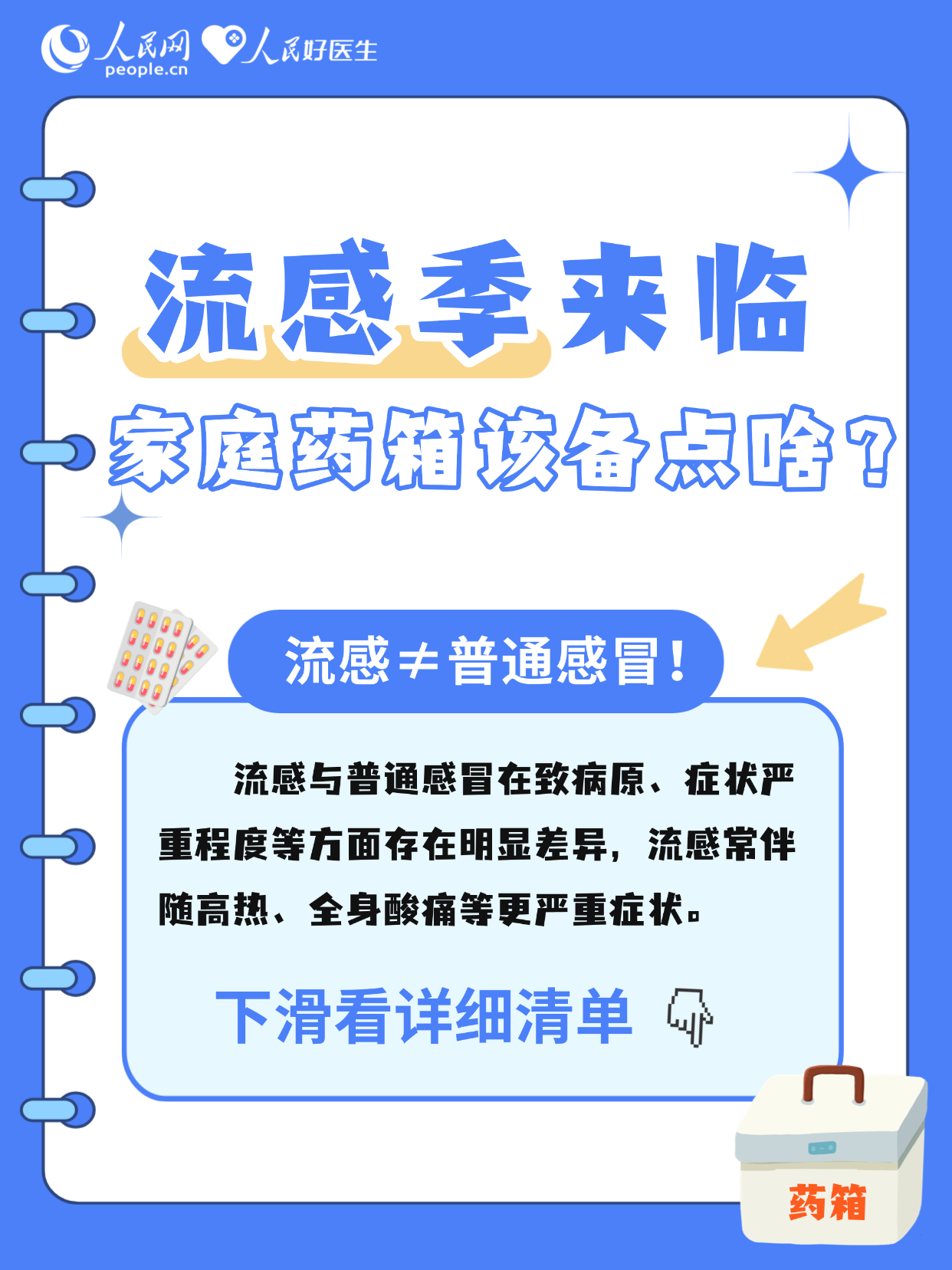
流感≠普通感冒!流感季来临,家庭药箱该备点啥?
Ren Min Wang· 2025-12-04 03:30
Core Viewpoint - The article emphasizes the importance of distinguishing between influenza and the common cold, highlighting their differences in pathogens and symptom severity, and provides a practical medication list for families to prepare for the flu season [1]. Group 1: Differences Between Influenza and Common Cold - Influenza and common cold have similar symptoms but differ significantly in pathogens and severity [1]. Group 2: Medication Recommendations - Acetaminophen is recommended for alleviating fever symptoms caused by influenza, suitable for adults, pregnant women, and children aged 3 months and older, with dosage strictly calculated based on weight for infants and children [4]. - Ibuprofen is effective for fever reduction and relieving mild to moderate pain, appropriate for children over 6 months and adults, with specific formulations for children [4]. - Oseltamivir should be used as soon as influenza is diagnosed, ideally within 48 hours of onset, and is suitable for both types A and B influenza [6][7]. - Baloxavir marboxil is a viral RNA polymerase inhibitor for adults and children over 5 years old with influenza [8]. - Oral rehydration salts are recommended to prevent dehydration due to vomiting and diarrhea associated with influenza, suitable for both adults and children [9]. - Dextromethorphan is indicated for dry cough symptoms caused by influenza, suppressing the cough reflex [10]. - Expectorants can help thin mucus and promote its expulsion, beneficial for patients with thick phlegm [11]. Group 3: Medication Usage Guidelines - Antibiotics, such as amoxicillin, are ineffective against influenza unless there is a concurrent bacterial infection, and their misuse should be avoided [15]. - Special populations, including children, pregnant women, and elderly individuals with underlying conditions, should consult a doctor before using medications [15]. - Regularly check and clear expired medications from home medicine cabinets every 3-6 months to avoid using ineffective or harmful substances [17]. - Expired medications should not be discarded casually; they should be disposed of through community drug recycling points or hospital collection boxes to prevent environmental and health hazards [18].

过期药品存隐患 专家呼吁社会全链条应对
Zhong Guo Jing Ji Wang· 2025-12-01 00:09
Core Viewpoint - The article emphasizes the dangers of using expired medications and the need for a comprehensive societal approach to manage expired drugs, including prevention, proper disposal, and public awareness [1][2][3] Group 1: Current Situation - Approximately 78.6% of families in China have a home medicine cabinet, yet over 80% do not regularly clean it, leading to an annual generation of about 15,000 tons of expired medications [1] - Expired medications are classified as hazardous waste and can pose risks to health and the environment if not disposed of properly [1] Group 2: Prevention Measures - Advocating for rational purchasing of medications is crucial to reduce overstocking and subsequent expiration [2] - Medical institutions and pharmacies should promote small dosage packaging to help patients buy only what they need, minimizing the risk of expiration [2] - Pharmacists should inform patients about medication usage periods and proper storage methods to prevent degradation [2] Group 3: Disposal Strategies - Establishing a standardized drug recovery system is essential for managing expired medications effectively [3] - The government should lead the creation of a drug recovery network with designated drop-off points in community health centers and pharmacies [3] - Regular "Expired Drug Recovery Days" should be organized to enhance public participation in the disposal process [3] - All collected expired medications should be handled by qualified hazardous waste disposal companies to ensure safe destruction and prevent environmental contamination [3]
过期药品能不能吃?卫健委发布会权威回应
Ren Min Wang· 2025-09-22 11:39
Core Viewpoint - The National Health Commission emphasizes that expired medications should not be used due to potential health risks and reduced efficacy [5]. Group 1: Effects of Expired Medications - Expired medications may have decreased active ingredient levels, leading to ineffective treatment outcomes, such as antibiotics failing to eliminate bacteria and potentially delaying recovery [5]. - Chemical degradation can occur in expired drugs, exemplified by aspirin breaking down into salicylic acid, which can irritate the gastric mucosa and cause symptoms like gastrointestinal bleeding [5]. - Even if expired medications appear normal, they may harbor bacterial growth, posing safety risks, such as expired eye drops potentially causing conjunctivitis or keratitis [5]. Group 2: Disposal Recommendations - The recommended method for disposing of expired medications is to crush the pills or capsules, wrap them in white paper, place them in a sealed bag, and discard them in a hazardous waste bin [5].