
中药饮片

Search documents
中国中药20260324
2026-03-26 13:20
Summary of the Conference Call for China Traditional Chinese Medicine (CTCM) Company Overview - **Company**: China Traditional Chinese Medicine (CTCM) - **Fiscal Year**: 2025 - **Key Financials**: - Net loss attributable to shareholders: CNY 342 million - Net profit margin: -3.1% - Revenue: CNY 14.745 billion (down 10.7% YoY) - Total assets: CNY 32.347 billion (down 7.7% YoY) - Total liabilities: CNY 9.32 billion (down 16.3% YoY) [2][3][10] Industry Insights - **Market Dynamics**: - The Chinese herbal medicine industry is facing increased competition and pressure from centralized procurement policies. - The market for traditional Chinese medicine (TCM) is undergoing significant changes, with a focus on quality and integration across the supply chain [15][21]. Key Business Segments Performance 1. **Chinese Herbal Medicine Granules**: - Revenue: CNY 6.098 billion (down 12.5% YoY) - Gross margin: 53.8% (down 3.1 percentage points) - Impacted by increased competition and a higher proportion of centralized procurement [2][8]. 2. **Chinese Herbal Pieces**: - Revenue: CNY 3.334 billion (up 0.6% YoY) - Gross margin: 25.1% (up 1.9 percentage points) - Growth attributed to optimized sales structure and reduced procurement costs [2][8]. 3. **Traditional Chinese Medicine (TCM)**: - Revenue: CNY 4.248 billion (down 6.7% YoY) - Gross margin: 66.7% (up 3.1 percentage points) - Growth in prescription drugs and the launch of an e-commerce strategy for OTC products [2][9]. 4. **Health and Wellness Sector**: - Revenue: CNY 235 million (down 17.2% YoY) - Gross margin: 31.9% (up 7.5 percentage points) - Decline due to strategic withdrawal from low-efficiency product lines [9]. Strategic Initiatives - **2026 Strategy**: Focus on "stability, integration, and efficiency" to manage costs and enhance supply chain management [11][12]. - **Supply Chain Management**: Emphasis on strategic reserves of bulk medicinal materials and graded processing to control costs [13]. - **Digital Transformation**: Development of a data platform for full-chain management of TCM production, aiming for enhanced traceability and quality control [14][19]. Research and Development - **Innovation**: - 207 patents granted in 2025, including 126 invention patents. - Participation in drafting 57% of the national standards for herbal granules [6][7]. - **Clinical Research**: Focus on evidence-based medicine to enhance product lifecycle and efficacy [16][17]. Financial Health - **Debt Management**: Debt ratio reduced to 11.8% (down 6.7 percentage points) with cash reserves of CNY 4.045 billion [10]. - **Accounts Receivable**: Increased by 4.6% due to tight healthcare funding, with 50.4% of receivables aged under 90 days [10]. Future Outlook - **Market Conditions**: Anticipated continued pressure on the herbal granules segment due to ongoing centralized procurement policies [21]. - **Growth Expectations**: The company aims for stable revenue and profit in 2026, with a focus on transforming the herbal granules business and strengthening core segments [18][21]. Conclusion CTCM is navigating a challenging environment marked by regulatory changes and competitive pressures. The company is strategically positioned to leverage its R&D capabilities and supply chain management to enhance its market position while focusing on digital transformation and quality improvement initiatives.
12366热点丨这些货物是否属于9%税率农产品征税范围?
蓝色柳林财税室· 2026-03-22 02:01
Group 1 - The article discusses the applicability of the 9% VAT rate on various agricultural products, confirming that items like noodles and medicinal herbs fall under this category [4][6] - It clarifies that traditional Chinese medicine does not qualify for the 9% VAT rate, as it is not classified as an agricultural product [6] - Animal excrement is also excluded from the agricultural product category for the 9% VAT rate [8] Group 2 - The article outlines a tax exemption policy for small-scale taxpayers, stating that those with monthly sales below 100,000 yuan are exempt from VAT [14] - It mentions that small-scale taxpayers can benefit from a reduced VAT rate of 1% instead of the standard 3% [14]

华创医药周观点:医药零售:2025全渠道数据更新及B2C财报总结 2026/03/21
华创医药组公众平台· 2026-03-21 13:04
Core Viewpoint - The article discusses the updates on the pharmaceutical retail market and B2C financial summaries for 2025, highlighting the industry's transition towards high-quality development and the recovery of retail channels [9][12]. Market Overview - The overall market for physical pharmacies in China is projected to reach CNY 616.5 billion in 2025, showing a slight year-on-year decline of 0.6%. However, the last quarter of 2025 is expected to see a cumulative scale of CNY 167.5 billion, reflecting a growth of 3.2% year-on-year [15][16]. - The B2C pharmaceutical market is anticipated to grow by 5.4% year-on-year, with major platforms like JD Health and Alibaba Health continuing to capture online pharmaceutical consumption demand [45][49]. Pharmaceutical Retail Trends - The retail scale of pharmaceuticals in physical pharmacies is expected to reach CNY 5,013 billion in 2025, with a year-on-year growth of 0.6%. The fourth quarter is projected to see a cumulative scale of CNY 1,359 billion, with a year-on-year increase of 4.7% [23]. - Monthly retail scale data indicates that in October 2025, the retail scale for pharmaceuticals was CNY 424 billion, showing a year-on-year increase of 2.2% driven by innovative drugs [23][16]. B2C Market Insights - The B2C market structure shows that prescription drug sales accounted for 61% of total sales, with a year-on-year growth of 14%, while OTC sales experienced a decline of 5% [45]. - JD Health reported a revenue of CNY 734 billion in 2025, marking a 26.3% increase, with a net profit of CNY 53.8 billion, reflecting a 29.2% growth and achieving a historical high in profitability [15][49]. Category Analysis - In 2025, the market share of pharmaceuticals is expected to be 81.3%, with traditional Chinese medicine (TCM) at 7.8%, health products at 3.7%, and medical devices stable at 4.7% [17]. - The top 20 categories of chemical drugs saw a market share of 78.3% in October 2025, with significant growth in categories such as antiviral drugs and diabetes medications [40]. Future Outlook - The pharmaceutical retail industry is undergoing a critical phase of reform and restructuring, with ongoing national medical and insurance reforms driving the exit of outdated supply and enhancing the competitive landscape [16]. - The integration and consolidation of the industry are expected to accelerate, with leading companies adapting to market demands and enhancing compliance and health service upgrades [16].
中药生产监管新规正式施行
21世纪经济报道· 2026-03-05 13:42
Core Viewpoint - The implementation of the "Special Regulations on the Supervision and Management of Traditional Chinese Medicine Production" marks a significant upgrade in industry regulation, focusing on quality compliance and high-quality development in the traditional Chinese medicine sector [4][6]. Regulatory Changes - The new regulations establish legal requirements for the production of traditional Chinese medicine (TCM) products, including decoction pieces, formula granules, and injection preparations, addressing long-standing compliance gaps [9][10]. - The regulations specifically prohibit practices such as outsourcing, re-labeling, and production beyond approved scopes, which have contributed to quality issues in TCM products [10][11]. Industry Impact - The regulations are expected to accelerate industry restructuring, with a clear differentiation among segments like decoction pieces, formula granules, and injection preparations, where compliance and cost management will become core challenges for companies [7][14]. - Companies that achieve full compliance and upgrade their operations will likely dominate the market, while those lacking production capabilities and quality control will be eliminated [14][15]. Compliance Requirements - The regulations impose stricter production thresholds for formula granules, requiring companies to self-manufacture and maintain complete production capabilities, including quality traceability and risk management [11][12]. - For injection preparations, the regulations clarify the responsibilities of the marketing authorization holder (MAH) and set stringent requirements for production processes and quality control [12]. Innovation and Transformation - The regulations encourage companies to adopt modern technologies for quality management and production processes, promoting automation and digitalization in the TCM industry [14][15]. - The shift towards innovation-driven growth is expected to enhance industry concentration and extend the value chain of TCM, with 2026 anticipated to be a pivotal year for digital transformation [15].
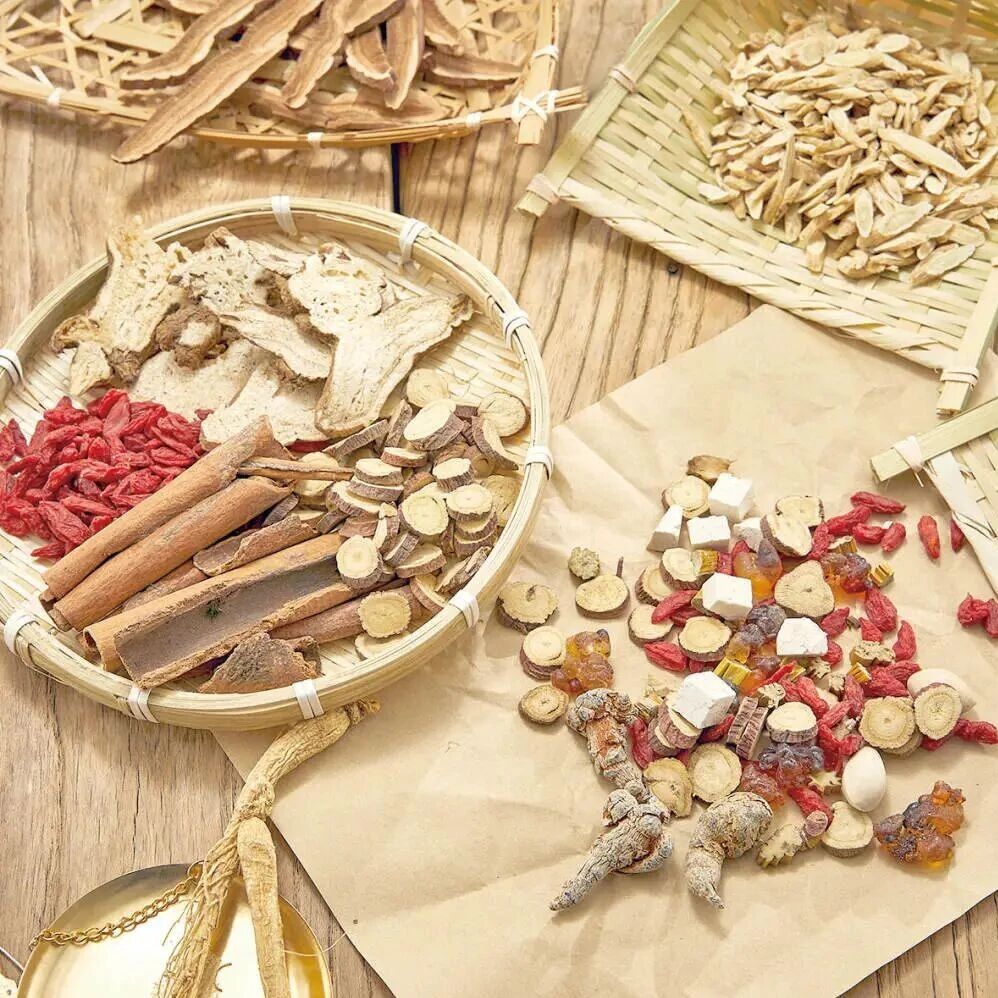
2026年中国中药饮片行业产业链、市场规模、营业收入、集采情况、企业格局及未来趋势研判:市场规模增长至2633.2亿元,集采将推动行业规范化发展[图]
Chan Ye Xin Xi Wang· 2026-02-28 01:08
Core Insights - The Chinese traditional Chinese medicine (TCM) decoction pieces industry has a history of thousands of years, but it began to be standardized and industrialized after the founding of New China. Recent years have seen a good development momentum due to the promotion of TCM development strategies and supportive policies [1][7] Market Overview - The market size of the Chinese TCM decoction pieces industry is projected to grow from 170.06 billion yuan in 2020 to 263.32 billion yuan by 2025, achieving a compound annual growth rate (CAGR) of 9.1% during this period [1][7] - The TCM decoction pieces industry is a key link in the TCM industry, serving both clinical prescriptions and as raw materials for compound preparations, with a significant role in the health sector [4][6] Industry Dynamics - The implementation of centralized procurement for TCM decoction pieces is seen as a catalyst for eliminating backward production capacity and purifying the market environment. In 2023, a pilot program led by Shandong involved 21 types of decoction pieces, resulting in an average price reduction of 29.5%, with the maximum drop reaching 56.5% [1][9] - By 2024, the centralized procurement alliance expanded nationwide, involving nearly 32,000 medical institutions and a total demand of over 97 million kilograms [1][9] Competitive Landscape - As of the end of 2024, there are 2,455 TCM decoction pieces production enterprises in China, an increase of 258 since 2020. The industry is characterized by a large number of small-scale players, with the top five companies holding less than 3% market share [1][11][12] - The distribution of production enterprises is concentrated in provinces such as Anhui, Guangdong, and Sichuan, with Anhui leading with 298 enterprises due to its rich medicinal material resources [1][11] Future Trends - The TCM decoction pieces industry is expected to evolve towards digital transformation, intelligent production, green and sustainable practices, and international expansion. This includes the use of big data and cloud computing for digital management, automation to enhance production efficiency, and promoting environmentally friendly production technologies [1][13]

集中约谈会在亳州召开
Xin Lang Cai Jing· 2026-02-26 16:38
Core Viewpoint - The provincial drug regulatory authority held a meeting to address the quality management of high-risk traditional Chinese medicine (TCM) decoction pieces, emphasizing the need for strict regulatory compliance and quality assurance measures [1][2]. Group 1: Meeting Overview - A concentrated meeting was held in Bozhou with representatives from 34 high-risk TCM decoction piece production enterprises [1]. - The provincial drug regulatory authority announced a notification regarding enhanced supervision of high-risk TCM decoction piece manufacturers for 2026 [1]. Group 2: Quality Safety Analysis - The meeting analyzed the overall quality safety situation of TCM decoction pieces in the province, highlighting various uncertainties affecting quality [2]. - Emphasis was placed on the importance of legal compliance and the rejection of illegal practices such as document forgery and substandard production [2]. Group 3: Risk Management and Quality Improvement - The need for strict implementation of primary responsibilities and continuous risk awareness was stressed, with a focus on identifying and addressing potential hazards [2]. - The meeting called for the enhancement of source control, adherence to production norms, and the establishment of a comprehensive quality management system to achieve high-quality development [2].
佐力药业2月24日获融资买入1847.99万元,融资余额5.92亿元
Xin Lang Zheng Quan· 2026-02-25 01:26
Group 1 - Zhaoli Pharmaceutical's stock increased by 1.75% on February 24, with a trading volume of 160 million yuan. The financing buy amount was 18.48 million yuan, while the financing repayment was 21.25 million yuan, resulting in a net financing buy of -2.77 million yuan. The total financing and securities balance reached 595 million yuan [1] - The financing balance of Zhaoli Pharmaceutical was 592 million yuan, accounting for 5.00% of the circulating market value, which is above the 70th percentile level over the past year, indicating a high position [1] - On the same day, Zhaoli Pharmaceutical repaid 7,200 shares in securities lending and sold 23,600 shares, with a selling amount of 398,400 yuan. The securities lending balance was 287,740 yuan, exceeding the 90th percentile level over the past year, also indicating a high position [1] Group 2 - As of September 30, Zhaoli Pharmaceutical had 41,400 shareholders, an increase of 7.31% from the previous period. The average circulating shares per person decreased by 6.82% to 14,562 shares [2] - For the period from January to September 2025, Zhaoli Pharmaceutical achieved an operating income of 2.28 billion yuan, a year-on-year increase of 11.48%. The net profit attributable to the parent company was 510 million yuan, reflecting a year-on-year growth of 21.00% [2] - Zhaoli Pharmaceutical has distributed a total of 1.442 billion yuan in dividends since its A-share listing, with 942 million yuan distributed over the past three years [3]

信邦制药:公司从道地药材基地采购的中药材用于自身生产中药饮片和中成药
Zheng Quan Ri Bao Zhi Sheng· 2026-02-24 10:16
Group 1 - The core viewpoint of the article is that the company has established a strategic reserve mechanism for commonly used Chinese medicinal materials to mitigate market volatility risks [1] - The company sources its Chinese medicinal materials from authentic medicinal material bases for its own production of Chinese medicinal slices and proprietary Chinese medicines [1] - The strategic reserve mechanism is designed to effectively reduce the impact of price fluctuations in Chinese medicinal materials on the company's operations [1]

英特集团:公司设有中药事业部,将稳妥推进中药销售业务
Sou Hu Cai Jing· 2026-02-24 01:39
Group 1 - The company has established a Traditional Chinese Medicine (TCM) division and places significant emphasis on national policies related to the TCM industry [1] - The company will continuously monitor policy developments and actively seize industry growth opportunities while steadily advancing its TCM sales business [1]

中国中药(00570.HK):2月23日南向资金增持26.4万股
Sou Hu Cai Jing· 2026-02-23 19:18
Group 1 - Southbound funds increased their holdings in China Traditional Chinese Medicine (00570.HK) by 264,000 shares on February 23 [1] - Over the past five trading days, there were three days of net reductions in southbound fund holdings, totaling a net decrease of 15.602 million shares [1] - In the last 20 trading days, there were ten days of net increases in southbound fund holdings, with a total net increase of 19.712 million shares [1] - Currently, southbound funds hold 1.612 billion shares of China Traditional Chinese Medicine, accounting for 32.0% of the company's issued ordinary shares [1] Group 2 - China Traditional Chinese Medicine Holdings Limited primarily engages in the manufacturing and sales of traditional Chinese medicine [2] - The company operates through four divisions, focusing on the production and sales of traditional Chinese medicine formula granules, health products, and traditional Chinese medicine slices [2] - The Tianjiang division also provides healthcare solutions related to traditional Chinese medicine through offline medical institutions, including consultations and prescriptions [2] - The Tongjitang division is involved in the production and sales of traditional Chinese medicine formula granules, slices, and proprietary Chinese medicines, as well as various health products [2]
