
违反组织纪律

Search documents
违规经商办企业有盈有亏如何计算违纪所得
Zhong Yang Ji Wei Guo Jia Jian Wei Wang Zhan· 2026-02-25 00:16
Core Viewpoint - The case of Zhang, a member of the water affairs bureau, illustrates the complexities of determining disciplinary actions for party members engaging in business activities, highlighting differing opinions on how to classify and quantify violations of discipline [1][3]. Group 1: Case Summary - Zhang engaged in business activities under the names of relatives and friends, investing a total of 140 million yuan (approximately 20 million USD) across various ventures from 2016 to 2023, with mixed results including profits and losses [2]. - The total profit from his restaurant business was 150 million yuan (approximately 21.4 million USD), while he incurred losses of 60 million yuan (approximately 8.6 million USD) and 80 million yuan (approximately 11.4 million USD) from other investments [2][4]. Group 2: Disciplinary Perspectives - The first viewpoint asserts that any engagement in business activities, regardless of profit or loss, constitutes a violation of discipline, suggesting that Zhang's total disciplinary income should be calculated as a net profit of 10 million yuan (approximately 1.4 million USD) [3]. - The second viewpoint argues that only profitable activities should be considered as disciplinary income, leading to a total of 150 million yuan (approximately 21.4 million USD) in violations, while losses from other ventures should not offset this amount [3][4]. Group 3: Reporting Violations - Zhang's failure to report his business activities is viewed differently; one perspective suggests it should be treated as a separate violation, while another argues it should not be penalized further due to the nature of the initial violation [5]. - The consensus leans towards recognizing only the primary violation of engaging in business activities without reporting, aligning with the disciplinary regulations [5].
三堂会审丨函询回复不容隐瞒 民事行为难掩受贿
Zhong Yang Ji Wei Guo Jia Jian Wei Wang Zhan· 2025-12-16 23:53
Core Viewpoint - The article discusses the disciplinary actions taken against Liu, a former county official, for various violations including accepting bribes and failing to report issues during organizational inquiries [1][4][5]. Group 1: Case Background - Liu joined the Communist Party in June 1993 and held various positions including Deputy Secretary and County Mayor [3]. - Liu received a total of 210,500 yuan in gifts during a mourning period for a relative, which violated the Central Eight Regulations [3][4]. - Liu failed to truthfully report issues during an organizational inquiry in September 2020 [4][8]. Group 2: Violations and Charges - Liu invested 6 million yuan in a small loan company owned by a businessman, which later went bankrupt, resulting in a total debt of over 12.47 million yuan owed to Liu [4][11]. - From 2009 to 2020, Liu accepted bribes totaling 19.33 million yuan by using his official position to facilitate administrative approvals and project contracts [4][12]. Group 3: Investigation and Disciplinary Actions - The investigation into Liu began in March 2022, leading to his expulsion from the Party and removal from public office in November 2023 [5][6]. - Liu was formally prosecuted for bribery in January 2024, resulting in an eleven-year prison sentence and a fine of 2 million yuan [6]. Group 4: Legal Analysis - The article analyzes the nature of Liu's actions during the inquiry, determining that his failure to report was a violation of organizational discipline rather than political discipline [9][10]. - Liu's acceptance of 10 million yuan from the businessman was classified as a bribe, despite arguments that it was a repayment of debt [13][14]. - The court determined that the 10 million yuan was a "thank you" payment for Liu's assistance in securing contracts, thus constituting bribery [18][19].

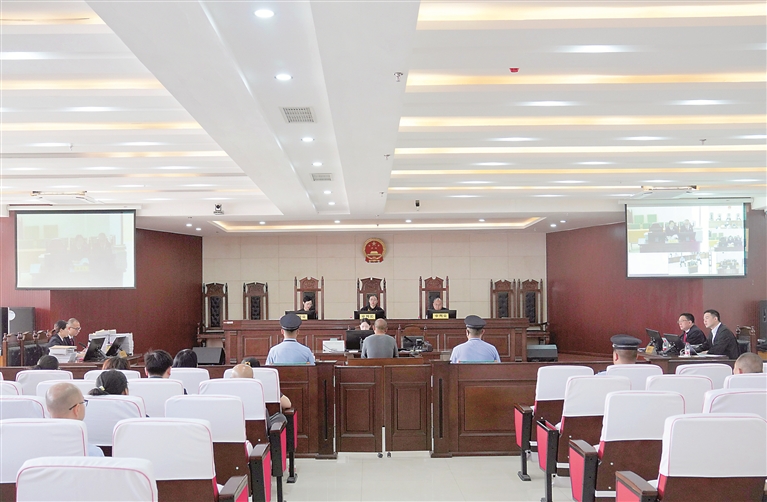
三堂会审丨对违纪又违法行为如何坚持纪法双施
Zhong Yang Ji Wei Guo Jia Jian Wei Wang Zhan· 2025-09-24 01:29
Core Viewpoint - The article discusses the case of Xu, a former official in the health sector, who is accused of violating organizational discipline and engaging in bribery during her tenure, highlighting the dual responsibilities of disciplinary and legal oversight in such cases [1][2][3]. Summary by Relevant Sections Basic Case Facts - Xu, a member of the Communist Party since June 1987, held various positions including Secretary and Director of the B City Health Commission until her retirement in December 2023 [2]. - From 2013 to 2022, Xu violated organizational discipline by intervening in the hiring and job adjustments of several officials, receiving a total of 37 million yuan in bribes [2][6]. Bribery Charges - Between 2013 and 2022, Xu utilized her position to gain improper benefits for others in areas such as medical equipment procurement and project contracting, receiving a total of 1.07 million yuan in cash, with 300,000 yuan being an attempted bribe [3][8]. Investigation Process - The investigation began on January 10, 2024, leading to Xu's detention and subsequent disciplinary actions, including expulsion from the Party and cancellation of retirement benefits [4][5]. Legal Proceedings - On August 9, 2024, the C District People's Procuratorate formally charged Xu with bribery, resulting in a conviction and a sentence of three years and four months in prison, along with a fine of 300,000 yuan [5]. Disciplinary Violations - Xu's actions in facilitating personnel benefits for others while receiving bribes were classified as violations of organizational discipline, warranting disciplinary measures in addition to legal consequences [6][8]. Family Influence and Responsibility - Xu's son, utilizing her position, sought benefits for others, but Xu was not found to have direct knowledge of his actions, leading to a conclusion that she violated disciplinary regulations rather than being complicit in bribery [9][12]. Bribery Without Actual Receipt - The case also discusses the implications of Xu agreeing to receive a bribe of 300,000 yuan but not actually obtaining it, which was classified as attempted bribery under the law [13][15].