
受贿罪

Search documents
证监会原副主席被捕
清华金融评论· 2026-03-31 06:43
Group 1 - The article reports that Wang Jianjun, former member of the Party Committee and Vice Chairman of the China Securities Regulatory Commission (CSRC), is under investigation for bribery and has been arrested by the Supreme People's Procuratorate [2] - The investigation was concluded by the National Supervisory Commission and the case has been transferred to the procuratorial organ for prosecution [2] - Wang Jianjun is accused of leveraging his positions within the CSRC to illegally accept significant amounts of money and benefits, which are described as particularly large in scale [2]

蒋超良,被提起公诉
财联社· 2026-03-17 02:16
Core Viewpoint - The article reports on the investigation and prosecution of Jiang Chaoliang, a former member of the Standing Committee of the 14th National People's Congress and former Vice Chairman of the Agricultural and Rural Committee, for alleged bribery [1] Summary by Relevant Sections - Jiang Chaoliang has been arrested by the Supreme People's Procuratorate on charges of bribery, following an investigation by the National Supervisory Commission [1] - The case has been transferred to the Nanjing People's Procuratorate for prosecution, which has already filed a public prosecution with the Nanjing Intermediate People's Court [1] - The prosecution alleges that Jiang utilized his positions in various financial institutions and government roles to gain advantages and illegally accepted significant amounts of money and property [1]

受贿3407万余元 国家烟草专卖局原副局长张天峰一审获刑12年
Xin Lang Cai Jing· 2026-02-26 09:21
Group 1 - The core point of the article is the sentencing of Zhang Tianfeng, a former deputy director of the National Tobacco Monopoly Administration, to 12 years in prison for bribery, along with a fine of 2 million RMB [1][3] - The court found that from 2004 to 2023, Zhang Tianfeng abused his positions in various tobacco-related organizations to illegally accept bribes totaling over 34.07 million RMB [3] - The court considered Zhang's confession, cooperation with authorities, and the return of all illicit gains as mitigating factors, leading to a lighter sentence [3] Group 2 - The trial was held publicly on January 8, 2026, with over 40 attendees, including representatives from the National People's Congress, political advisors, and journalists [3] - Evidence was presented by the prosecution, and both the defendant and his defense team participated in the proceedings, culminating in Zhang's admission of guilt [3]
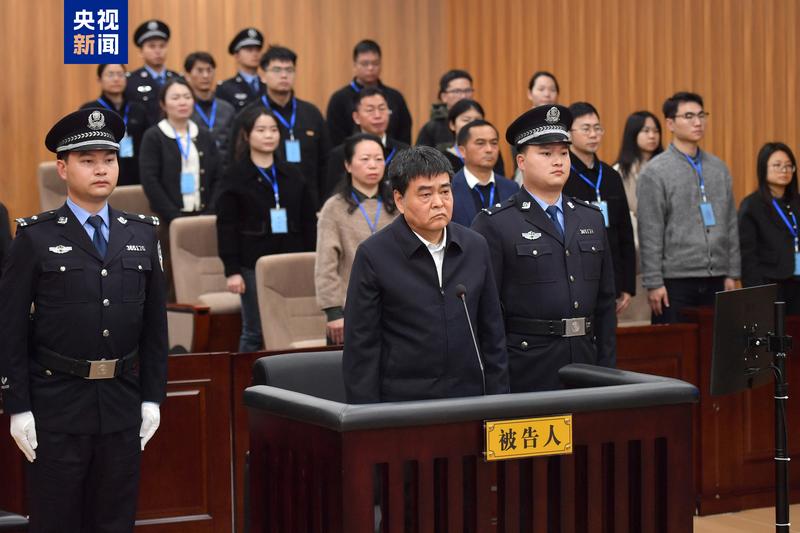
检察机关依法分别对郭建平、庞建军、何志旭、丁振提起公诉
Yang Shi Wang· 2026-02-09 08:31
Core Viewpoint - The news reports on the prosecution of four individuals in connection with bribery charges, highlighting the ongoing efforts of the Chinese judicial system to combat corruption within various governmental and institutional roles [1]. Group 1: Prosecution Details - The Shanxi Provincial People's Procuratorate has filed charges against Guo Jianping, a former deputy director of the People's Congress in Xinzhou, for accepting bribes while holding positions in the coal industry [2]. - The Shanxi Provincial People's Procuratorate has also charged Pang Jianjun, a former second-level inspector at the Shanxi Provincial Development and Reform Commission, for similar bribery offenses during his tenure [3]. - In Guizhou, He Zhixu, the former Party Secretary of Guizhou Medical University, has been prosecuted for accepting bribes while serving in various educational leadership roles [4]. - Ding Zhen, the former deputy general manager of Guizhou Highway Group, is facing prosecution for accepting bribes while holding multiple governmental and corporate positions [5]. Group 2: Legal Proceedings - Each of the accused individuals has been informed of their legal rights during the prosecution process, and their cases are currently under further investigation by the respective local courts [2][3][4][5]. - The charges against all four individuals involve the illegal acceptance of significant amounts of money or property, indicating the severity of the alleged offenses [2][3][4][5].
受贿1.5亿,王小林死缓!
Xin Lang Cai Jing· 2026-02-07 00:07
Core Viewpoint - The case of Wang Xiaolin, former Vice President of Guiyang Medical College and President of its affiliated hospital, highlights significant corruption within the healthcare sector in China, resulting in a death sentence with a two-year reprieve for accepting bribes totaling over 150 million RMB [1][3]. Group 1: Case Details - Wang Xiaolin was found guilty of accepting bribes totaling over 150 million RMB from 2002 to 2023, leveraging his positions to assist in mergers, procurement of medical equipment, and project contracting [3]. - The court deemed Wang's actions as particularly severe due to the massive amount of bribes and the negative social impact, leading to a harsh sentence [3]. - The court acknowledged mitigating factors such as Wang's confession, cooperation with authorities, and the return of most illicit gains, which influenced the decision for a lighter sentence [3]. Group 2: Legal Proceedings - The Sixpanshui Intermediate People's Court publicly announced the verdict on February 6, indicating a transparent judicial process [1]. - The ruling includes a lifelong deprivation of political rights and the confiscation of all personal assets, emphasizing the legal consequences of corruption [1][3]. - The court's decision reflects a broader commitment to combating corruption within the public sector, particularly in healthcare [3].
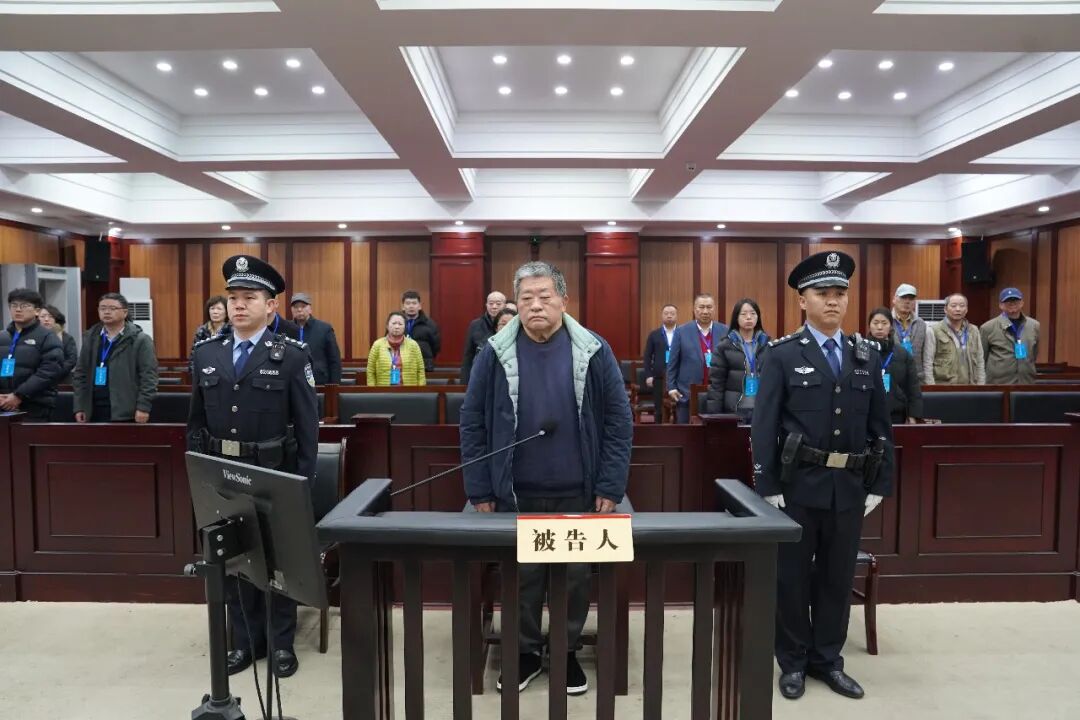
纪法讲堂丨村干部在占地和征收补偿工作中收受好处涉嫌何罪
Zhong Yang Ji Wei Guo Jia Jian Wei Wang Zhan· 2026-02-06 01:06
Core Viewpoint - The article discusses the legal implications of the actions of a village leader, Wang, who engaged in corrupt practices while handling land compensation matters for a mining project and a logistics park project, highlighting the distinction between public duties and collective affairs [3][5][7]. Group 1: Case Analysis - Wang, as a village representative, received 100,000 yuan from a company for expediting land compensation negotiations, which raises questions about his legal status and the nature of his actions [1][2]. - In a subsequent project, Wang solicited another 100,000 yuan from a business owner under the pretext of needing to approve compensation materials, which he later submitted to the government [2][7]. Group 2: Legal Classification - There are differing opinions on whether Wang's actions constitute bribery as a public official or as a non-state worker, with the second viewpoint suggesting that his role in the first case was not as a government collaborator [3][4]. - The article emphasizes that village leaders typically operate as non-state workers unless they are assisting the government in specific administrative tasks, which can change their legal classification [4][5]. Group 3: Distinction Between Public and Collective Affairs - The distinction between public duties and collective affairs is crucial in determining the legality of Wang's actions, as public duties pertain to state affairs while collective affairs relate to village governance [5][6]. - Wang's first action of receiving money was deemed a non-state worker's bribery, while his second action, involving government collaboration, was classified as bribery as a public official [6][7].
村干部在占地和征收补偿工作中收受好处涉嫌何罪
Zhong Yang Ji Wei Guo Jia Jian Wei Wang Zhan· 2026-02-04 00:49
Core Viewpoint - The case of Wang, a village cadre, highlights the complexities of defining his actions as either public service or collective affairs, leading to differing legal interpretations regarding bribery and corruption [3][7][8] Group 1: Case Background - Wang, a village group leader, was involved in negotiations for land compensation with an energy company, receiving 100,000 yuan as a bribe [1] - In a subsequent project, Wang was part of a government-led demolition team, where he solicited another 100,000 yuan from a company owner for processing compensation materials [2] Group 2: Legal Interpretations - Two main viewpoints exist regarding Wang's actions: one considers him a public servant during his negotiations, while the other views him as a non-public servant in the first instance and a public servant in the second [3][4] - The distinction between "public affairs" and "collective affairs" is crucial in determining Wang's legal status and the nature of his actions [6][7] Group 3: Implications of Actions - Wang's receipt of 100,000 yuan from the energy company is classified as bribery by a non-public servant, as he was acting on behalf of the village collective [7] - Conversely, his solicitation of 100,000 yuan from the company owner is deemed bribery as a public servant, given his role in the government-led compensation process [8]
十四届全国政协人口资源环境委员会原副主任李微微受贿案一审宣判
Xin Hua She· 2026-02-03 09:45
Core Points - The Hainan Provincial First Intermediate People's Court sentenced Li Weiwei, former deputy director of the 14th National Committee of the Chinese People's Political Consultative Conference, to life imprisonment for bribery, confiscating all personal property and depriving him of political rights for life [1] - Li Weiwei was found guilty of accepting bribes totaling over 117 million RMB from 2008 to 2024 while holding various official positions, including member of the Hunan Provincial Committee and chairman of the Hunan Provincial Political Consultative Conference [1] - The court acknowledged mitigating circumstances, including Li's confession, cooperation in returning illicit gains, and the fact that most of the bribe-related assets had been recovered, leading to a lighter sentence [1] Summary of Related Sections - **Court Proceedings**: The trial was held on November 6, 2025, with evidence presented by the prosecution and Li Weiwei admitting guilt during his final statement. The trial was attended by over 20 observers, including representatives and journalists [2]
原正部级李微微,一审被判无期徒刑
第一财经· 2026-02-03 09:38
Core Viewpoint - The article discusses the sentencing of Li Weiwei, a former vice chairman of the National Committee of the Chinese People's Political Consultative Conference, who was convicted of bribery and sentenced to life imprisonment due to the severity of his crimes and the significant amount involved [4][8]. Summary by Sections Case Overview - Li Weiwei was found guilty of accepting bribes totaling over 1.17 billion RMB from 2008 to 2024 while holding various high-ranking positions in Hunan Province and at the national level [5][6]. Court Findings - The court determined that Li Weiwei's actions constituted a particularly serious bribery offense, causing significant losses to the state and the public [8]. - The court acknowledged mitigating factors, including Li Weiwei's confession, cooperation with authorities, and the return of most of the illicit gains, which led to a lighter sentence despite the gravity of the crime [8]. Trial Proceedings - The trial was held publicly on November 6, 2025, with evidence presented by the prosecution and Li Weiwei's defense team participating in the proceedings [10].
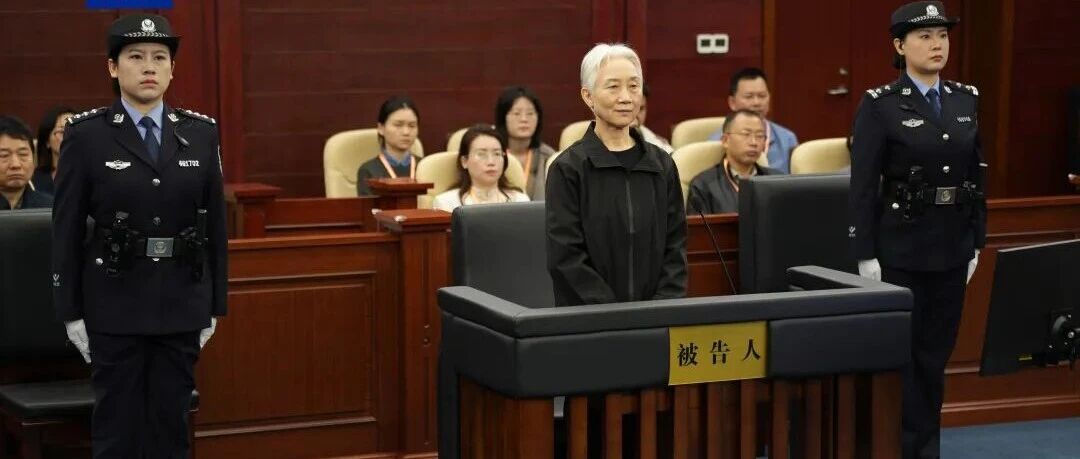
纪法讲堂丨精准识别以税费抵扣为幌子的利益输送
Zhong Yang Ji Wei Guo Jia Jian Wei Wang Zhan· 2026-02-03 07:52
Core Viewpoint - The case highlights the issue of disguised bribery under the pretext of tax benefits, emphasizing the need for precise identification of the essence of such behaviors [1][2]. Group 1: Case Summary - Li, a deputy general manager of a state-owned enterprise, engaged in a transaction with Chen, the actual controller of a private company, involving a vehicle purchase where tax benefits were used as a cover for bribery [1]. - Li requested Chen's company to pay 300,000 yuan for a vehicle, knowing that Chen's company was bidding for a procurement project with Li's enterprise [1]. - Chen later suggested that Li could reduce the repayment by 50,000 yuan due to tax deductions, which Li accepted, leading to a favorable evaluation for Chen's company in the procurement process [1][2]. Group 2: Legal Perspectives - There are differing opinions on how to classify Li's actions regarding the 50,000 yuan reduction in payment, with one view suggesting it violates party discipline and another asserting it constitutes bribery [2]. - The second viewpoint, which is supported, argues that the 50,000 yuan is a form of property benefit received by Li due to his position, thus qualifying as bribery [2][7]. Group 3: Tax Deduction Clarification - Tax deductions are legal rights granted to companies under specific conditions and should not be treated as negotiable benefits [3][4]. - The relationship between vehicle payment and tax deductions is independent; thus, any tax benefits obtained by Chen's company do not legally justify Li's reduced payment [4][5]. Group 4: Implications of the Transaction - The transaction between Li and Chen is characterized as a form of quid pro quo, where tax deductions were used as a facade for the actual exchange of benefits [5][6]. - Li's acceptance of the 50,000 yuan reduction is viewed as receiving a financial benefit, which aligns with the legal definition of bribery [7].