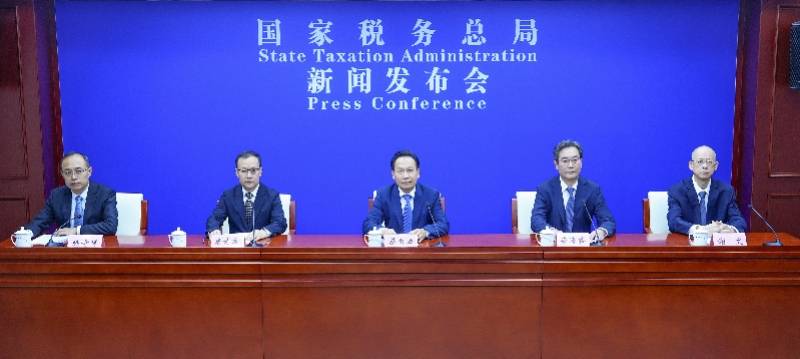
违规招商引资涉税问题

Search documents
新华每日电讯:别把“开票经济”当“发展经济”
Xin Lang Cai Jing· 2025-12-18 08:15
Core Viewpoint - The article criticizes the practice of "invoice economy" being mistaken for genuine economic development, highlighting the dangers of tax refund schemes that create false prosperity and lead to long-term detrimental effects on local economies [1][3]. Group 1: Tax Policy and Economic Impact - The National Taxation Administration has intensified efforts to address illegal tax-related issues in investment attraction, particularly focusing on local governments that return a significant portion of taxes to businesses through various incentives [1][3]. - The practice of using tax incentives to attract investment can lead to the creation of "policy lowlands," where companies exploit loopholes to evade taxes, resulting in the emergence of "shell companies" and fraudulent projects [1][3]. Group 2: Short-term vs Long-term Economic Strategies - "Invoice economy" is characterized as a short-term self-serving behavior that, while it may boost investment figures temporarily, fails to drive real economic growth or job creation, potentially pushing compliant businesses out of the market [2][4]. - The National Development and Reform Commission has issued guidelines to prevent local governments from violating national regulations regarding tax incentives, emphasizing the need for a sustainable and high-quality economic development approach [2][4]. Group 3: Vision for Future Development - To move beyond the misconception of "invoice economy" as a legitimate growth strategy, it is essential to establish a correct view of performance, focusing on creating a transparent business environment and a robust industrial structure to attract quality enterprises [2][4]. - Collaborative efforts to promote a unified national market are crucial for expanding overall market size and providing stronger momentum for local economic development [2][4].
建设全国统一大市场不能靠卷
Nan Fang Du Shi Bao· 2025-12-12 07:00
Group 1 - The Central Economic Work Conference emphasized the need for a more proactive macro policy to enhance economic governance and resilience, focusing on stable progress and quality improvement [1] - Eight key tasks were outlined, including the construction of a unified national market and addressing "involution" competition [1] - The construction of a unified national market is essential for strengthening domestic circulation and releasing consumption potential, which is crucial for economic recovery [1] Group 2 - Market segmentation and local protectionism are prevalent issues, often involving administrative interference that disrupts fair competition [2] - The State Taxation Administration highlighted measures to combat tax-related issues in local investment attraction, where some regions create "shell companies" to manipulate tax incentives [2] - Local governments have been using low tax zones and zero tax burdens to attract businesses, leading to unhealthy competition and market distortions [3] Group 3 - There is a need for clear regulations in local investment attraction to prevent local protectionism and ensure fair competition [3] - Short-term incentives can create a false sense of prosperity but are detrimental to long-term development [3] - The construction of a unified national market requires improved rules in the investment attraction process to ensure equitable competition across regions [3]


有些地方违规招引空壳企业搞开票经济,税务部门加大核查力度
Sou Hu Cai Jing· 2025-12-11 10:58
Core Viewpoint - The National Taxation Administration is intensifying efforts to address tax-related issues in local governments' irregular investment promotion practices, which distort market order and threaten the construction of a unified national market [1][6]. Group 1: Tax Issues in Local Investment Promotion - Local governments are breaching tax laws and fiscal systems by offering excessive tax rebates and incentives to attract businesses, leading to distorted business location choices and disrupted tax order [1][5]. - The phenomenon of attracting "shell companies" for "invoice economy" is prevalent, where localities prioritize quantity over genuine industry development, resulting in minimal economic activity and increased risks of tax fraud [4][6]. Group 2: Policy Responses and Recommendations - The National Taxation Administration is enhancing monitoring and verification of irregular investment practices, urging local governments to amend or abolish non-compliant tax agreements [6][7]. - Experts suggest improving the local tax system and increasing the share of local taxes to reduce reliance on easily movable tax sources, thereby refocusing on the real economy [7][8]. - Recommendations include shifting fiscal support from tax rebates to long-term competitiveness measures such as R&D subsidies and enhancing the business environment through fair competition reviews [8]. Group 3: Case Studies and Local Practices - A case from Jiangsu Province highlights the return of government subsidies due to non-compliance with relevant policies, illustrating the risks associated with irregular tax practices [5]. - The introduction of fair competition review guidelines in Taizhou, Zhejiang Province, aims to shift the focus from tax incentives to improving the overall business environment [8].