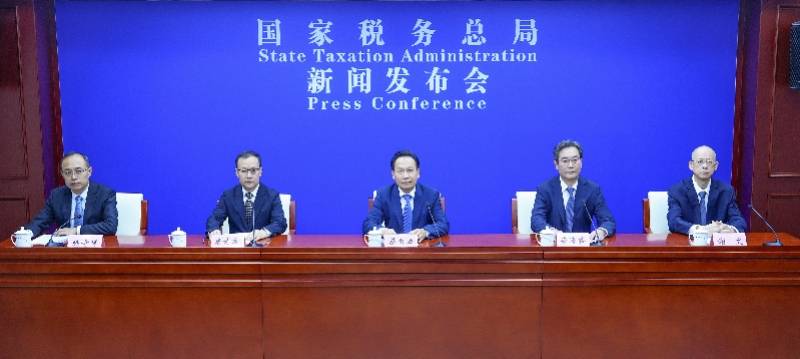
开票经济

Search documents
财政增速仍承压 境外所得补税或成今年征管重点
Jing Ji Guan Cha Wang· 2026-02-08 05:29
Group 1: Fiscal Revenue Overview - In 2025, the national general public budget revenue is projected to be 21.6045 trillion yuan, a decrease of 1.7% from the previous year [1] - Tax revenue is expected to reach 17.6363 trillion yuan, showing a growth of 0.8%, while non-tax revenue is anticipated to decline by 11.3% to 3.9682 trillion yuan [1] - Land transfer revenue is forecasted to be 4.1518 trillion yuan, down 14.7% compared to the previous year [1] Group 2: Regional Fiscal Data - Some provinces have reported unique trends in their fiscal data for 2025, with Jilin province's non-tax revenue increasing by 25.4% to 63.85 billion yuan and Shaanxi province's non-tax revenue rising by 11.6% to 87.09 billion yuan [1] Group 3: Expenditure Trends - Expenditures related to "people" are increasing, with education spending at 434.17 billion yuan (up 3.2%), social security and employment spending at 444.16 billion yuan (up 6.7%), and health spending at 214.46 billion yuan (up 5.7%) [2] - The overall fiscal policy for 2025 aims to maintain necessary spending levels despite revenue pressures, with a focus on macroeconomic support [2] Group 4: Tax Revenue Composition - In 2025, tax revenue is expected to constitute 81.6% of the general public budget revenue, an increase of 2.0 percentage points from 2024, indicating improved revenue quality [3] - Major tax categories such as domestic VAT, corporate income tax, and personal income tax are showing positive growth rates, with personal income tax growing by 11.5% [3][6] Group 5: Personal Income Tax Insights - The high growth rate of personal income tax at 11.5% is attributed to improved tax administration and an increase in dividend income [6] - The tax authority has intensified scrutiny on high-income individuals, leading to significant recoveries in unpaid personal income tax [6][8] Group 6: International Income Taxation - The tax authority has been focusing on overseas income taxation, with significant amounts being recovered from individuals who failed to report their foreign income [8][9] - The implementation of the Common Reporting Standard (CRS) since 2017 has enhanced the tax authority's ability to track overseas financial accounts [8][9] Group 7: Future Tax Administration Trends - It is anticipated that the trend of strengthening the administration of overseas income taxation will continue into 2026, with more rigorous data collection and compliance measures expected [10]
去年广西各项税费收入5150亿元
Sou Hu Cai Jing· 2026-02-07 03:03
Core Insights - In 2025, the Guangxi tax department is projected to collect a total of 5150.2 billion yuan in various taxes and fees, with tax revenue expected to reach 2434 billion yuan, reflecting a year-on-year growth of 3.4% [1] - The implementation of tax incentives for technology innovation and manufacturing development resulted in a total of 264.6 billion yuan in new tax reductions, fee cuts, and tax refunds from January to November 2025 [1] - The efficiency of tax services has significantly improved, with 127 tax service halls upgraded, and the "Silver Tax Interaction" online authorization process completed in just three minutes, benefiting 89,000 small and micro enterprises with credit loans totaling 1758 billion yuan [1] Tax Service Optimization - The tax service will leverage the "Belt and Road" tax administration cooperation mechanism to enhance cross-border trade and investment tax services, aiding Guangxi enterprises in their international expansion [2] - A closed-loop work mechanism will be established to ensure policy implementation, service support, and regulatory oversight, particularly for major strategies like "Artificial Intelligence+" [2] - Continuous efforts will be made to simplify processes and improve efficiency through initiatives like the "Spring Breeze Tax Service Action," promoting deep integration of online and offline services [2] Tax Administration Reform - The implementation of the Value-Added Tax Law and related reforms will be steadily advanced, including the expansion of the environmental protection tax scope and the postponement of consumption tax collection [2] - The construction of smart tax systems will be promoted, aiming for the complete replacement of provincial ordinary invoices with electronic invoices, enhancing convenience and real-time regulation [2] Tax Governance Efficiency - Focus will be placed on key areas such as "invoice economy" and invoice management, with integrated risk prevention measures for tax, law enforcement, and integrity risks [2] - Data quality governance will be strengthened to ensure effective supervision in key sectors and specialized industry management [2] - Collaboration across departments will be enhanced to expand the coverage of joint efforts against tax-related crimes, maintaining a fair tax order [2]
经济热点快评|“开票经济”为何要严查?
Sou Hu Cai Jing· 2026-02-02 12:12
Core Viewpoint - The national tax work conference emphasizes the need to address issues related to "invoice economy" and illegal tax incentives to maintain a sound economic tax order and support the construction of a unified national market [2][3][6] Group 1: Definition and Issues of "Invoice Economy" - "Invoice economy" refers to the practice where local governments attract shell companies without real operations by offering financial incentives, creating a false economic prosperity [2] - This practice leads to fiscal empty circulation and tax revenue loss, as local governments may return excessive tax revenues to attract these companies, resulting in a cycle where legitimate businesses suffer [2] - It undermines fair market competition, as compliant businesses bear the full tax burden while shell companies benefit from illegal financial returns, leading to a situation where "bad money drives out good" [3] Group 2: Consequences of "Invoice Economy" - The "invoice economy" disrupts the unified national market, as local governments engage in competitive and illegal incentives, causing resources like capital and talent to be misallocated [3] - It provides opportunities for criminal activities, where gangs exploit the system by registering multiple shell companies to fraudulently claim subsidies and evade taxes [3] Group 3: Call for Genuine Economic Development - The reliance on inflated GDP and fiscal data misrepresents the true economic situation, misleading macroeconomic decisions and causing neglect of core issues like industrial cultivation and public welfare [6] - A shift in performance evaluation is necessary, focusing on actual tax revenue, job creation, and industrial development rather than mere registration numbers and contract amounts [6] - Strengthening regulatory frameworks and monitoring systems is essential to prevent illegal financial practices and ensure a robust business environment that supports real economic growth [6]


“开票经济”,为何要严查?
Sou Hu Cai Jing· 2026-02-01 10:24
Core Viewpoint - The national tax work conference held on January 28, 2026, emphasized the need to address issues related to "invoice economy" and illegal tax-related practices to maintain a sound economic tax order and better serve the construction of a unified national market [1] Group 1: Understanding "Invoice Economy" - "Invoice economy" refers to a situation where local governments attract shell companies that lack real operations by offering financial incentives, creating a false economic prosperity through digital manipulation [2] - This model leads to fiscal circularity and tax revenue loss, as local governments may return excessive portions of tax revenue to attract these shell companies, resulting in a cycle where legitimate businesses suffer while the state loses tax revenue [2] - The practice undermines fair market competition, as compliant businesses bear the full tax burden while shell companies gain undue advantages through illegal financial returns, leading to a scenario where "bad money drives out good" [2] Group 2: Risks and Consequences of "Invoice Economy" - "Invoice economy" provides opportunities for criminal activities, where gangs register shell companies to fraudulently claim financial subsidies and tax returns, creating a black market chain of "registration - invoicing - virtual issuance - collection" [3] - This approach does not generate real industries, jobs, or high-quality development, as inflated GDP and fiscal data misrepresent the actual economic situation, potentially misleading macroeconomic decisions and causing neglect of core issues like industrial cultivation and public welfare [3] - To foster genuine economic growth, it is essential to shift the focus from mere numerical achievements to real tax contributions, job creation, and industrial development, while enhancing regulatory frameworks to monitor and penalize illegal financial practices [3]
经济日报:清除“开票经济”滋生土壤
Xin Lang Cai Jing· 2026-01-31 08:13
Core Viewpoint - The article discusses the negative impact of "invoice economy" on genuine economic development, emphasizing the need for a fair tax environment and the importance of long-term growth strategies over short-term gains [10][11][12]. Group 1: "Invoice Economy" Issues - "Invoice economy" refers to local governments circumventing fiscal boundaries by offering significant tax rebates to attract investments, leading to inflated investment and tax figures [10]. - This practice creates a false sense of economic prosperity, which does not contribute to real growth or employment, and instead leads to resource wastage and market disorder [10][11]. - The reliance on "invoice economy" undermines the construction of a unified national market and violates principles of tax fairness, resulting in tax revenue loss and fiscal health erosion [10][11]. Group 2: Government and Regulatory Response - The State Taxation Administration has initiated a special campaign to address tax-related issues in investment attraction, prohibiting tax authorities from participating in or condoning such practices [12]. - Monitoring mechanisms are being established to track abnormal tax revenues and invoice issuance, with a focus on rectifying problematic agreements related to tax incentives [12]. - A collaborative effort among local governments, relevant departments, and the business community is essential to eliminate the conditions that allow "invoice economy" to thrive, promoting a healthier economic environment [12].
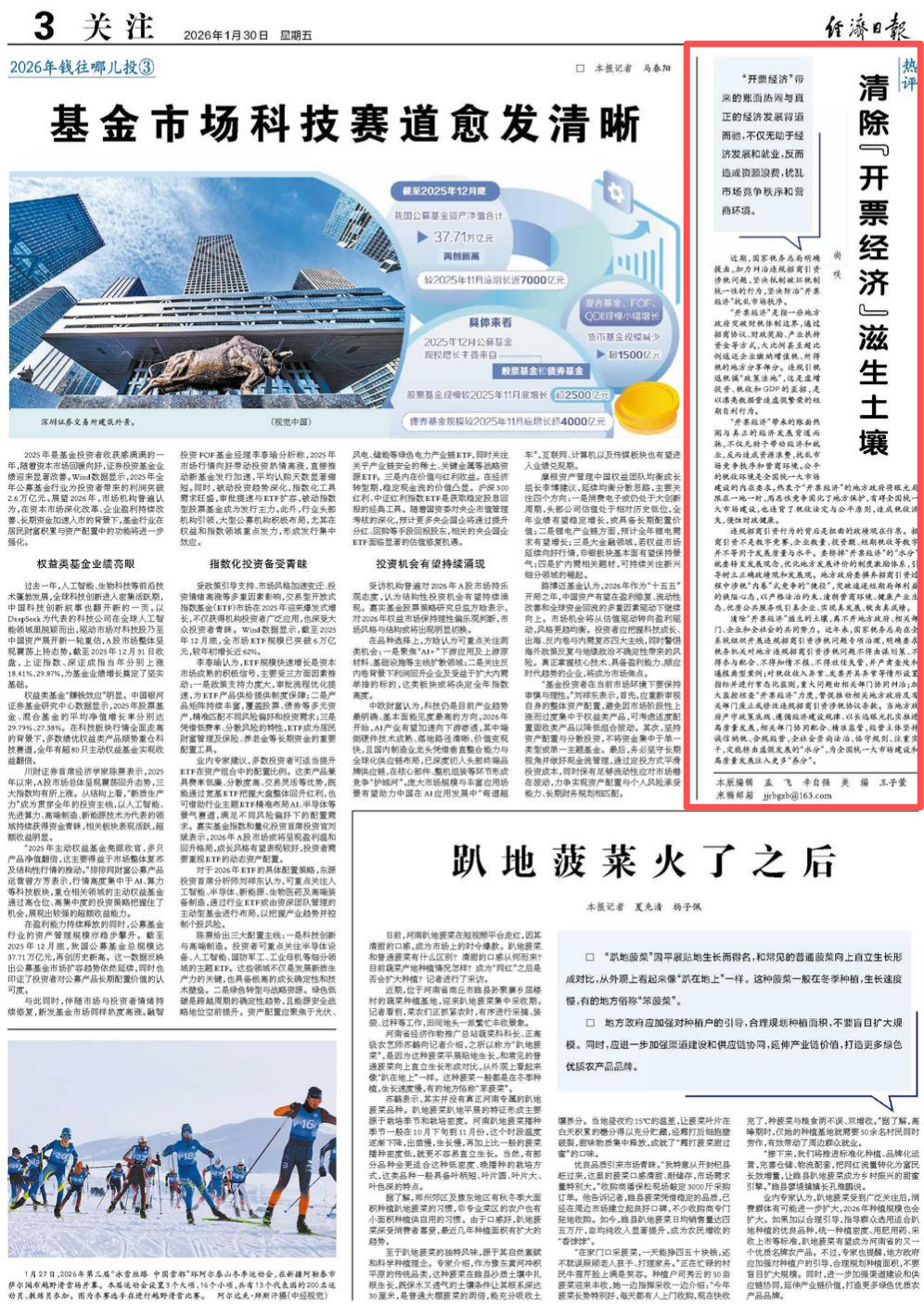
清除“开票经济”滋生土壤
Jing Ji Ri Bao· 2026-01-29 22:15
Core Viewpoint - The "invoice economy" is counterproductive to genuine economic development and employment, leading to resource waste and disrupting market competition and business environment [1] Group 1: Issues with the "Invoice Economy" - The "invoice economy" involves local governments circumventing fiscal and tax systems by offering significant tax rebates to attract investment, which artificially inflates investment, tax revenue, and GDP [1] - This practice creates a false sense of prosperity and does not contribute to real economic growth or job creation, instead causing resource misallocation and market disorder [1] Group 2: Need for Change in Development Perspective - The distorted performance evaluation of local governments drives the problematic behavior of attracting investment through tax incentives, which does not equate to quality development [2] - To eliminate the "water" from the "invoice economy," there is a need to shift development perspectives and optimize local evaluation systems to promote a correct view of performance and development [2] Group 3: Collaborative Efforts Required - Addressing the issues stemming from the "invoice economy" requires joint efforts from local governments, relevant departments, enterprises, and society as a whole [3] - The State Taxation Administration has initiated special governance on tax-related issues in investment attraction, emphasizing strict monitoring and reporting of irregularities [3] - A collaborative approach involving adherence to policy, long-term vision for high-quality development, and a commitment to lawful and compliant business practices is essential to eliminate false development metrics [3]
新华每日电讯:别把“开票经济”当“发展经济”
Xin Lang Cai Jing· 2025-12-18 08:15
Core Viewpoint - The article criticizes the practice of "invoice economy" being mistaken for genuine economic development, highlighting the dangers of tax refund schemes that create false prosperity and lead to long-term detrimental effects on local economies [1][3]. Group 1: Tax Policy and Economic Impact - The National Taxation Administration has intensified efforts to address illegal tax-related issues in investment attraction, particularly focusing on local governments that return a significant portion of taxes to businesses through various incentives [1][3]. - The practice of using tax incentives to attract investment can lead to the creation of "policy lowlands," where companies exploit loopholes to evade taxes, resulting in the emergence of "shell companies" and fraudulent projects [1][3]. Group 2: Short-term vs Long-term Economic Strategies - "Invoice economy" is characterized as a short-term self-serving behavior that, while it may boost investment figures temporarily, fails to drive real economic growth or job creation, potentially pushing compliant businesses out of the market [2][4]. - The National Development and Reform Commission has issued guidelines to prevent local governments from violating national regulations regarding tax incentives, emphasizing the need for a sustainable and high-quality economic development approach [2][4]. Group 3: Vision for Future Development - To move beyond the misconception of "invoice economy" as a legitimate growth strategy, it is essential to establish a correct view of performance, focusing on creating a transparent business environment and a robust industrial structure to attract quality enterprises [2][4]. - Collaborative efforts to promote a unified national market are crucial for expanding overall market size and providing stronger momentum for local economic development [2][4].
国家税务总局:持续深化违规招商引资涉税问题专项治理,加力防治违规搞“开票经济”对市场秩序的影响
Zheng Quan Shi Bao Wang· 2025-12-14 10:22
Group 1 - The core viewpoint of the article emphasizes the importance of tax policies in stabilizing employment, enterprises, markets, and expectations while enhancing the vitality of business entities and boosting social confidence [1] - The meeting highlighted the need to implement tax and fee support policies that promote domestic demand, encourage innovation, and improve people's livelihoods [1] - There is a focus on deepening the governance of tax-related issues in the context of attracting investment, particularly addressing the negative impacts of "invoice economy" on market order [1]
有些地方违规招引空壳企业搞开票经济,税务部门加大核查力度
Sou Hu Cai Jing· 2025-12-11 10:58
Core Viewpoint - The National Taxation Administration is intensifying efforts to address tax-related issues in local governments' irregular investment promotion practices, which distort market order and threaten the construction of a unified national market [1][6]. Group 1: Tax Issues in Local Investment Promotion - Local governments are breaching tax laws and fiscal systems by offering excessive tax rebates and incentives to attract businesses, leading to distorted business location choices and disrupted tax order [1][5]. - The phenomenon of attracting "shell companies" for "invoice economy" is prevalent, where localities prioritize quantity over genuine industry development, resulting in minimal economic activity and increased risks of tax fraud [4][6]. Group 2: Policy Responses and Recommendations - The National Taxation Administration is enhancing monitoring and verification of irregular investment practices, urging local governments to amend or abolish non-compliant tax agreements [6][7]. - Experts suggest improving the local tax system and increasing the share of local taxes to reduce reliance on easily movable tax sources, thereby refocusing on the real economy [7][8]. - Recommendations include shifting fiscal support from tax rebates to long-term competitiveness measures such as R&D subsidies and enhancing the business environment through fair competition reviews [8]. Group 3: Case Studies and Local Practices - A case from Jiangsu Province highlights the return of government subsidies due to non-compliance with relevant policies, illustrating the risks associated with irregular tax practices [5]. - The introduction of fair competition review guidelines in Taizhou, Zhejiang Province, aims to shift the focus from tax incentives to improving the overall business environment [8].