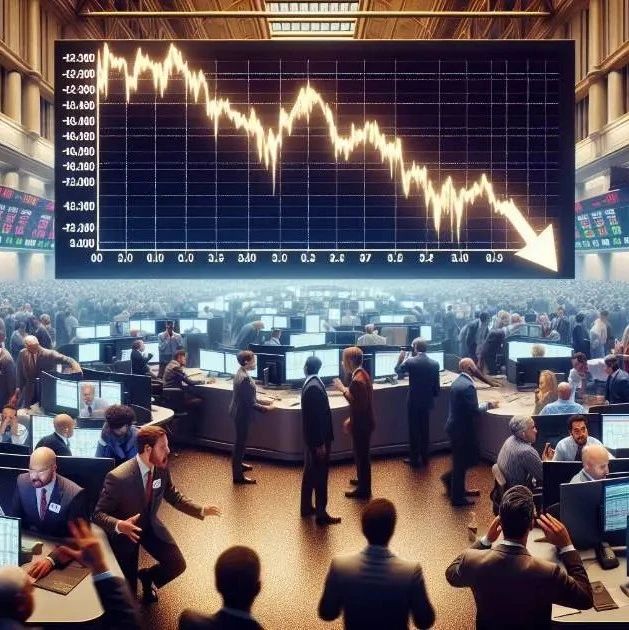
追加保证金通知

Search documents
从FOMO到对追加保证金通知的恐惧,黄金的疯狂之旅进入新阶段
Jin Shi Shu Ju· 2025-10-22 14:49
Group 1 - Gold has risen 54% this year, potentially marking the largest annual increase since 1979, with significant psychological resistance levels breached at $3000 in March and $4000 in October [1] - The recent surge in gold prices is driven by political tensions and uncertainty surrounding U.S. tariffs, leading to a wave of fear of missing out (FOMO) buying [1] - The nature of the gold rally has shifted, now primarily driven by Western investors rather than the more stable emerging market buyers seen in the past two years, indicating increased uncertainty and volatility [1] Group 2 - On Monday, gold reached a record high of $4381 per ounce, a level few predicted a year ago, with previous forecasts estimating a price of $2941 by this time [1] - Following significant milestones, gold prices dropped 5% on Tuesday, marking the steepest single-day decline in five years, with the market's relative strength index (RSI) falling from "overbought" to "normal" for the first time in seven weeks [1] - Analysts suggest that such a sharp and steep rise followed by a consolidation phase is not uncommon and should be viewed as healthy, with the fundamental backdrop for gold remaining favorable [1] Group 3 - The S&P 500 index's rise is being closely monitored, with experts noting that significant stock market adjustments have historically led to the liquidation of safe-haven assets, including gold [3] - Some gold purchases are being made as a hedge against potential stock market declines, which could trigger long positions to be liquidated as investors seek to raise cash or meet margin calls [3] - Emerging market central banks are likely to continue increasing their gold reserves to achieve diversification, benefiting from the recent exponential price increases [3][4] Group 4 - Central bank purchases of gold are expected to remain high in the coming years, supporting gold demand, although rising prices automatically increase the value of their holdings [5] - Long-term institutional investors may also be reaching their investment threshold, necessitating a reduction in risk and gold holdings [5] - Analysts warn that if investor momentum slows by 2026, excess physical supply may begin to exert downward pressure on prices, particularly as demand from the jewelry sector in major consumption areas declines [5][6]

新一轮“熔断噩梦”来袭,美联储降息预期飙至120基点
美股研究社· 2025-04-07 11:26
Core Viewpoint - The article discusses the recent significant market downturn, drawing parallels to the volatility experienced during the COVID-19 pandemic, highlighting the impact of geopolitical tensions and economic uncertainty on investor sentiment and market performance [4][8][10]. Market Performance - On Monday, Nasdaq futures dropped over 5.5%, S&P 500 futures fell more than 4.7%, and Dow futures decreased over 4%. WTI crude oil fell by 4%, dropping below $60 per barrel for the first time since April 2021 [4]. - The S&P 500 index experienced a decline of 5.97% last Friday, nearing the 7% threshold that would trigger a trading halt [8]. Investor Sentiment - The current market turmoil has led to a "panic sell-off," affecting even traditionally safe assets like gold, as investors seek to cover losses elsewhere [10]. - There is a notable increase in margin calls from major banks to hedge fund clients, indicating a significant drop in asset values [9]. Economic Outlook - Analysts express a cautious outlook, with some predicting further market corrections before stabilization occurs. Michael Hartnett from Bank of America advises shorting risk assets until there are policy shifts from the Trump administration [11]. - JPMorgan's David Lebovitz believes the U.S. will avoid a recession due to tariffs, suggesting that the market has entered a buy-the-dip phase [12]. Interest Rates and Monetary Policy - The Federal Funds futures indicate a potential interest rate cut of 120 basis points (approximately 4.8 times) by the end of the year, reflecting a shift in market expectations [5]. - The uncertainty surrounding the economic impact of tariffs raises questions about how effective potential rate cuts will be in mitigating economic damage [13].